Landauer House human rights charity piano recital
The Glass RoomThe Landauer House human rights charity piano recital is both a benefit for refugees and a carefully staged encounter between political responsibility and architectural modernism. In the Glass Room, Viktor Landauer asks an audience to look beyond its borders at the persecution of its neighbours; the evening’s artistic success gives that appeal a public platform, but the house itself remains, in the narrative’s telling, indifferent to the politics unfolding around it.
Origins and purpose
Viktor tells Liesel Landauer that he has been invited to join the committee of the Human Rights League. A newspaper story about the recent influx of refugees from Germany—most of them Jews—makes the committee’s fundraising purpose immediate. The League’s president has asked about raising money, and Viktor expects the Landauer family’s business to contribute. He also proposes using the house, which people are already eager to see, for a charity event.
The plan takes shape as a recital by Miroslav Němec. Viktor suggests an audience of sixty, with tickets priced high enough to raise substantial funds while making use of public interest in the celebrated building. The combination is practical and symbolic: the house draws visitors, and the gathering gives those visitors a chance to support refugees rather than merely admire the architecture.
The recital in the Glass Room
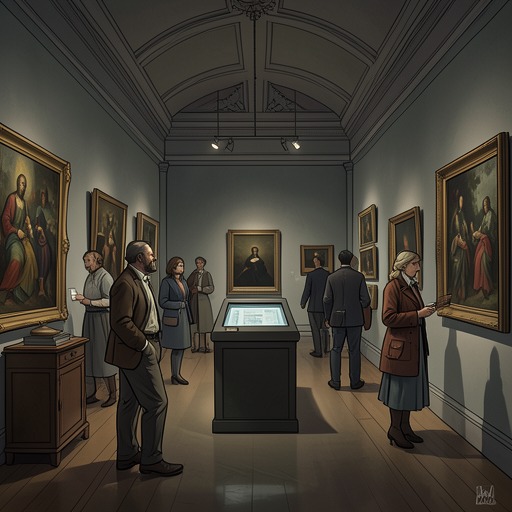
The event is announced as a recital, and all sixty-five tickets sell within a few days. Chairs are placed in arcs on either side of the onyx wall. The piano is moved so that the room’s focus turns inward, away from the glass walls. This arrangement transforms the space for the evening without hiding its defining design; the audience comes to hear the music, but many have also come to see the house itself.
Hana Hanáková sits solemnly at the back, in the library area, while the pianist’s wife, Milada Němcová, takes a conspicuous seat at the front. Viktor opens with a short speech welcoming the guests and affirming the value of their support for the Human Rights League. He warns that, although oppression currently falls on others, the audience’s own young democracy may be at risk if its citizens remain passive. His appeal makes solidarity a present civic responsibility, not simply distant sympathy.
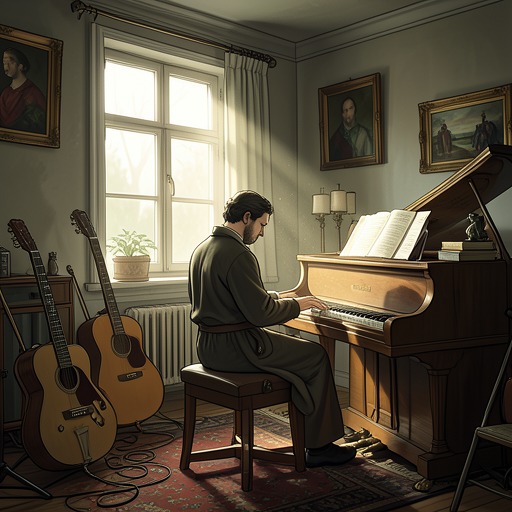
Němec then appears at the entrance to the Glass Room and begins a programme that moves from a Brahms intermezzo to Janáček’s piano sonata From the Street, followed, after an interval, by a Schubert sonata. The performance is described as accurate and sensitive, yet also theatrical: his entrance, posture, and forceful playing make the recital feel like a public performance transplanted into a private home. Hana privately compares the pianist to a vulture as he attacks the Schubert notes. The music critic of Moravské Noviny subsequently places Němec among the foremost interpreters of the time, and the cultural pages of Prager Tagblatt report on the event under the title “Human Rights Bring Cultural Bonus.” The League’s chairman closes by calling it both an artistic success and an act of solidarity with oppressed peoples.</n
Architecture and political contradiction
The Glass Room does not itself endorse the cause celebrated within it. Its balance and clarity remain unchanged, while political pressures gather outside the house. Rainer von Abt’s position that architecture should have no politics is set against Viktor’s insistence that citizens must respond to oppression. The building’s clean formal ideals can thus host a political appeal without resolving the tension between neutrality as an architectural principle and responsibility as a civic one.
That tension becomes sharper in the surrounding historical landscape. During the Landauers’ usual summer holiday in Marienbad, red Sudeten German Party graffiti and black swastikas appear on walls and remain for days before workmen paint them out. Viktor and Liesel also see a newsreel of Adolf Hitler addressing torch-bearing soldiers. These details frame the recital as a moment when the house’s image of order and permanence stands beside visible signs of political extremism and growing danger.
Significance in the wider narrative
The recital demonstrates how the Landauer House can function as more than a private residence or an object of admiration: its prestige and gathering space are put to use in support of refugees. Yet the benefit’s success cannot make the Glass Room a refuge from history. The building remains an image of balance, while events outside it expose the limits of aesthetic detachment. The evening’s title, “Human Rights Bring Cultural Bonus,” captures both sides of the occasion: culture attracts attention and lends force to a humanitarian appeal, even as the political crisis threatening those rights continues to advance.