Marika Kalman
The Glass RoomMarika Kalman, the daughter of Katalin Kalman, enters the story as a child whose sudden appearance interrupts Viktor and Katalin’s private intimacy. Later, in exile, she becomes nearly inseparable from Ottilie and calls Viktor Onkel, revealing how the Landauers’ household has become a place of shelter and family feeling for her and her mother.
Identity and Introduction
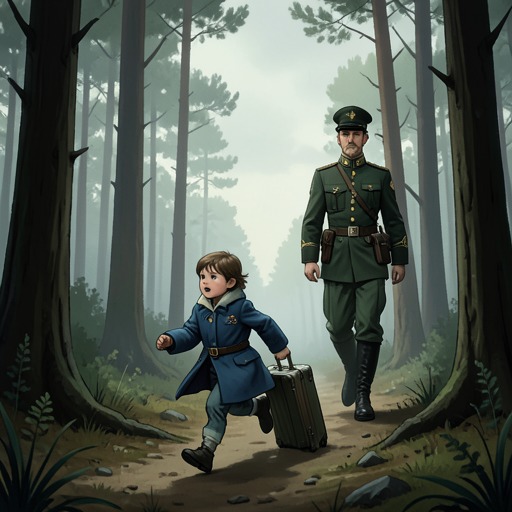
Marika first appears at the open doorway as a little girl of about five or six, younger than Ottilie. She is dressed in a plain nightdress, her hair in pigtails, and stands solemnly while Viktor and Katalin turn toward her. When Katalin asks why she is out of bed, Marika explains that she could not sleep. Her entrance abruptly breaks the intimacy between the adults: Katalin slips from Viktor’s grasp and redirects her attention to her daughter.
A later public scene identifies Marika as Mrs Kalman’s daughter. At a gathering where displaced people are introduced, she appears with her widowed mother, alongside the Neumann family and their children. This brief introduction places the two Kalmans among people whose livelihoods and possessions have been disrupted: Katalin says she works as a seamstress when she can find work, and that the money she had saved in the bank may be gone.
Life in Exile
During the Landauers’ first summer in exile, Marika and Ottilie spend time together while the families share ordinary outings. They go around the market in Zurich, take a steamer trip on the lake with the children, and swim from the landing stage at the foot of the garden. The account emphasizes the ease of this shared life: Marika and Ottilie become almost inseparable, their companionship continuing through the changing seasons.
As the first winter arrives, the children go tobogganing in the hills behind the house. Before Christmas, they make their first trip to the ski slopes, where Ottilie can show skills she learned in the Tatra Mountains. Marika’s place in this family routine is conveyed through her repeated appeals to Viktor to teach her to ski, take her tobogganing, or come and watch her ice-skate. The activities give exile a temporary shape of home: shared outings and familiar adult care establish a rhythm amid displacement.
Relationships and Narrative Role
Marika calls Viktor Onkel, and he appears amused by the name. Her mother tells Liesel that Viktor has become like a father to Marika and that they owe him a great deal. The remark makes explicit what Marika’s requests already show: she trusts Viktor’s attention and seeks him out as a dependable adult. Their closeness is not described through a single dramatic declaration but through repeated, practical invitations to participate in her childhood.
Marika’s relationship with Ottilie also matters to the household’s changing sense of kinship. The girls are described as nearly inseparable, growing from children into young adolescents during their first winter in exile. Their friendship binds the families together in daily life, while Marika’s affectionate address to Viktor reflects the support he has extended to her and Katalin.
Significance
Marika’s early interruption and later place in the Landauers’ exile life form a telling contrast. As a small child, she appears at the threshold and ends a private moment between Viktor and Katalin; in Switzerland, she belongs within the broader circle of shared family routines. Her presence connects the adult history of intimacy and displacement to the children’s experience of companionship, care, and growing up away from home.