Munich Agreement
The Glass RoomThe Munich Agreement is remembered by Liesel as a betrayal that divides an earlier, intimate world from the flight, separation, and political upheavals that followed. In the novel’s later scenes, that memory returns not as a self-contained account of diplomacy but as part of a family’s reckoning with exile, lost relatives, and the contested ownership of Landauer House.
The Agreement as a remembered divide
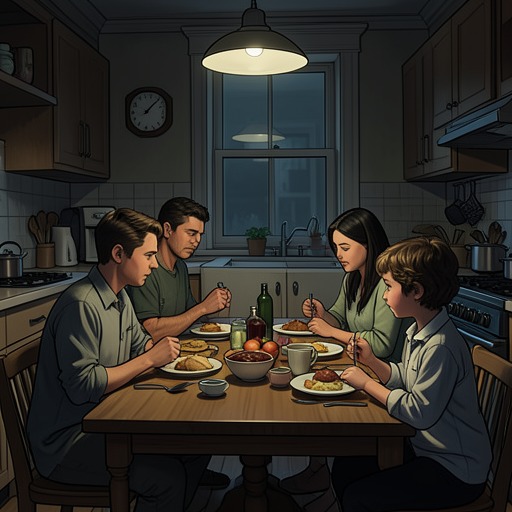
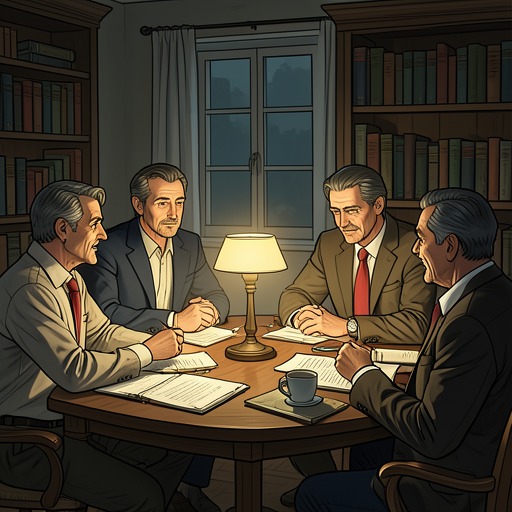
During a later visit to the house, Liesel recalls a small group gathered in the months before what she calls the betrayal of Munich: herself and Viktor, Ottilie and Martin, and Katalin and Marika. The recollection places the agreement at a threshold in her personal history. The group belongs to a past in which these people were still held together by proximity and shared plans; in the present, Liesel describes people entering one another’s lives and then vanishing.
That sense of rupture is sharpened by what Liesel remembers about Katalin and her daughter. They had been expected to travel with the family to Cuba, but stayed behind when Liesel and her family left France. The agreement is not described through its terms or negotiations in these scenes. Its force in Liesel’s memory lies instead in the way it marks a world before separations that could not be undone.
Memory amid the return
The agreement’s legacy resurfaces decades later when the authorities of Město invite Liesel to witness a handover connected with the family house. The city offers to cover the expenses and presents the invitation as part of a changed political climate: it wants more normal relations with its neighbours, an opening to the West, and a willingness to discuss past errors. The proposed visit therefore joins personal remembrance to public claims about how the past should be acknowledged.
Martin Landor, Liesel’s son, warns her that accepting could amount to de facto recognition of the city’s legal ownership of the property. He interprets the invitation as an attempt to secure confirmation of the confiscation and to use his mother politically. The encounter makes clear that a changed political language does not settle the underlying dispute: the house remains at once a family home, contested property, and a site through which the city seeks to address history.
The family’s losses and the limits of recovery
The invitation also brings back the family’s wartime uncertainty. Liesel explains that they had believed a relative was dead after hearing of her arrest and deportation in 1942, while the family was in Cuba. After the war, confusion, the expulsion of Germans, and the movement of displaced people made reliable information difficult to obtain. The Iron Curtain then seemed to make the country itself inaccessible. The news that the relative was alive breaks into this accumulated absence, showing how political borders and family loss had become entangled.
The account widens beyond Liesel’s household: her husband’s Jewish relatives were killed in the camps, while her own family had already left Moravia. The possibility of a return and a public handover cannot reverse those losses or restore the scattered family to its former life. The Munich Agreement’s remembered betrayal thus belongs to a longer history of displacement, whose consequences persist even when political circumstances change.
The house, time, and historical recognition
At a gathering in the Glass Room, Liesel becomes overwhelmed by the crowd and asks Hana to accompany her outside. The scene contrasts the room’s remembered openness with the pressure of the present gathering, where officials discuss the house’s place in European architecture and seek photographs. The building can be presented as an enduring work of modern architecture, yet the people inside it carry histories that its balanced, apparently timeless space cannot resolve.
The novel sets that architectural image against the discontinuities of lived history. The invitation to witness a handover gestures toward recognition and renewed relations, but Martin’s concern about legal ownership exposes the unresolved question beneath the ceremony. Liesel’s recollection of the Munich betrayal gives this present-day dispute its emotional depth: political decisions are not past merely because the moment has passed, and the attempt to return to a house cannot restore the world that once gathered around it.