The fragility of interwar Czechoslovak democracy
The Glass RoomThe fragility of interwar Czechoslovak democracy is presented as a contest between an ambitious civic ideal and the forces that would strain it: nationalist division, antisemitism, and the widening reach of Nazi politics. Through Viktor Landauer’s hopes for a shared Czechoslovak identity, the arguments surrounding his modern house, and the increasingly perilous circumstances of people seeking refuge, political freedom appears both newly gained and vulnerable to reversal.
A New State and a Chosen Future
Viktor’s vision of the future shapes the couple’s search for an architect. Earlier proposals, with gables, towers, and ornate windows, fail to express what he wants. His idea of progress is not simply architectural: he resists being confined by race or creed, insists on speaking Czech as well as German, reads Lidové Noviny, and imagines Czechoslovaks as people able to choose a common history. The unexpected encounter in Venice with Rainer von Abt, whose architectural ideals seem oriented toward the future, therefore offers more than a possible solution to a building commission. It suggests that a new country might create forms of life not inherited from its divided past.
That ideal is already complicated by the new border. When Rainer describes the passport inspection on his journey as absurd, he notes the irony that a world moving forward has acquired a border control where none existed before. Liesel answers that the loss of freedom is small beside the freedoms they have gained. Their exchange captures the uncertain balance of the new state: borders can mark political change and national independence, while also making movement newly subject to control. The freedom celebrated by one generation is not an uncomplicated condition, but an achievement measured against restrictions that have just appeared.
Competing Memories of Political Change
The household becomes a forum for incompatible accounts of how the old order ended and what should replace it. At a dinner held in honor of Rainer, conversation moves between Czech and German, and a local architectural figure regards him as an outsider and Viktor as a traitor for considering a Viennese architect. Liesel’s mother, who identifies with German culture and recalls having been celebrated in Vienna under the Monarchy, blames socialism for the empire’s fall and describes the new state as a creation imposed by foreigners.
Liesel challenges this account. She argues that the First World War, not socialism, destroyed the Monarchy, and recalls that war also killed Benno and ruined lives and countries. Her response turns the family’s disagreement toward the possibility of political reconstruction: perhaps a new country can be built, she argues, and socialism builds things. The silence that follows shows how charged that hope is. The debate does not resolve the competing claims of German cultural belonging, Czech political identity, and socialist possibility; instead, it reveals that even within one family the legitimacy of the new state remains contested.
Nationalism and the Warnings Viktor Resists
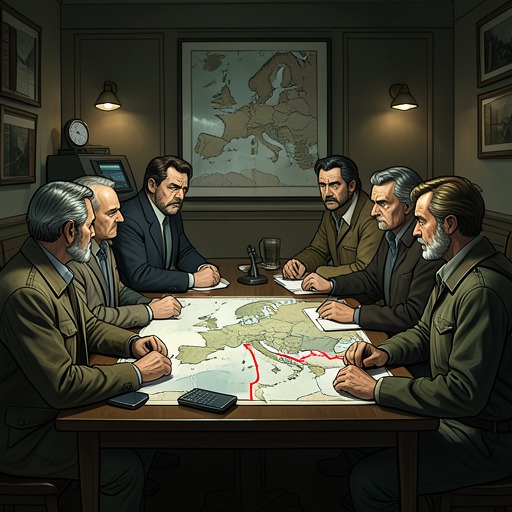
Political danger becomes harder to dismiss when Oskar brings Viktor a copy of the Frankfurter Zeitung in the reading room of the German House. The report describes the electoral successes of the National Socialist German Workers’ Party: eighteen per cent of the vote and more than one hundred seats in the Reichstag. Oskar predicts pogroms. Viktor rejects the prediction, reasoning that Jews are essential to the German economy. His response exposes the distance between the warning and his confidence that economic interdependence will prevent persecution.
An earlier conversation about the ornate interior of the German House acquires greater force in retrospect. Oskar observes that people could be injured if the heavy decoration collapsed; Viktor answers that all of them could be crushed. The narrator presents the exchange as a minor moment in ordinary social life, yet something remains with Viktor: beneath the calm surface of the young country he senses tremors of uncertainty. The image of a massive structure that could fall on everyone turns political instability into a physical possibility. The scene does not make Viktor’s later actions inevitable, but it registers the first disturbance in his confidence that the surrounding order will hold.
At a dinner in the Glass Room, a guest presses the implications of German nationalism more directly. He refers to Germans in Pilsen seeking autonomy, or absorption into the Reich, and asks whether they are demanding their rights. Viktor describes them as victims of political agitation; the guest counters that democracy also entails duties. He then invokes a duty to German blood, arguing that National Socialism stands above democratic reservations. Viktor asks whether this duty is being applied to him as well. The exchange makes visible the coercive logic beneath nationalist appeals: a cultural identity that Viktor has treated as compatible with civic pluralism is recast as an obligation to a political cause.
The Glass Room and the Limits of Neutrality
The Glass Room embodies a different kind of promise. When its large transparent panes are installed between the concrete floors, the space becomes a bright, open interior that Liesel experiences as freeing and full of possibility. Yet the house’s rational balance cannot insulate its inhabitants from politics. At the charity recital, all sixty-five tickets sell within days; the chairs are arranged on either side of the onyx wall, and the piano is moved so that the room directs attention inward rather than toward its glass walls. Viktor uses his opening speech to support the Human Rights League and warn that oppression directed at others may one day reach them.
The recital is at once a cultural event and an act of solidarity. Miroslav Němec performs Brahms, Janáček, and Schubert; the audience’s response to the house itself is as strong as its interest in the music. The evening is described as an artistic success and a public affirmation of support for oppressed people. But the Glass Room remains indifferent to the political meaning its occupants give it. Rainer’s assertion that architecture should have no politics meets a landscape of graffiti: red SdP lettering in Marienbad and swastikas elsewhere. The marks remain for days before workers paint them out, and a newsreel shows a speaker addressing ten thousand torch-bearing soldiers. As these signs gather around the house, Viktor begins transferring money from accounts in Prague and Vienna to a new account in Switzerland without telling Liesel. His private precaution registers a change from faith in the stability of the state to preparation for a danger he does not openly name.
Refuge, Persecution, and Unequal Freedom
The political crisis is also measured through the lives of those with less security than the Landauers. At a gathering about refugees, three adults and three children are brought into the Glass Room before an audience. They stand uncertainly under the direction of a committee secretary: a family of four, a single woman, and her young daughter. The girl’s cracked spectacle lens and the family’s crumpled clothes make their precarious journey legible, while the adults’ public display gives the room the character of a small theatre. The refugees are not merely discussed as a political question; they are made to stand in front of those debating what government should do.
The mother and daughter are Kata and Marika. Elsewhere, Katalin explains that Viktor helped her financially when finding work, paying rent, and buying clothes for her baby became difficult. Her account insists on the material conditions behind dependence: poverty and unstable shelter shape what choices are available. When Liesel asks about their past, Katalin does not accept shame for having taken money. The contrast between the Landauers’ resources and Katalin’s precarious position reveals how unequal access to money and security can make nominal freedom sharply different in practice.
The pressure of antisemitism also enters a personal conversation. When Viktor asks why Katalin is concerned about the proposal to isolate Jews, she tells him that her husband is Jewish. The revelation links political persecution to an intimate relationship and directly challenges Viktor’s earlier confidence that Jewish participation in the economy would protect Jews from hostility. The danger is not abstract to her: it concerns her husband and her family’s place in a society where exclusion is being advocated.
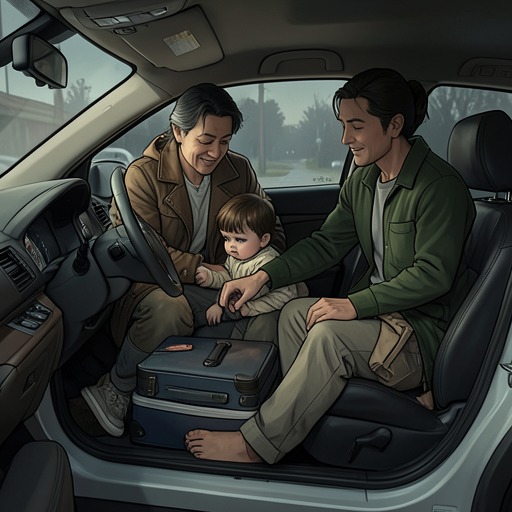
At a later border inspection, an official examines Katalin’s passport and visas while she waits in fear. Viktor tries to speak for her, but a soldier cuts him off and calls another official over. Katalin is then taken by the elbow toward a nearby hut. Marika calls for her mother; Liesel pulls the child closer and assures the officials that Marika is with the Landauers and will be cared for. The scene turns the earlier promise of new freedoms into a test at a border: documents and official authority can separate a mother from her child in moments, while wealth and personal connections do not guarantee control over the outcome. Across these episodes, the novel presents democracy’s fragility not as an abstract constitutional weakness alone, but as a widening discrepancy between its promise of shared rights and the vulnerability of those whom nationalist power marks as outsiders.