Viktor's family flees to Switzerland
The Glass RoomViktor’s family flees to Switzerland when the German occupation makes remaining in Město untenable. The departure turns the Glass Room—an embodiment of order and permanence—into a place they must leave behind, while the flight itself carries them toward uncertain safety. Its central tension is between movement and severance: the family gets away, but the journey cannot preserve the home, relationships, and security they are forced to abandon.
Departure from the Glass Room
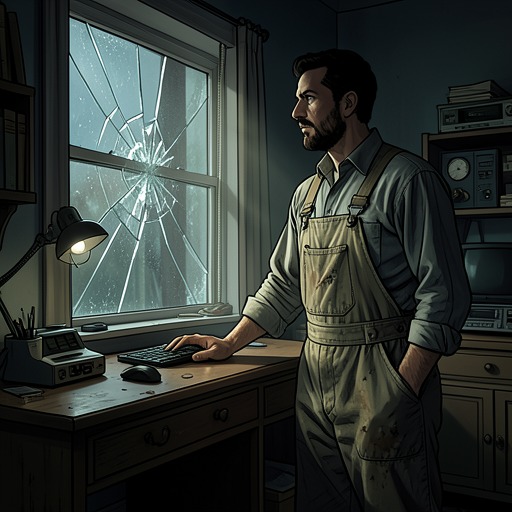
The flight begins in a nearly emptied house. In the Glass Room, the piano remains behind the onyx wall, but almost everything else has been removed. The bare space recalls the room before it was furnished: light, white surfaces, chrome pillars, the onyx wall, and the curved Macassar wood partition. Its rational calm seems untouched by human disorder, yet it is the people who have made the room a home who must now go. Liesel and Viktor pause to look at it, and Liesel asks whether leaving breaks Viktor’s heart.
Viktor does not claim that their return is certain. He squeezes Liesel’s hand and kisses her cheek, then points her toward the others waiting for them. In his briefcase are the family’s birth certificates, marriage certificate, and the deeds to the house: documents that establish identity and belonging even as the family is driven away from the place those papers connect them to. When Liesel asks whether they will come back and when, he refuses to predict the future; he cannot even be sure the flight will be allowed. Her final look at the Glass Room is blurred by rain running down the windows, an image that binds departure to the distortion of memory and the pain of not knowing whether home will be seen again.
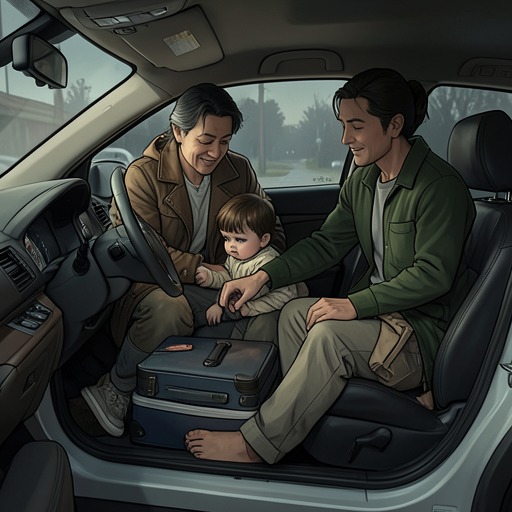
Ten minutes later, a convoy leaves the house along Blackfield Road. Viktor and Liesel ride in the first car with the children. Katalin follows in the second with Marika and the luggage, while Oskar and Hana bring up the rear. The new rules require them to drive on the right, one small but unmistakable sign that the world around them has changed. On Friday the seventeenth, the city is unnaturally quiet. At the Ringstrasse, military vehicles block access to the railway station; soldiers stop the cars, and the family encounters the German military presence that has become impossible to ignore.
A passage governed by permission
The convoy continues to the airfield under a plain, windy March sky. Vehicles marked with iron crosses surround the perimeter, and armed soldiers reluctantly let the cars through after Viktor presents the tickets and explains the problem. Inside, the airport is crowded with people pressing toward airline desks, Czech policemen trying to maintain order, and German soldiers on guard. The Air France flight from Paris is cancelled. The aircraft the family can see through the windows bears the Swiss cross, sharply distinct from the German Hakenkreuz on the military planes nearby; the visual contrast makes the possibility of escape feel both concrete and exposed to interruption.
Liesel clings to Hana, who now seems stronger than she did only days earlier. As officials offer no clear answer, Liesel admits that part of her hopes the authorities will prevent take-off and send them back to Město, to the Glass Room’s familiar quiet. The desire to escape coexists with the desire not to leave. Viktor returns with the news that the Swissair flight to Zurich will depart in fifteen minutes. He tells Laník he can go and urges the family to hurry before the decision changes. The escape has become possible, but not secure: even at the airfield, departure depends on permission that can be withdrawn.
At the gate, a border guard checks the documents. Katalin and Marika’s Nansen passports are glanced at and returned with a shrug. Hana has no passport. She tells the guard that they are just friends, the people left behind. At the doorway she and Liesel exchange kisses and embraces. Hana whispers that she loves Liesel, then lets her go and stands bereft with Oskar. The family crosses the threshold toward the aircraft while the people who cannot accompany them remain on the other side of it. Martin’s excited announcement that they are going to fly, and a hostess’s reply that he is lucky, carry a child’s exhilaration into a farewell shaped by adult uncertainty.
The meaning of escape
The aircraft offers a stark contrast to the Glass Room. Its cabin is a narrow, sloping tunnel of seats, luggage netting, and paper bags, designed for functionality rather than beauty or calm. As the engines drown out Martin’s voice and the plane shudders along the runway, Liesel reaches across the aisle to hold Viktor’s hand. When the aircraft lifts, the ground falls away and Město opens beneath them: the river, streets, factory, and dense clusters of houses. The ascent brings exhilaration, and Liesel cries out at the view.
Then she recognizes the hospital and the slope of grass and trees, and sees the house standing on the hill: the long, low structure shaped by Rainer von Abt’s vision, its blank glass wall and the Glass Room still visible from above. The sight turns the thrill of flight into grief. Liesel weeps at the possibility that she may never see the house again, and at the realization that what has happened belongs to the past while the future remains fearful and uncertain. The flight succeeds, but it does not resolve the question of return. The family’s physical escape is inseparable from the loss of its home and the separation from Hana and Oskar.
Borders and the limits of papers
The journey’s significance is sharpened by the novel’s recurring attention to borders and documents. Earlier, Rainer von Abt remarks on the new passport control at a border that previously had none, calling it an irony of a world that claims to move forward while creating new controls on movement. The family’s flight gives that observation practical force: tickets and official papers are essential, but passage still depends on the discretion of armed authorities. Viktor’s briefcase gathers the records that say who the family is and what it owns; it cannot make the route safe or guarantee that all its companions will be allowed through.
The danger is made especially clear when Katalin and Marika are later stopped at a station. Viktor lays out the family’s papers, French transit visas, Spanish visa, and tickets, but the officials separate Katalin from Marika despite the Nansen passport Katalin presents. She is taken to a hut; Marika cries for her mother, and Liesel pulls the child close, promising that she is with them and will be looked after. Viktor protests that Katalin’s refugee passport is valid, but an official warns him to return to the train or risk detention. The episode shows the fragile boundary between the family’s successful escape and the vulnerability of refugees whose legal documents do not prevent sudden separation.
The later dispute over the house extends the same conflict between legal status and actual power. From exile, the family learns that the government has confiscated its home. The occupation authorities had presented requisition as a legal transfer of municipal property for the war effort, complete with German-language paperwork and official signatures. After the war, Martin argues that the house was first sequestered by one illegal government and then another, rejecting the application of the Beneš decrees to people driven into exile by the Nazi invasion. The escape therefore marks not a clean passage from danger to safety, but the beginning of a longer estrangement: the family gets out of Město, while its claim to the house remains contested and its return uncertain.