Water nymphs
The Glass RoomWater nymphs are the mythic figures through which Tomáš understands Zdenka: first as an emblem of her energy and hope, then as the dancer who seems to take on the form of a water creature, and finally as Ondine, whose legend gives shape to his fear of betrayal. The motif links her northern borderland origins, a patient’s breathing disorder, and the Glass Room’s transparency to Tomáš’s contradictory desire for love and for the danger of losing it.
The water association and Zdenka
When Tomáš meets Zdenka at the hospital gymnasium, her account of growing up in Hranice gives him the first basis for associating her with water. She describes her hometown as standing at the watershed of the continent: streams on one side run north to the Baltic, and on the other run south toward the Danube and the Black Sea. Tomáš makes that geography personal, thinking of her as his rusalka, his nymph. The association begins in their conversation, but it quickly becomes a private imaginative language for his response to her.
Zdenka’s optimism and energy intensify the contrast. She had abandoned her childhood ambition of becoming a ballet dancer and now works in physiotherapy, helping children learn to walk, while teaching dance classes in the evenings. Tomáš is struck by her confidence in the future, so unlike his own despair. His image of her as a nymph therefore signifies not only movement and water, but also a vitality that he feels he lacks. Within days of meeting, they are seeing one another regularly; within a week, they are lovers.
Ondine and the breathing disorder
The water-nymph motif acquires a darker meaning through one of Tomáš’s young patients. The child can breathe normally while awake but stops breathing when asleep, and must sleep with a ventilator to avoid dying of asphyxiation. The medical profession has no explanation for the condition, which is known as the curse of Ondine. The name brings a supernatural legend into the hospital’s clinical setting, where a real and urgent vulnerability is described in medical terms.
In the legend, Ondine is an immortal water nymph who loves the mortal Palemon, although he is betrothed to Berta. Ondine fears that bearing a child by a mortal will cost her immortality, but Palemon promises that every waking breath will prove his faithfulness. They marry, and after their child is born, Ondine becomes mortal. She then discovers Palemon with his former fiancée. Before returning to the river in grief, she curses him: he will breathe while awake, but cease breathing if he sleeps. The tale makes breath a pledge of fidelity and sleep the condition in which that pledge fails. Its tragic logic—love, a promise, betrayal, and a curse—will become a framework for Tomáš’s own fears.
The Glass Room performance
Tomáš and Zdenka know the story by different routes: his patient’s condition has brought him to it, while she knows it through Maurice Ravel’s piano piece “Ondine.” When he asks her to dance, she initially refuses, saying that her ballet-school life is behind her. Eventually, after work, when the clinic staff have gone, she brings out the gramophone she uses in her classes and plays the piece she danced for her final presentation at ballet school.
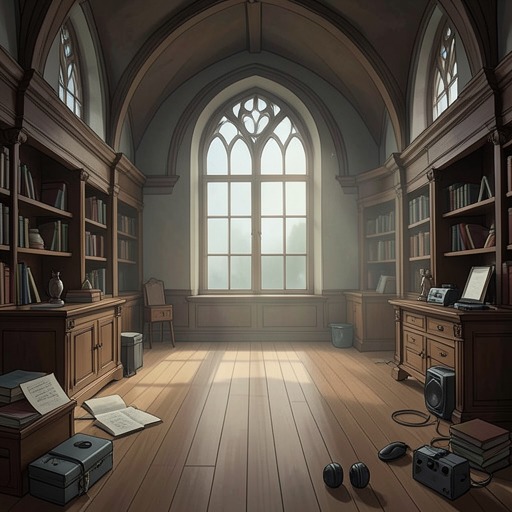
The Glass Room turns her return to dance into a vision through Tomáš’s perspective. Its transparent walls, chromium pillars, onyx wall, and pools of light seem to enclose her like a tank. As she moves to Ravel’s music, Tomáš imagines a water nymph darting through a confined space, repeatedly returning to the room’s centre and to the onyx wall where he sits. The room’s modern transparency does not dissolve the sense of enclosure; it sharpens it. The performance makes the nymph at once apparently free in movement and contained within the glass architecture.
The dance changes Tomáš’s understanding of Zdenka. He sees the figure he had imagined in their first conversation become physically present in her performance, and the passage identifies this as the moment he falls in love with her. His response joins aesthetic wonder with desire: the mythical image is not a substitute for the woman, but a way of seeing her as both an imaginative ideal and a real person. The myth thus enters their relationship through an act of performance rather than through any literal supernatural event.
Exposure, fidelity, and the curse
The Glass Room’s meaning deepens when Tomáš insists that Zdenka dance with the curtains open. He argues that the room’s ideal of tranquillity and openness calls for honesty, and imagines her dancing before the city and the world. The exposure is symbolic: from outside, no observer could make out her figure behind the panes. Even so, the imagined public gaze unsettles Zdenka and excites Tomáš. Her hesitant beginning gives way to a dance in which he again sees her as a water creature, transformed by movement and music. Afterwards, they make love on the floor of the room before the city that cannot see them.
The scene brings together the motif’s two opposing forces. Glass promises visibility, yet the city remains sightless; the performance feels exposed without actually being visible to the public. Similarly, the nymph appears to move freely but is figured as trapped within the Glass Room. The myth’s promise of fidelity also has its opposite: Palemon’s vow is the instrument of Ondine’s curse once he betrays her. The legend makes intimacy inseparable from the possibility of exposure and the consequences of broken trust.
Tomáš later relates the curse to his own infidelity with Eve. He believes Zdenka would be devastated if she knew, and compares her to Ondine, who would die after discovering betrayal. Yet he also wonders whether betraying Zdenka is his way of courting the curse, because the risk might give meaning to his life. He dwells on breathing as a basic condition of existence and on the words inspiration, respiration, and expiration as a sequence suggestive of birth, life, and death. Water nymphs therefore carry more than Tomáš’s image of Zdenka’s beauty: through Ondine, they give narrative form to his guilt, his fear of discovery, and his attraction to the danger that his conduct creates. The story remains a myth used to interpret human choices, not proof that a supernatural curse governs them.