Wiener Riesenrad
The Glass RoomThe Wiener Riesenrad, the great Ferris wheel in Vienna, marks the beginning of Viktor Landauer and Kata’s connection and later becomes a personal emblem through which he remembers her. Its high, turning arc is both a literal feature of the city and a recurring image of attraction, chance, and fate.
The First Ride
Viktor proposes a ride on the wheel rather than continuing to the station for the afternoon train back to Město. His decision is stirred by curiosity and by the young woman’s apparent youth and innocence, but also by her looks, gentleness, and the mystery of someone unknown. Kata initially resists, saying she will not go up, then accepts when he challenges her to prove she is not afraid.
They wait behind families and a young couple. As the wheel rises two hundred feet above them, the attendant holds the crowd back, and Viktor and Kata enter an empty cabin alone. The box rocks gently; Kata totters against him, and he catches her. Their brief, unconsidered physical contact—her hair against his face—makes the ride an intimate first encounter before either has fully named what is beginning.
A Return to the Wheel
The Riesenrad recurs later in Viktor’s memory of Kata. When he travels to Vienna with Liesel to make decisions about the house’s interior, the wheel appears above the city as their taxi leaves the Nordbahnhof. Viktor has been wondering whether he might encounter Kata and how he would feel if he did; the sight of the wheel brings those unresolved questions into the present, even though the imagined encounter does not occur.
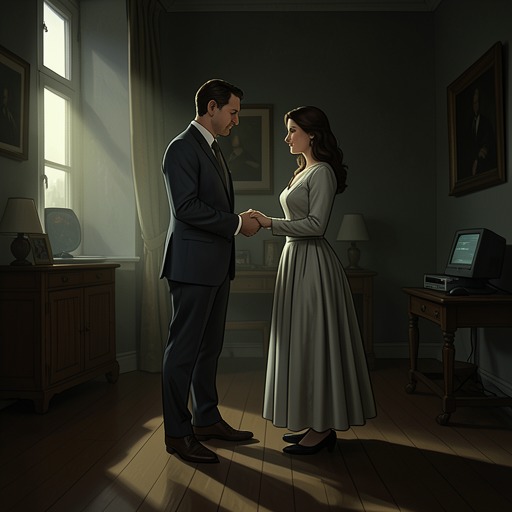
In a later scene, Kata takes Viktor by the hand and pulls him toward the queue, asking whether he remembers their first ride. The gesture reverses the earlier arrangement: this time she initiates the return, while Viktor protests. His memory is immediate and vivid; he recalls that he had seemed so stern that she thought she had done something wrong.
The Wheel as Motif
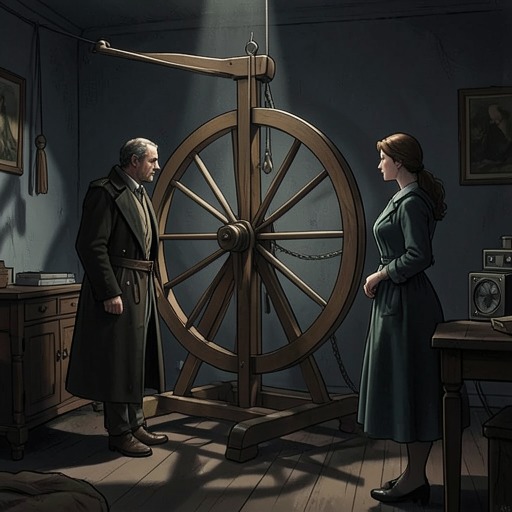
For Viktor, the Riesenrad becomes a talisman. Whenever its arc appears above Vienna’s houses, he thinks of Kata. Its rotation gives physical form to the wheel of fate: their first meeting is shaped by a choice that could have gone otherwise, yet the image persists and draws that moment back into later life.
The wheel therefore joins a concrete place to the novel’s pattern of recurrence. It frames the beginning of Viktor and Kata’s relationship, reappears amid his unsettled thoughts about her, and later carries them back toward the memory of their first contact. Its circular movement suggests return, while its height and motion keep that return suspended between exhilaration and uncertainty.