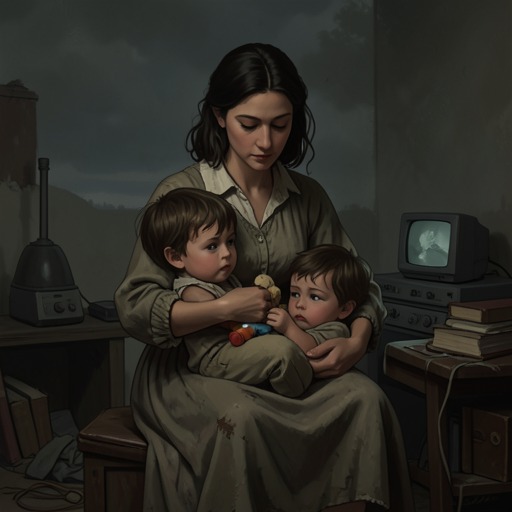
“Ammu and our Baba and you love us Double”
The God of Small Things“Ammu and our Baba and you love us Double” is Estha and Rahel’s answer to Ammu’s question about why they do not need a Baba. It gives their mother a double parental role and makes their certainty about her love a phrase that returns, transformed by her death, as a measure of their loss.
The Children’s Answer
Ammu asks the twins whether they know why she believes they do not need a Baba. They nod, and when she prompts them to explain, Estha and Rahel answer almost together: she is their Ammu and their Baba, and she loves them Double. The expression belongs to the children’s shared understanding of their family: Ammu’s care, rather than the presence of a father, is what they identify as enough.
Public Behavior and Private Affection
The exchange follows Ammu’s warning that people misread the children when they disobey her in public. Her advice about how their behavior appears to others sits beside the children’s intimate declaration of loyalty. In the same conversation, the language of public judgment gives way to the family’s own account of its bond: the twins know who cares for them, even when outsiders draw the wrong impression.
The Phrase After Ammu’s Death
At the crematorium, the narration recalls the ordinary acts through which Ammu loved her children, including using Kipling before bedtime, kissing them goodnight, and helping them dress and combing their hair. It then restates the children’s earlier claim in the past tense: she was their Ammu and their Baba, and she had loved them Double. The return turns a child’s explanation of family into an elegy for the person whose care had made that family feel whole.
Narrative Significance
The expression links a moment of reassurance to the account of Ammu’s cremation. Its repeated wording preserves the twins’ understanding of her love while marking the finality of her absence; the earlier present-tense declaration becomes a recollection as her remains are collected in a clay pot. The phrase’s force lies in that change: what once described the children’s living relationship with Ammu becomes the language through which the narrative recalls what they have lost.