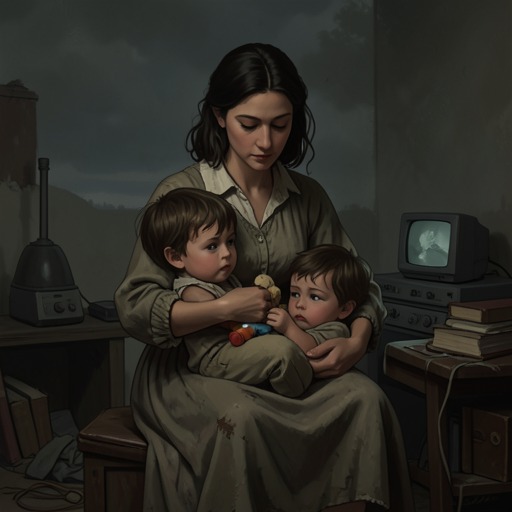
Ammu’s death in the lodge
The God of Small ThingsAmmu’s death in the lodge is recalled as both an intimate bereavement and a source of Estha’s enduring guilt: he believes his words helped silence the distant man inside her, and that she died alone without anyone to lie beside her and talk to her.
The remembered loss
The account links Ammu’s death to Estha’s retrospective sense of responsibility. He calls it his fault that the man in her chest stopped shouting, and his fault that she died alone in the lodge. The phrasing does not describe the circumstances or cause of her death; it records how Estha understands the loss and the absence that marked it.
A future that did not happen
The memory returns to a conversation about what might come next. Estha had insisted that Ammu would never be able to make a future for herself; she answered that it would happen soon, imagining that she would become a teacher and start a school for him and Rahel. Estha’s practical response was that they could afford it because it would be theirs. Against the remembered death, the exchange preserves Ammu’s hope of building a shared life with her children—and the ordinary future that never arrived.
Estha’s guilt and the narrative’s return
The death is presented through recollection rather than as a narrated account of the lodge scene. Estha’s belief that his words contributed to Ammu’s isolation gives the memory its force, but the passage does not establish that his words caused her death. Instead, the contrast between his self-accusation and Ammu’s plans holds together what can be remembered: her imagined school, her promise that the future would come soon, and her death alone. The lost conversation becomes a measure of the distance between the life the family imagined and the life it could not recover.