Delhi
The God of Small ThingsDelhi is a formative setting in the lives of Ammu and Rahel, marking two sharply different departures from the expectations governing women in the family. Ammu is forced to leave when her father refuses to pay for her higher education; Rahel later reaches the city for college, where she remains for eight years without completing her degree. Delhi thus belongs both to a history of choices denied and to one of freedoms exercised without a conventional plan.
Ammu’s departure and the limits imposed on her
Ammu finished school in the year Pappachi retired from his job in Delhi and moved to Ayemenem. He considered a college education an unnecessary expense for a girl, so Ammu had no choice but to leave Delhi and accompany her parents. In Ayemenem, she helped her mother with the housework and waited for marriage proposals. Because the family could not afford a suitable dowry, none came; two years passed, including her eighteenth birthday, without a proposal.
The absence of prospects turned the move from Delhi into a restriction rather than a fresh start. Ammu dreamed of escaping her ill-tempered father and her mother’s unhappy circumstances. Eventually, she persuaded Pappachi to let her spend the summer with a distant aunt in Calcutta, where she met the man she would marry at a wedding reception. Delhi is therefore the point of departure in a chain of limited options: her education ends, the prospect of marriage stalls, and escape offers itself as the route to a future.
Rahel’s arrival and uncompleted education
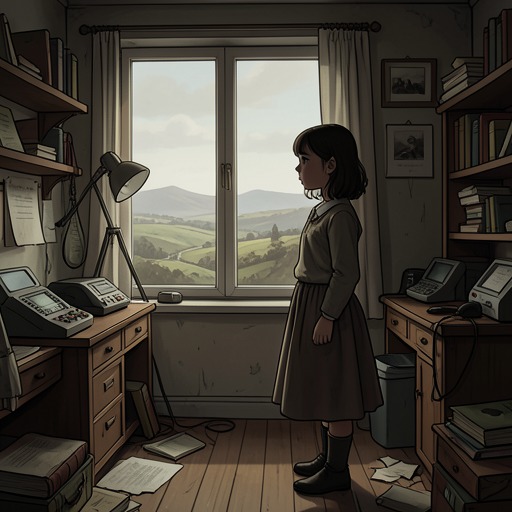
Rahel’s experience reverses the pattern without becoming a conventional success story. After finishing school, she gained admission to a mediocre architecture college in Delhi, though she had neither a serious nor even a superficial interest in architecture. She had simply taken the entrance examination and passed. The staff were impressed by the enormous size of her charcoal still-life drawings rather than their skill, reading her careless lines as artistic confidence.
She stayed at the college for eight years without completing its five-year undergraduate course or earning a degree. The low fees made it possible to remain in the hostel, eat in the subsidized student mess, and scrape by while rarely attending class. Instead, she worked as a draftsman for architectural firms that used inexpensive student labor to produce presentation drawings and left students to take the blame when work went wrong. Her time in Delhi was not a credentialed professional ascent; it was a prolonged interval made possible by modest expenses and casual work.
A life outside prescribed ambition
Rahel’s conduct unsettled the college’s social expectations. Other students, especially the men, were intimidated by her waywardness and near-total lack of ambition, and left her alone. She was not invited to their homes or parties. Her professors, too, were wary of her impractical building plans, set out on cheap brown paper, and of her indifference to their forceful criticism. The city gave her room to persist, but not a secure place within the academic community.
That persistence also marked a distance from family life. Rahel occasionally wrote to Chacko and Mammachi, but she did not return to Ayemenem—not when Mammachi died and not when Chacko emigrated to Canada. Delhi consequently figures not merely as the site of an education, but as the setting of a long separation sustained by Rahel’s choices and departures.
Delhi as contrast in the family’s history
The two women’s experiences make the city’s role relational rather than simply geographical. Ammu leaves Delhi because Pappachi denies her the means to continue her education; Rahel enters a college there without a settled academic purpose and remains despite not completing its course. One woman’s movement is directed by a father’s decision and the absence of a dowry, while the other’s extended stay rests on low fees, hostel accommodation, subsidized meals, and draftsman work.
Delhi does not resolve either life into a straightforward story of liberation or achievement. For Ammu, leaving it initiates a future shaped by restricted options. For Rahel, remaining there permits an unconventional independence, but also accompanies estrangement from Ayemenem and an unfinished degree. The contrast shows how the same broad possibility—education and life away from home—can be withheld from one daughter and lived out, imperfectly and on her own terms, by another.