Quietness and Emptiness
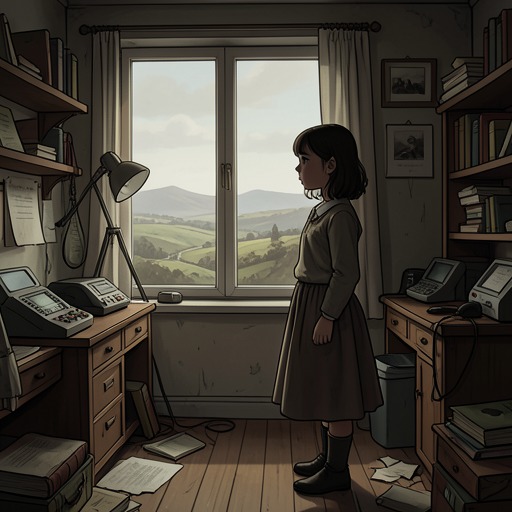
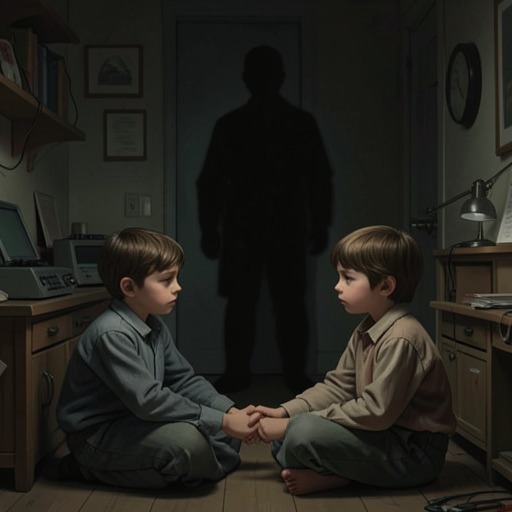
The God of Small Things“Quietness and Emptiness” is an expression for the twins’ wordless state of shared grief, most starkly embodied when Estha and Rahel lie together after their reunion. It also recalls an earlier image of them as separated, motionless figures caught in a story that has escaped its apparent order. Across these appearances, stillness is not peace or resolution: it is the shape their grief takes when language cannot contain it.
Earlier Image: Stillness Inside the Story
The expression first appears in an image of Estha and Rahel as “two-egg fossils,” frozen and not yet grown into the horns of adulthood. A kuthambalam lies between them: they are separated by a physical breadth even as the image binds them together as paired forms. They are trapped in “the bog of a story that was and wasn’t theirs,” a story that began with the semblance of structure and order before bolting into anarchy. Quietness and Emptiness thus names more than silence between two people. It evokes their immobilization within events that have overtaken their ability to direct or explain what has happened.
The Expression Returns at Their Reunion
At the end of the narrative, the phrase returns as Estha and Rahel lie awake together in the dark. The narration emphasizes the duration of their stillness and suspends ordinary distinctions of age: they are “Not old. Not young.” They are instead at a “viable die-able age,” a formulation that places the bodily reality of mortality beside the fragile possibility of continuing to live. Their quiet is not presented as a conversation or a shared account of the past; the scene rests on their presence beside one another.
Grief, Embodied and Unspoken
The expression becomes most precise when the narration says that tears are present and that Quietness and Emptiness “fitted together like stacked spoons.” The image makes their closeness tangible without suggesting that either twin can explain or dispel what binds them. The scene gives grief a bodily form: there is snuffling at the base of Rahel’s throat, a semicircle of teethmarks on her shoulder, and the twins hold each other close long after their encounter is over. The narration explicitly distinguishes what they share from happiness, naming it instead as “hideous grief.” The expression gathers the scene’s silence, physical intimacy, and sorrow without reducing any of them to a spoken confession.
Recurrence and the Love Laws
The return of Quietness and Emptiness connects the twins’ final closeness to their earlier image as fossils separated by the breadth of a stage. Both appearances place them in a silence shaped by a story whose consequences exceed their control. At the ending, however, the distance between the paired figures has become bodily closeness, though that closeness does not undo their loss. The narration closes by saying that they have once again broken the Love Laws, which prescribe who should be loved and how. The phrase therefore holds together intimacy and violation, connection and damage: the twins are no longer separated in the scene, but neither are they released from the grief that has accompanied their story.