Southwest monsoon
The God of Small ThingsThe Southwest monsoon is the annual season of wind and water that transforms Ayemenem’s landscape and gives the novel a recurring measure of time. When it returns in June as Rahel comes home after twenty-three years, the rain makes the place feel at once changed and unmistakably the same: cupboards swell, books soften, and the old house and its surroundings are reclaimed by dampness and growth. Its recurrence binds landscape to memory and frames the twins’ reunion without making return equivalent to recovery.
Seasonal Arrival and Transformation
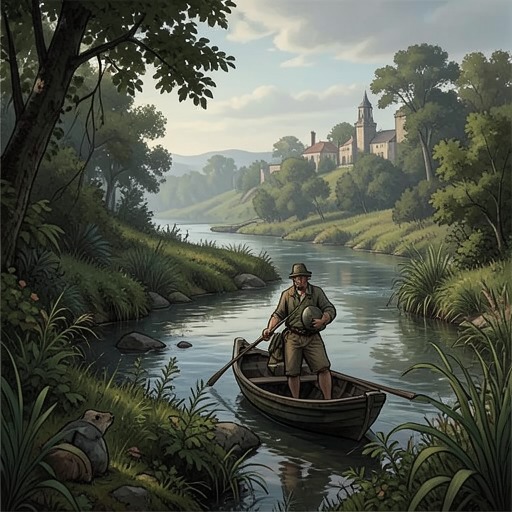
By early June, the monsoon breaks over the countryside and brings three months of wind and rain, interrupted by short spells of sharp sunshine that children seize for play. The change is material and widespread: the countryside turns intensely green, tapioca fences take root and flower, moss spreads across brick walls, pepper vines climb electric poles, and wild creepers push through laterite banks and spill over flooded roads. Boats ply through bazaars, while small fish appear in puddles filling potholes on the highways. The season alters boundaries as well as surfaces, making roads and ordinary routes part of a waterlogged landscape.
The rain’s arrival is not simply a scenic backdrop. It changes how the inhabited world works: flooded roads become waterways, while walls, banks, and fences lose the firmness that separates one space from another. The monsoon’s abundance is vivid and regenerative, but it also makes the familiar environment unstable and difficult to traverse.
Rahel’s Return and the Repeated June Rain
When Rahel returns to Ayemenem, it is raining. The house on the hill appears empty, with its doors and windows locked and its front verandah bare; its moss-streaked walls have softened and bulged with dampness rising from the ground. The garden has grown wild, animated by small creatures, while the downpour strikes loose earth with the force of gunfire. The scene presents homecoming through an environment that is recognizable yet visibly altered by years of weather and neglect.
The twenty-three-year interval does not bring a different season. Rahel has forgotten how damp Ayemenem’s monsoon air can be, but the June Rain itself has not changed. Swollen cupboards creak, locked windows burst open, and books turn soft and wavy between their covers. In the evenings, insects appear around Baby Kochamma’s dim forty-watt bulbs and burn themselves; their crisp corpses litter the floors and windowsills until Kochu Maria sweeps them away with a plastic dustpan. The air smells of something burning. These domestic details make the season an intimate pressure inside the house, not just a spectacle outdoors.
Estha’s Return in the Rain
The rain also surrounds Estha’s return to Ayemenem. Their father sends him back after twenty-three years with a suitcase of smart new clothes and a letter explaining that he has retired from his carbon-black job, is emigrating to Australia for work as Chief of Security at a ceramics factory, and cannot take Estha with him. The letter’s paper has grown soft and folded like cloth, another object altered by the damp climate. Its physical condition quietly parallels the return it records: a life redirected across distance, delivered back to the old household in a form already marked by time.
As the rain hammers down, it revives the reluctant old well and greens the moss-covered pigsty. Tea-colored puddles remain, while the grass appears wet and pleased and purple earthworms move through the slush. Against this renewed landscape, Estha walks on the riverbank in a crushed-strawberry-pink T-shirt, drenched darker by the rain; he knows Rahel has come. The season gathers their separate returns into one charged present, connecting the changed house, the returning brother, and the sister who has come home.
Recurrence, Memory, and Boundaries
The monsoon’s repetition gives the novel a form of seasonal return: after twenty-three years, the same June rain falls, but the people who encounter it carry histories the season cannot erase. Its water revives wells and turns the countryside green, while also swelling cupboards, opening locked windows, softening books, and flooding roads. That double action—renewal alongside damage—suits a homecoming in which recognition coexists with loss and estrangement.
The season’s blurred boundaries have particular narrative force. Tapioca fences take root, creepers cross banks, flooded roads fill with life, and familiar domestic objects yield to dampness. The monsoon makes separation between landscape and memory, past and present, or home and elsewhere feel less secure, while leaving the passage of twenty-three years unmistakable. It does not resolve the history carried back into Ayemenem; it gives that history a weathered, recurring setting in which return can happen without undoing what has happened.