The Terror: Velutha’s death
The God of Small ThingsThe Terror: Velutha’s death is the remembered catastrophe around which Estha and Rahel’s guilt and loss gather. Its significance lies not only in the death itself, but in how the twins revisit the event: they know that responsibility was shared, yet their memory fixes on Velutha as the one victim and on the absence that followed as a lasting break in their world.
Setting and Recollection
The History House’s back verandah becomes the scene through which the event is recalled. By the time the story returns to the place, the verandah has been enclosed and converted into an airy hotel kitchen. That later use makes the site’s transformation part of the memory: a space associated with the police and the twins’ catastrophe has been absorbed into an ordinary commercial interior.
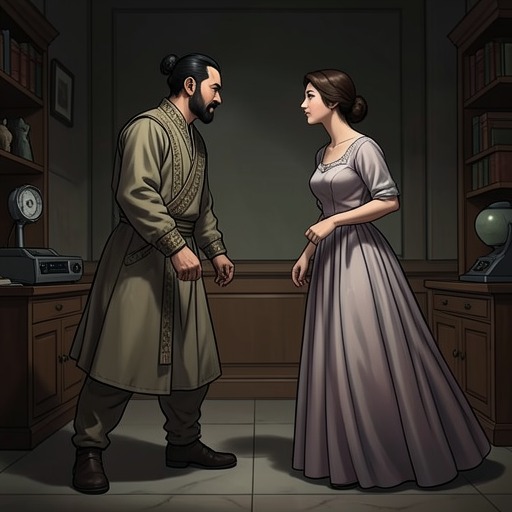
The recollection reaches back to three days before the Terror. Velutha had let Estha and Rahel paint his nails with red Cutex discarded by Ammu. He was a carpenter with conspicuously colored nails when History came to them on the verandah. The policemen who converged there saw the nails and laughed. The small, playful detail endures in the twins’ memory alongside the event’s grave consequences, preserving an image of Velutha that is not reducible to the violence that ended his life.
Responsibility and the Single Victim
As adults, Estha and Rahel recognize that there were several perpetrators besides themselves. They do not understand themselves as the only people responsible for the day’s outcome. Yet their accounting also insists on an asymmetry: there was only one victim, Velutha. The contrast between shared culpability and singular loss gives the memory its moral weight without making the twins’ guilt disappear.
The account places this recognition against the imagined possibility of receiving an outside explanation or consolation. It pictures a counselor telling the twins that they had been children, lacked control, and were victims rather than perpetrators. But the possibility remains hypothetical: they are described as unable to change the roles they inhabit or obtain that kind of exoneration. The passage therefore holds two understandings together—childhood powerlessness and the twins’ awareness that others also acted—without resolving their sense of responsibility into a simple verdict.
Aftermath and Narrative Significance
Velutha’s death leaves what the narrative calls a hole in the universe, through which darkness pours. This image makes the consequence larger than a single loss: the twins experience the event as a breach in the foundation of their lives, leaving them without moorings. The memory gives the catastrophe a continuing presence rather than treating it as an episode safely confined to the past.
That rupture is connected to Ammu’s departure. The twins remember her following through the darkness without turning to wave goodbye, leaving them behind. The image binds Velutha’s death to separation from their mother, presenting the event’s consequences as a chain of losses that reaches beyond its immediate victim. In the twins’ retrospective understanding, the Terror is therefore both a death and the beginning of a lasting abandonment: one person is lost, their mother follows, and the children are left in a world that no longer feels secure.