Vellya Paapen
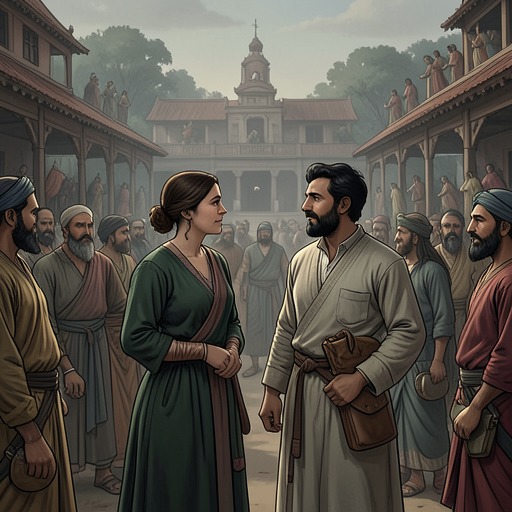
The God of Small ThingsVellya Paapen, Velutha’s father, is an Old-World Paravan whose fierce loyalty to Mammachi’s family and fear for his son converge in the disclosure of Velutha and Ammu’s relationship. His report to Mammachi turns private knowledge into a family crisis and makes him an unwitting agent of the forces that will destroy his son. The novel presents him neither as a simple villain nor as a free actor: his gratitude has been cultivated within a hierarchy that makes him feel indebted for aid his family could never repay.
Identity and Dependence
Vellya Paapen’s life is defined in part by the material debt he believes he owes the Ipe family. After an accident involving a stone chip, Mammachi arranged and paid for his glass eye. Although he was not expected to repay the cost and knew that he never could, he felt that the eye did not truly belong to him. The physical aid therefore becomes a mark of obligation: gratitude bends his posture and shapes his understanding of what he owes his benefactors.
That dependence has a family history. Vellya Paapen remembers that Reverend E. John Ipe gave his father, Kelan, title to the land on which their hut stood, and he recalls the family’s help across generations. Mammachi also arranged for Velutha to be educated and later employed him. In Vellya Paapen’s mind, these acts reinforce a durable bond of loyalty; in the social order around him, they also underscore the unequal terms on which that bond rests.
The contrast between father and son makes this dependence especially visible. Velutha is known for his technical skill and confidence, while Vellya Paapen fears the younger man’s assurance and independence. He cannot identify a particular offense. What unsettles him is Velutha’s way of moving through the world: his lack of hesitation, his willingness to offer suggestions, and his ability to disregard them without open defiance. Vellya Paapen’s fear is thus not a response to a single act, but to a self-possession that seems unsafe within the limits imposed on a Paravan.
A Father’s Fear and the Discovery
When Velutha returns to Ayemenem after years away, Vellya Paapen recognizes the same quickness and sureness he had feared before. He initially remains silent. That silence ends when he sees a small boat crossing the river at night and returning at dawn. He comes to understand that his son is meeting Ammu, and that the relationship has crossed a boundary he believes cannot be crossed. The narrative marks the discovery as a turning point: what Vellya Paapen has seen becomes, in his mind, a threat requiring disclosure.
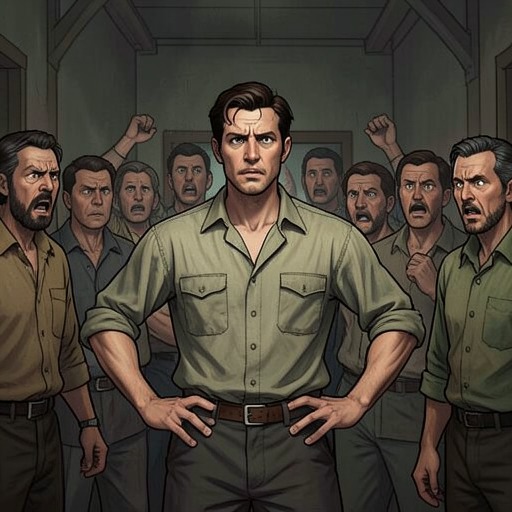
The scene of his confession is framed through his divided response. He goes to Mammachi, looks straight ahead with his glass eye, and weeps with his natural one. He shakes and trembles, unable to control his fear even when Mammachi orders him to stop. He asks God’s forgiveness for having fathered a “monster” and offers to kill his son himself. His words convey the depth of his panic and the coercive moral world in which he has learned to interpret his son’s conduct; they do not make the proposed violence an act he carries out.
Reporting Velutha
Vellya Paapen eventually tells Mammachi what he has witnessed: the boat’s repeated crossings, and the sight of a man and woman together at night. He insists that the whole village knows and that Mammachi will learn of it in any case. He presents his decision to speak as a duty owed by a Paravan and by a man whose body, in his own understanding, remains mortgaged to the family. In this reasoning, disclosure is not merely a personal choice; it is an attempt to perform the loyalty that his long dependence has taught him to regard as obligatory.
The account also shows that Vellya Paapen’s act is shaped by inherited beliefs and by a social hierarchy that gives his report consequences far beyond his control. He explains the lovers’ meetings through a supernatural account involving Kari Saipu’s house, but the practical effect of his testimony is to expose the relationship to Mammachi. His fear becomes information that can be used against Velutha. The novel stresses the imbalance between the father’s limited understanding of what will follow and the severity of the consequences gathering around the family.
The Ghost Story and Historical Irony
Vellya Paapen is also remembered as the man who claimed to have encountered Kari Saipu’s ghost. Two years before the main crisis, he crossed the river searching for a nutmeg tree to make a remedy for Chella, his wife, who was dying of tuberculosis. Recognizing cigar smoke as a brand Pappachi had smoked, he hurled his sickle toward the smell and later boasted that he had pinned the ghost to a rubber tree. He never found the nutmeg tree and had to buy a new sickle, but took satisfaction in believing that his quick reflexes had stopped a dangerous spirit.
The story’s irony lies in what Vellya Paapen does not know. Kari Saipu’s house is the History House, and the narrative connects that place with the consequences that will follow from the lovers’ meetings and the disclosures about them. Vellya Paapen imagines that he has dealt decisively with a ghost; meanwhile, he is being drawn into a human crisis whose consequences he cannot reverse. Later, the novel recasts him as a deputy of History: his tears set the Terror in motion, and by the time he understands his part, he cannot retrace his steps. The contrast between his triumphant bazaar story and this belated recognition makes his action tragic without erasing its consequences.
Aftermath and Narrative Significance
On the night the crisis advances, Vellya Paapen arrives at the kitchen door drenched and shaking, with his real eye bloodshot. He waits outside while Kochu Maria finishes preparing fish and onions, then asks to see Mammachi. When Mammachi comes, he offers her the glass eye, saying that he does not deserve it and wants her to take it back. The gesture makes his sense of debt tangible: in the moment of disclosure, he tries to return the emblem of the family’s assistance before explaining what he has witnessed.
After he calms down, he recounts the family’s acts of generosity and tells Mammachi about the lovers. He weeps with one eye while the other remains fixed ahead, a physical division that echoes his conflict between loyalty to his benefactors and love for his son. He also says that he came because the village already knows and because he considers it his duty. The report exposes Velutha to Mammachi’s anger and helps bring about the chain of events that follows, while Vellya Paapen’s own dependence leaves him unable to protect his son from the power of the household he has served.
When Velutha later returns from Kottayam after having a factory canning machine repaired, he encounters a worker who says, with a smirk, that Mammachi wants to see him. Velutha does not know about his father’s visit. Vellya Paapen is still waiting at their hut, while Kuttappen tries to calm him and listen for his brother’s approach. The difference between what the father knows and what the son knows sharpens the tragic timing: Vellya Paapen’s disclosure has already altered the situation, but Velutha walks into the confrontation without knowing why he has been summoned.
Vellya Paapen’s narrative role rests on this collision of care, fear, and submission. He loves his son and fears for him, yet interprets the discovery through the rules of a social world in which his family’s survival has depended on the goodwill of those above them. His testimony is a consequential action, not a neutral report; at the same time, the novel situates it within obligations he has internalized and a wider historical order that turns private relationships into grounds for punishment. The father’s tears, his offered glass eye, and his confident ghost story are distinct signs of a life shaped by dependence—and of how a person can help set catastrophe in motion without grasping the full design.