August 12 occupancy-exemption regulation
The Heart of a DogThe August 12 occupancy-exemption regulation is a protection against increased occupancy that Professor Preobrazhensky invokes when the house management committee seeks to reduce the space he uses. Its significance in the novel lies in the gap between a rule that formally exempts his apartment and the committee’s determination to redistribute rooms anyway: legal wording becomes the ground on which residents and administrators contest who may live where, and on what terms.
The Regulation and the Committee’s Demand
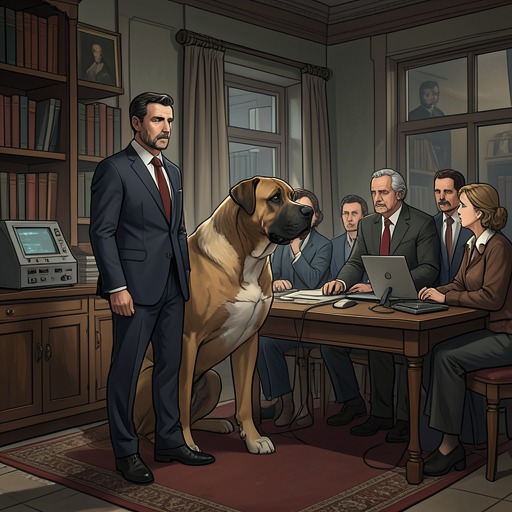
The conflict begins when Shvonder arrives with representatives of the house management, speaking on behalf of a general meeting of tenants charged with increasing the building’s occupancy. Preobrazhensky challenges the committee’s language and asks for a clearer explanation of its authority. When he learns that its purpose is to increase occupancy, he cites the regulation of August 12, saying that his apartment is exempt from any such increase.
Shvonder does not dispute that the regulation exists. Instead, he says the tenants’ general meeting has concluded that Preobrazhensky occupies too much space, since he lives alone in seven rooms. The committee’s position thus shifts from whether the exemption applies to whether the apartment’s actual use is excessive. Its demand treats occupancy as a matter of collective allocation, while Preobrazhensky treats the regulation as a limit on the committee’s power to impose that allocation.
Rooms as Work Space and Living Space
Preobrazhensky answers the charge by explaining how the seven rooms are used. The waiting room also serves as a library; the remaining rooms include a dining room, study, consulting room, operating theatre, bedroom, and servant’s room. He says the arrangement is not even sufficient for his needs, and that he could use an eighth room for a library. His account makes the apartment more than private residential space: it also accommodates his professional work and medical practice.
The committee nevertheless singles out the dining room and consulting room. Shvonder says the general meeting requests that Preobrazhensky voluntarily surrender the dining room in the name of labour discipline, adding that no one in Moscow has a dining room. A woman among the visitors invokes Isadora Duncan as an exception in a brief, pointed interjection. The demand does not resolve the regulation’s formal protection; instead, it presses a collective standard of housing against the professor’s explanation of the rooms’ practical uses.
Administrative Identity and Residential Claims
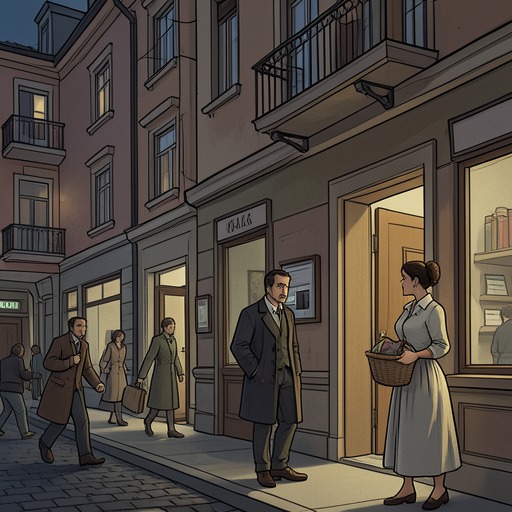
Later disputes show that occupancy is entangled with registration and official identity. Sharikov asks to be entered on the register and to receive an identity card, arguing that people cannot live in Moscow without registration and that he does not want to be arrested as a deserter. Preobrazhensky counters that Sharikov is an unnatural phenomenon and an artefact, but concedes that registration may ultimately be necessary. Shvonder then asks the professor to provide a certificate identifying Sharikov as Poligraph Poligraphovich Sharikov and describing him as born in the apartment. The request makes the home a site not only of contested room allocation but also of an attempt to establish a person’s legal and residential status.
Sharikov later presents three pieces of paper—green, yellow, and white—and claims membership in the residential association and an entitlement to thirty-seven square feet from the tenant in charge of flat No. 5, Preobrazhensky. The specific demand demonstrates how committee membership and documentary recognition can turn abstract occupancy policy into a claim against a particular resident’s space. The regulation’s protection of the apartment does not prevent such competing claims from being advanced through other administrative channels.
From Housing Dispute to Political Pressure
The conflict’s administrative vocabulary broadens further when Sharikov takes a job in the Moscow Cleansing Department, responsible for eliminating vagrant quadrupeds, including cats. He later signs a denunciation accusing Preobrazhensky of threatening Shvonder, making counter-revolutionary speeches, ordering Zina to burn Engels, and keeping Bormenthal secretly in the apartment without registration. The accusations connect the original housing dispute to the power of official status and political allegations: an argument about occupancy and registration becomes a means of threatening the household itself.
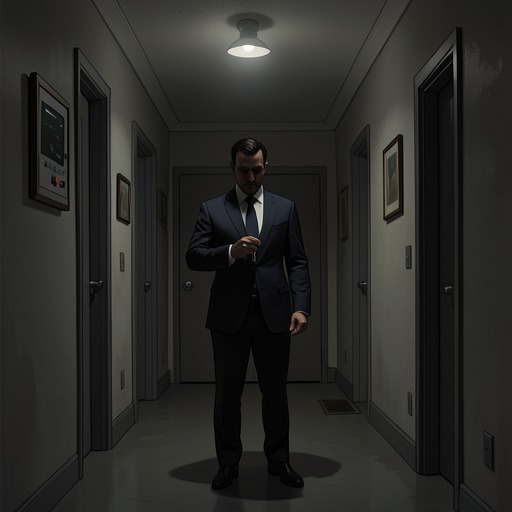
The pressure culminates when men arrive at night with a warrant to search the apartment and arrest Preobrazhensky depending on what the search reveals. The scene does not establish that the occupancy-exemption regulation has been formally revoked; rather, it shows how little a formal housing protection can settle when local administrative claims and accusations reach the point of state intervention. Across these episodes, the rule remains a concrete defense invoked by the professor, but it cannot by itself end the struggle over rooms, registration, and control of the apartment.