Chugunkin’s transplanted testes
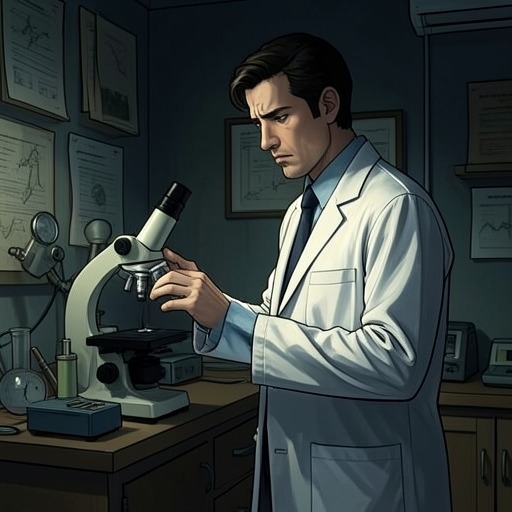
The Heart of a DogChugunkin’s transplanted testes are the human organs taken from Klim Chugunkin and implanted in Sharik during Professor Preobrazhensky’s December 23 operation. Alongside the transplanted pituitary gland, they make the experiment a literal graft of a particular dead man’s body into a dog—and become part of the explanation for the identity and conduct of the resulting creature.
Operation and Provenance
The operation began at 8:05 p.m. on December 23, with Sharik identified in the case record as an approximately two-year-old male mongrel. Under anaesthesia, Professor Preobrazhensky removed Sharik’s testes and replaced them with human testes and associated ducts from a 28-year-old man who had died four hours and four minutes earlier. The procedure then continued with a separate operation on the skull, in which the donor’s pituitary gland was substituted for Sharik’s own.
The operative account records the exchange as a physical act performed by the professor and Doctor Bormenthal. The donor’s organs were kept in sterilised physiological fluid before the operation; the case notes describe the testes being taken from a glass jar and sewn into place. Their documentary identification is later made explicit: the professor names Klim Chugunkin as the man whose bodily material informed the experiment.
Relation to Sharik’s Transformation
The testes are one component of a combined transplant, not the sole cause the novel assigns to Sharik’s transformation. The case report lists them together with the pituitary replacement, after which the experiment produces a new organism capable of normal conversation. The narrative does not isolate the effect of the testes from that of the pituitary or offer a separate physiological account of their influence.
That distinction matters when the professor later assesses the result. He calls the experiment theoretically interesting but questions its practical value, and points to Chugunkin’s history as evidence that the pituitary carries the imprint of an individual rather than generating a universal human type. The testes belong to the same donor and therefore anchor the procedure in the transfer of a particular person’s remains, though the professor’s explicit explanation focuses on the pituitary.
Donor and Interpretation
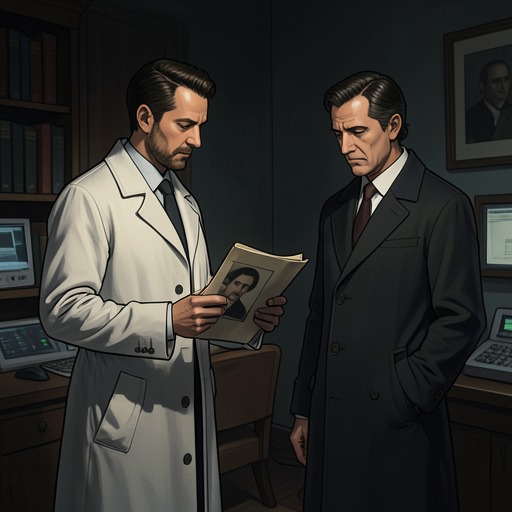
In his discussion with Bormenthal, the professor recalls Chugunkin as an alcoholic with two convictions, associated with the demand to take property and divide it up, and with the theft of the professor’s beaver hat and twenty roubles. This account makes the donor’s personal history central to the interpretation of the experiment: the result is not an abstract, perfected human, but a creature shaped by the material taken from an individual with a specific record.
The professor contrasts that outcome with his original interest in eugenics and the improvement of the human race, explaining that the experiment has instead led him toward rejuvenation. The transplanted testes contribute to the material reality of that transformation, while the professor’s argument about inherited individuality rests most directly on the pituitary. The novel thus presents the organs together as parts of a bodily transfer but distinguishes the professor’s stated theory of personality from the wider transplant itself.
Documentary Record and Aftermath
The operation and its outcome reach the reader through competing forms of record. Bormenthal’s case notes identify the donor, date, time, and procedure, then conclude that the result is a new organism to be studied. Later, rumours about the experiment circulate through the town and newspapers, turning the private medical procedure into public spectacle without reliably describing what happened.
The conflict over the transformed being’s identity also becomes administrative and political. He names himself Poligraph Poligraphovich, and Shvonder proposes a certificate identifying him as a person born in the flat; the professor rejects that account of his origin. Later, the transformed being’s accusation names the professor and others as responsible for the murder of Poligraph Poligraphovich Sharikov. In the closing confrontation, the professor responds by identifying Sharikov as the dog he operated on. The transplanted organs therefore remain part of the unresolved distinction between a documented surgical origin and the competing claims made about the creature’s human identity.