March 1917
The Heart of a DogMarch 1917 is the date Professor Preobrazhensky marks as the beginning of the decline in Kalabukhov House, turning a remembered record of orderly shared life into an account of loss, deteriorating services, and contested ownership. The month also supplies a historical marker for the book’s wider contrast between established routines and the disorder that follows social upheaval.
The remembered change in the house
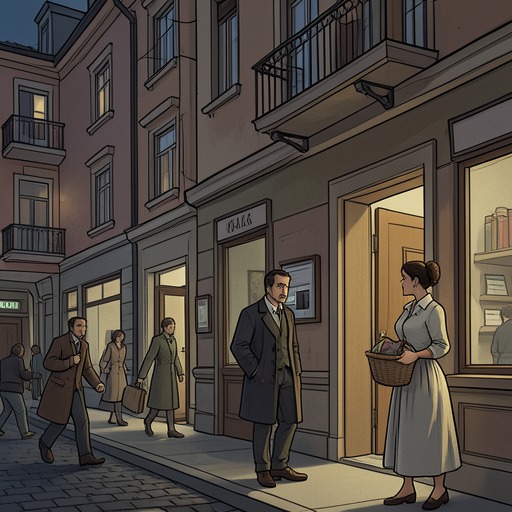
Preobrazhensky says he had lived in the house since 1903 and recalls that, until March 1917, not a single pair of galoshes had disappeared from the rack, even when the front door stood open. The building contained twelve flats, while a steady stream of patients visited his consulting rooms. In his account, the absence of theft had been an ordinary, durable feature of communal life.
He dates the break precisely to March 1917: the galoshes vanished, including two pairs of his own, along with three walking sticks, an overcoat, and the porter’s samovar. The rack itself subsequently ceased to exist. These details make the month more than a passing date; it is the dividing line in his personal chronology of the building.
From lost belongings to daily disruption
The losses are accompanied by changes in the building’s shared spaces and services. Preobrazhensky complains that residents now climb the marble staircase in dirty galoshes and felt boots, that the carpet has been removed from the front staircase, and that flowers have disappeared from the landing. The front entrance has been boarded up, forcing people to use the back door, while the galoshes must be kept under lock and key and guarded against theft.
He also connects the building’s deterioration to the boiler no longer being stoked and the electricity failing regularly once a month, despite having failed only twice in the preceding twenty years. His description gathers small, concrete disruptions into a single post-March 1917 pattern: objects disappear, maintenance lapses, and precautions once unnecessary become routine.
Interpretation and narrative significance
When Doctor Bormenthal describes the place as going to ruin, Preobrazhensky resists treating ruin as an independent force. He argues instead that disorder is produced by people abandoning ordinary work and habits, and his recollection of March 1917 gives that argument a material history: a vanished rack, stolen property, an unmaintained boiler, and damaged communal arrangements. The date therefore anchors his distinction between social upheaval as an abstract explanation and the specific actions and neglect visible in everyday life.