Moscow
The Heart of a DogMoscow is both the terrain of the dog’s precarious early life and the civic framework in which his transformation becomes a question of identity and official recognition. The city is encountered through practical signs—food, shopfronts, warmth, and paperwork—so that its social order is measured first by what a vulnerable animal can find and later by what institutions will certify.
Streets, Food, and Survival
At the opening, the dog is injured after a canteen cook at the National Economic Council spills boiling water on his side. He is left in a doorway as the afternoon darkens, hungry and cold, and thinks about possible refuge and food in the city, including the sausage scraps available in Sokolniki Park during summer. His account makes Moscow legible through immediate needs: a place to shelter, something to eat, and the hazards encountered while searching for both.
The city’s commercial landscape also becomes an informal school. Sharik reasons that Moscow’s many dogs can learn to read the word “sausage,” and he recalls recognizing the blue-green signs of the Moscow State Food Stores as marks for butchers and delicatessens. A mistaken approach to a blue sign leads instead to the Polubizner Brothers’ electrical-goods shop on Myasnitzkaya Street, where he is taught through painful experience that color alone cannot identify a source of food. He learns to look for the distinctive first letter on butcher-shop signs. The episode turns urban literacy into a practical skill acquired by a streetwise observer rather than through formal schooling.
Shelter and the Professor’s Apartment
A chance encounter changes the dog’s relation to the city. A gentleman gives him a piece of Special Cracower sausage and calls him Sharik; the dog accepts the name along with the food that has rescued him from immediate hunger. The urban street, where human care has been scarce, briefly becomes the site of an unexpected attachment.
At the apartment of Professor Preobrazhensky, Moscow appears in sharp contrast to the freezing doorway. Heated radiators warm the rooms, and regular meals replace the dog’s uncertain street diet. In two weeks he eats as much as he had during six weeks outside, while daily meat scraps bought at the Smolensk market and an evening dinner establish a new domestic routine. The dog comes to regard the professor as a near-magical benefactor; the comforts of one well-provisioned household stand out against the hardship he has known elsewhere in the city.
Names and Civic Recognition
After the transformation, the naming of the new man draws Moscow’s administrative life into the apartment. Asked what he will call himself, he answers “Tолigraph Poligraphovich” in the source’s account; when pressed for a surname, he says he will use his real name. Shvonder proposes a certificate identifying the bearer as Poligraph Poligraphovich Sharikov and even suggests that he was born in the flat. The proposal makes identity a matter not only of self-description but also of documents and institutional recognition.
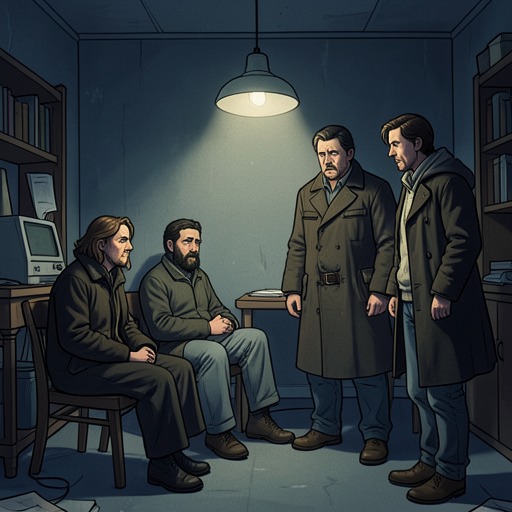
The conflict over the name reaches its public stakes in the epilogue. Ten days after the struggle in the professor’s consulting-room on Obukhov Street, criminal police enter the apartment and charge the professor, Doctor Bormenthal, Zinaida Bunina, and Darya Ivanova with murdering Poligraph Poligraphovich Sharikov, described as a sub-department controller in the Moscow Cleansing Department. The professor answers by treating Sharikov as his operated-on dog. Moscow’s official charge and the professor’s refusal to recognize the identity it names expose the gap between bureaucratic status and the household’s account of what has happened.
The City’s Narrative Function
Moscow is presented at several scales: the street-level struggle for food, the network of shops and markets, the shelter of a heated apartment, and the reach of police and municipal administration. These settings are not interchangeable. Each changes what can be claimed or secured: a sign can mislead, a meal can create dependence, a chosen name can express selfhood, and a certificate can make that name actionable in public life.
The city’s progression through the story therefore links ordinary material conditions with the dispute over who belongs and under what description. Sharik first navigates Moscow by smell and visual clues; later, his human identity is debated through names, certificates, and a criminal charge. The movement from street survival to official accusation gives the urban setting its decisive role: Moscow is where personal transformation becomes a conflict over social and legal recognition.