Sharikov's restoration to dog form
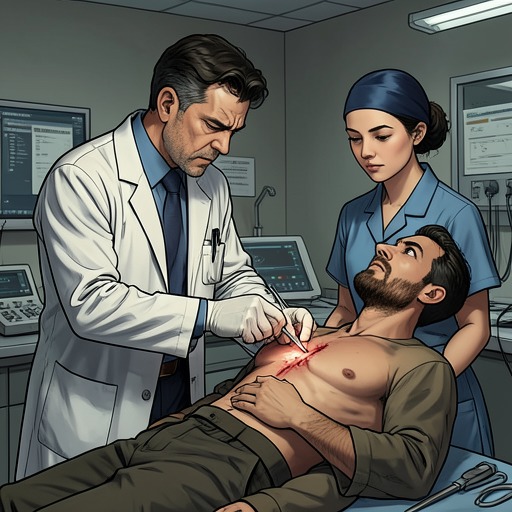
The Heart of a DogSharikov’s restoration to dog form reverses the transformation of Sharik, a male mongrel approximately two years old, into a human being. The reversal returns him to the name and domestic life he had before the experiment, but leaves the professor’s scientific intervention visible in the scar on his skull and in the continuing work that closes the novel.
Identity and the Experiment
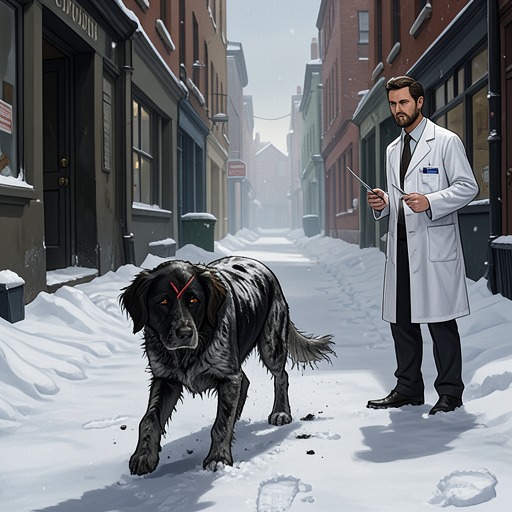
The case begins with an animal identified in the experimental record as a male dog of approximately two years, a mongrel named Sharik. Earlier, the professor had given him that name while offering him a piece of sausage; Sharik’s grateful response makes the name part of a relationship formed before the transformation. After the operation produces a human, however, the dog’s simple name gives way to an asserted full identity: “Poligraph Poligraphovich,” followed by the surname Sharikov.
The restoration therefore reverses more than a bodily change. It returns Sharik to the identity with which the story first presented him, while exposing the distance between an animal’s given name and the official human identity claimed for the transformed creature. The record’s eventual conclusion—that a new organism must be studied as such—had treated the outcome as an unresolved scientific object. The ending instead presents the dog again in the professor’s home.
Names, Papers, and Human Status
During his human phase, Sharikov chooses the name Toligraph Poligraphovich when asked what he proposes to call himself. When asked for a surname, he insists on using his real name. The exchange links naming to a claim of self-definition: he is no longer simply the dog the professor named, but a person asserting an identity of his own.
That identity also becomes a matter of paperwork. Shvonder asks the professor to certify that the bearer is Poligraph Poligraphovich Sharikov and proposes that the certificate describe him as born in the flat. The professor rejects the description as absurd, disputing the premise that Sharikov was born there. The exchange shows how the transformed being’s status is contested between biological origin and administrative recognition.
The dispute reaches a sharper turn when Sharikov’s accusation names the professor, Bormenthal, Zinaida Bunina, and Darya Ivanova as responsible for the murder of Poligraph Poligraphovich Sharikov, identified as a sub-department controller in the City of Moscow Cleansing Department. The accusation treats Sharikov as a person whose disappearance requires a legal explanation. The professor answers by identifying him instead as his dog, the one he operated on. The contrast makes the restoration legible as both a reversal of the experiment and a conflict over which identity the surrounding institutions will recognize.
The Restoration and Its Aftermath
At the end, the narrative returns to the professor’s flat. Sharik lies stretched out on the carpet beside the leather couch while the professor sits in his chair and Bormenthal tidies the consulting-room shelves. The dog remembers the operation only in fragments: he thinks of the circular scar on his skull and concludes that, although his head was altered, the matter is not his concern. By evening, the discomfort associated with the scar is easing, and his thoughts settle into contentment with his life in the flat.
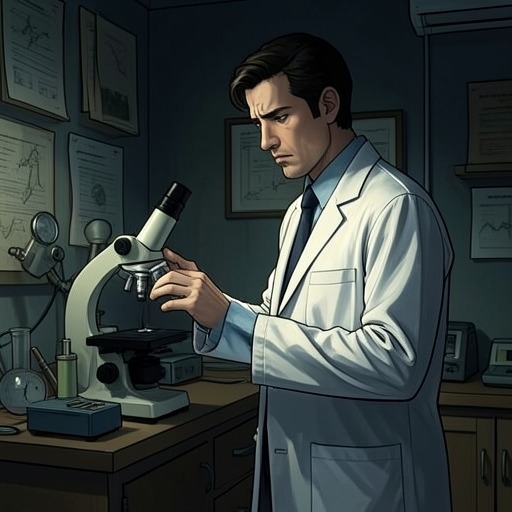
The final scene does not describe the restoration as a procedure in progress. Instead, it establishes its result through Sharik’s presence and perspective, then turns to the professor’s continuing work. Sharik sees the professor reaching into a jar for a brain, searching and examining it while humming the recurring line about the sacred Nile. The return to the dog’s point of view confirms that the humanized phase has ended; the professor’s renewed investigation leaves the scientific question open even as the domestic outcome is plain.
Narrative Significance
The novel frames the reversal through contrasting kinds of evidence. Bormenthal’s signed case notes classify the transformed subject and close with the declaration that a new organism must be studied. Later, newspaper rumors distort events into stories of a Martian on Obukhov Street and a child born able to play the violin. The official accusation against the household supplies yet another account, assigning Sharikov a bureaucratic position and describing his alleged death as a crime. Against these documents and rumors, the final scene offers the dog’s settled presence in the flat.
The restoration also completes a cycle of naming and belonging. Sharik first receives his name from the professor in an act that saves him; as Sharikov, he claims a full name, presses for documentation, and enters public life. At the close, he is again Sharik, resting in the professor’s home. His return does not erase the experiment—the scar and the professor’s ongoing examination remain—but it decisively restores the animal identity from which the transformation began.