
Rabadash’s Fall
The Horse and His BoyRabadash moves from courtly entitlement through invasion and defeat to a constrained reign shaped by the consequences of his own aggression.
increasing Bearing strength in each event
 decreasing
Bearing strength in each eventdecreasingThe Suitor in Narnia
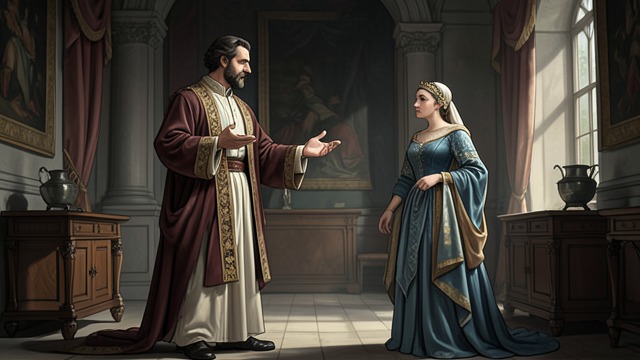
A polished first impression
Courtesy as courtship
Rabadash behaves courteously during his visit to Narnia, impressing Queen Susan with feats and apparent meekness. His conduct gives her reason to consider his suit, though the impression does not survive a return to his own city.
A character concealed
In Tashbaan, Susan sees his pride, cruelty, and expectation that others should submit to him. The difference between the two settings exposes the gap between his performed gentility and his actual character.
Rabadash’s early promise makes his later behavior more revealing. The conflict arises not because Susan changes arbitrarily but because she sees the ruler’s conduct in the place where he believes no restraint is needed.
A Refusal He Cannot Accept
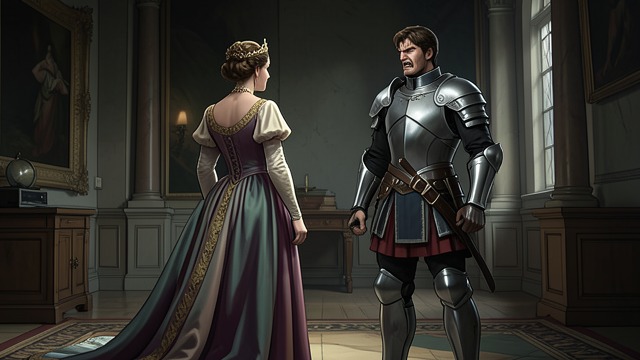
Entitlement at court
Susan says no
Susan refuses marriage to Rabadash, judging his conduct and rejecting the future he offers. Her decision is an exercise of consent, but the prince treats it as an injury to his authority.
Anger becomes policy
Rabadash presses for pursuit after the Narnian ship sails. His frustration leads him to propose invading the free kingdoms and carrying Susan away by force.
The rejection reveals that Rabadash’s courtship has never respected Susan as an independent person. His personal desire becomes a military danger when he tries to use the state to override her choice.
The Prince’s Private War
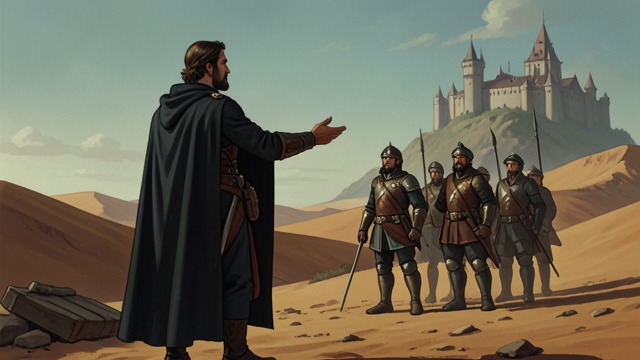
Power without accountability
A calculated expedition
Rabadash proposes taking a small force across the desert, seizing Anvard, and continuing toward Cair Paravel. He expects the Tisroc to disclaim knowledge if the mission fails.
A father’s calculation
The Tisroc approves without promising help or rescue. He sees the expedition as a chance to expand his power and as a convenient way to remove a potentially troublesome eldest son.
Rabadash’s plan is bold in execution but shallow in moral judgment. He assumes other people’s blood and freedom are costs to spend while he preserves his own claim to admiration and power.
The Attack and Humiliation
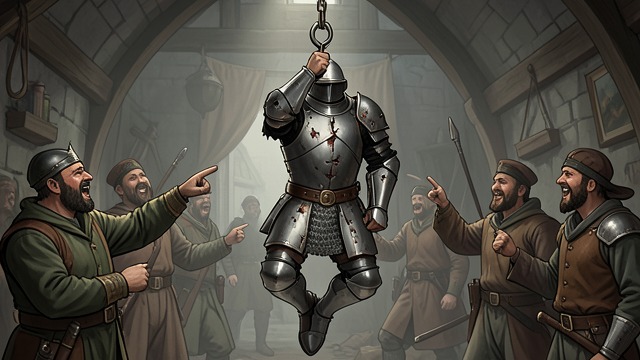
Ambition undone
Defeat at the castle
Rabadash’s force attacks Anvard but is met by King Lune’s defenders and the arriving Narnian army. The loss of surprise leaves his men fighting on several fronts.
The hooked armor
In the battle, a tear in Rabadash’s mail catches on a wall hook, suspending him while others laugh. King Lune rejects his demand for a duel because the invasion began without a challenge in peacetime.
Rabadash loses not only the battle but control over how others interpret his courage. His theatrical self-image cannot undo the fact that he brought war to a peaceful neighbor for personal gain.
The Donkey King
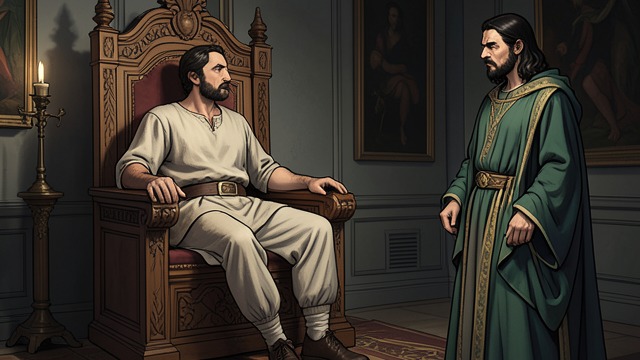
A limited restoration
Transformation and condition
Aslan changes Rabadash into a donkey and declares that he may regain human shape at the temple in Tashbaan. If he travels more than ten miles from the temple after restoration, the transformation will return permanently.
Peace through constraint
Rabadash later becomes Tisroc and is unusually peaceful, in part because he cannot lead distant wars and fears others gaining military fame. His motives remain selfish, but neighboring countries benefit from the limit imposed on him.
The ending does not turn Rabadash into a virtuous ruler. It makes the consequences of his aggression unavoidable and converts the ambition that threatened others into a lasting restriction on his power.
during Rabadash’s visit to Cair Paravel
during the final days of the Narnian visit
the night Rabadash presents his invasion plan
during the Battle of Anvard
after Rabadash returns to Tashbaan
