
The Escape Plan Under Attack
The Horse and His BoyRabadash’s failed courtship becomes a military scheme, while the resistance of the free kingdoms converts his aggression into defeat.
increasing Bearing strength in each event
 decreasing
Bearing strength in each eventdecreasingDesire Turns Coercive
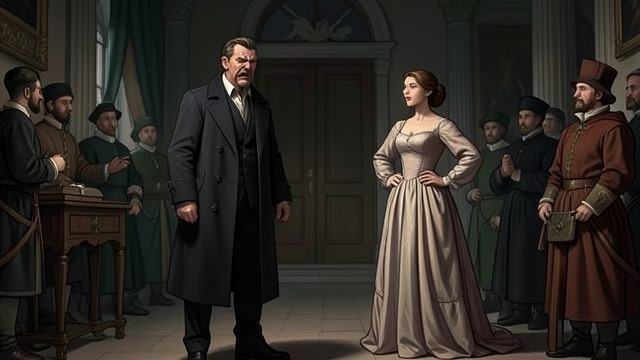
A refusal made dangerous
Private anger
Rabadash interprets Susan’s refusal as an insult to his authority rather than a decision she has a right to make. His desire hardens into a threat against her freedom.
Public consequences
King Edmund recognizes that the delegation may be detained once Rabadash accepts the refusal. The court’s language of hospitality conceals a possible attempt to make Susan a bride or a slave.
The conflict begins in a personal relationship but quickly becomes political. The question is whether a powerful prince can force a foreign queen to comply without provoking resistance from her allies.
The Tisroc’s Calculation
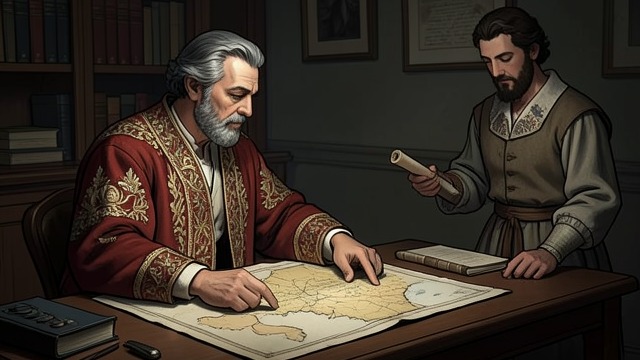
Ambition with deniability
A proposed invasion
Rabadash asks the Tisroc to let him take a small force across the desert, seize Anvard, and carry Susan back. He presents the operation as a fast, limited venture rather than an open war.
A ruler’s cold consent
The Tisroc recognizes the political opportunity and the risk. He allows the expedition while planning to deny responsibility if it fails, revealing how courtly family affection gives way to calculations of power.
The scheme turns rejected desire into a threat against Archenland and Narnia. Its secrecy does not make it less aggressive; it is designed to gain territory while preserving an excuse for the ruler.
The Desert Route
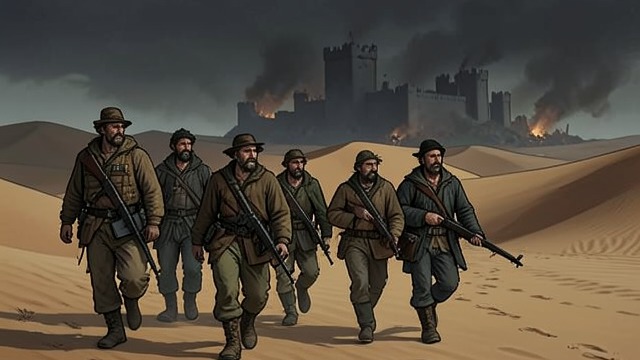
Surprise as strategy
A hidden approach
Rabadash intends to cross the desert quickly and strike Anvard before King Lune can prepare. The geography that usually protects the northern kingdoms appears vulnerable because his force uses an unfamiliar western way.
A race against warning
Aravis learns of the plan in the palace, and the fugitives attempt to reach Anvard first. Their limited supplies and difficult route make the expedition’s speed a direct threat to the kingdom.
The desert crossing transforms a concealed proposal into an approaching military crisis. The outcome depends on whether information can outrun a force that believes secrecy has already secured success.
Anvard Under Assault
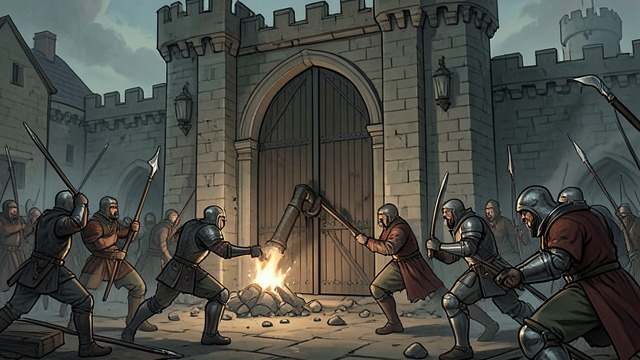
The siege begins
A rushed attack
Rabadash’s men batter the castle gate while defenders resist from the walls. His plan has lost the element of surprise, but the attackers still have numbers and a battering ram.
Relief arrives
King Lune’s forces and the Narnian army approach in time to attack the besiegers from outside. The defenders sally from the gate, while Narnian fighters and Great Cats disrupt the Calormene position.
The fight resolves the conflict through coordinated resistance rather than a private duel. Rabadash’s expedition is forced into battle on ground where his speed and secrecy can no longer protect him.
A Betrayer Judged
The failed challenge
Honor denied
Rabadash demands release and a chance to fight King Edmund. King Lune refuses, arguing that an unannounced attack on a peaceful castle makes Rabadash a traitor rather than an honorable challenger.
Consequences beyond defeat
Aslan transforms Rabadash into a donkey and sets a condition for his restoration and future movement. Returned to Tashbaan, he rules cautiously because the restriction makes distant warfare impossible.
The invasion ends not with Rabadash’s death but with a humiliating limit on his power. The result protects neighboring countries while making the aggressor live within the consequences of his own choices.
after Susan rejects Rabadash in Tashbaan
the night Aravis overhears the palace council
the day Rabadash’s force crosses the desert
the afternoon Rabadash reaches Anvard
after Rabadash’s defeat at Anvard
