Cair Paravel
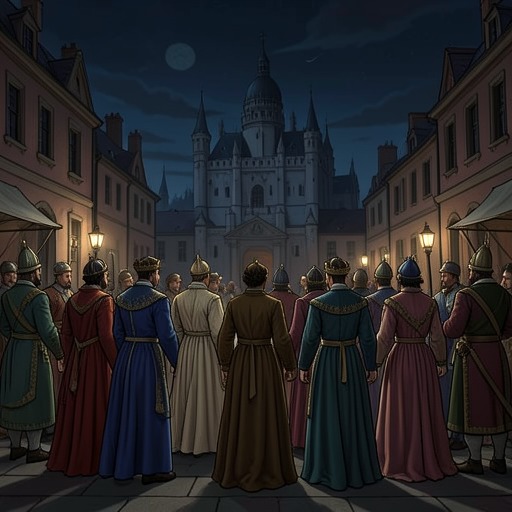
The Horse and His BoyCair Paravel is the Narnian royal residence whose role in the story shifts from a place of diplomatic hospitality to a target in Rabadash’s invasion plan. It connects Queen Susan’s earlier encounter with the prince to his later attempt to reach her by force, and figures in Shasta’s hopes of traveling north to Narnia.
Royal Residence and Diplomatic Setting
Queen Susan recalls that Rabadash had once been a guest at Cair Paravel, after ambassadors from the Tisroc came to Narnia to negotiate a marriage. During that visit, he behaved with courtesy, and Susan remembers his conduct as markedly different from the way he later acts in his own city. The recollection makes Cair Paravel part of the contrast between Rabadash’s diplomatic presentation and his subsequent aggression.
A Destination in Shasta’s Hopes
While Shasta eats with the Narnian party, Tumnus describes the life awaiting him if he returns north: visits between Narnia and Archenland, and a future visit to Cair Paravel, where King Peter has promised to make him a knight. Tumnus then tells him to prepare to board and go home. The prospect gives Cair Paravel a place in the imagined future Shasta longs for, though at this point he is thinking more about reaching Narnia by ship than about the friends waiting for him at the Tombs.
Target of Rabadash’s Plan
Rabadash proposes crossing the desert with two hundred horsemen, taking Anvard by surprise, and then riding through the pass into Narnia toward Cair Paravel. He expects the High King to be away and imagines finding the residence with its gates open. His stated plan is to occupy it with as little Narnian bloodshed as possible, wait for the Splendor Hyaline to arrive with Queen Susan aboard, and take her back to Anvard. In this scheme, the residence is not merely a royal seat: capturing it is the step that would bring Rabadash within reach of his intended prize.
Narrative Significance
The references establish a sharp reversal in Cair Paravel’s place in the political story. It first belongs to a period of guest-right and apparent courtesy, remembered by Susan as evidence of how differently Rabadash once behaved; later, it becomes the objective of a covert military plan. Against that threat, Tumnus’s description presents the same place as part of Shasta’s hoped-for homecoming and future belonging.