Cor
The Horse and His BoyCor is the lost heir of Archenland, raised under the name Shasta in a poor fisherman’s household in Calormen. His journey from captivity to his family’s court binds the story’s escape narrative to a political crisis: the boy carried away as an infant becomes the messenger whose warning helps save Archenland, fulfilling a prophecy made at his birth. His eventual recognition also reveals that the identity he had lived under was only one part of his history, while making him the lawful successor to King Lune.
Identity and Early Life
Cor was born in Archenland as the twin brother of Prince Corin, and, as the elder by twenty minutes, he is the king’s heir. He was separated from his family as an infant through the actions of Lord Bar, a former Lord Chancellor who had fallen from office and secretly worked for the Tisroc. Bar had learned of the prophecy concerning the newborn prince and arranged to remove him from the kingdom. After the abduction, the baby was taken to the coast and put aboard a ship, while King Lune pursued the kidnappers by sea.
The ship was overtaken after a six-day pursuit and a battle on the seventh day. Before Bar’s ship was captured, he sent the child away in a small boat with one of his knights. The boat was never found by the pursuers. Aslan later brought it ashore at a place where Arsheesh, a poor fisherman in southern Calormen, found the child. Arsheesh raised him as his son and called him Shasta, without disclosing the royal identity that had been lost at sea.
Shasta’s childhood in Arsheesh’s household was defined by work and dependence. He mended and washed nets, cooked supper, and cleaned the cottage. Arsheesh’s temper varied with the success of his fish sales; when the catch sold poorly, he found fault with Shasta and sometimes beat him. The boy’s daily duties and limited freedom stood in sharp contrast to the northern lands he imagined but had never been allowed to visit.
Escape and the Journey North
The turning point in Shasta’s life came when he learned that Bree, the horse in Arsheesh’s possession, was a talking horse from Narnia, kidnapped as a foal and held in human service. Bree had concealed his nature to avoid being displayed and guarded more closely. He and Shasta planned to escape together, seeking the free northern country Bree remembered and praised. Shasta’s participation in this flight begins the passage from an imposed household identity toward the discovery of his birth and kinship.
The escape does not mean that Shasta immediately understands freedom as a settled condition. When Bree questions whether it is right to use money taken from their captors, he recognizes that a free and talking horse must not steal, but argues that the fugitives are prisoners in enemy country and need money to obtain food for Shasta, who cannot live on grass and oats. The exchange sets practical need beside the moral habits of a life under captivity. Shasta is not merely carried north by events: he shares decisions with Bree and travels as a companion, though the horse’s experience initially gives him greater knowledge of the dangers and customs they face.
Bree’s sense of shame later makes their different responses to danger a point of conflict. After the encounter with the lion, Bree says that he is unfit to return to the free horses of Narnia because he fled while others were in danger. He contrasts his own retreat with Shasta’s return toward the danger, despite Shasta’s lack of a sword, training, or good example. That judgment helps establish a distinction between a title or boast and the action that proves courage; Shasta’s conduct is recognized even by the companion who had previously considered himself the more experienced one.
Prophecy, Warning, and Recognition
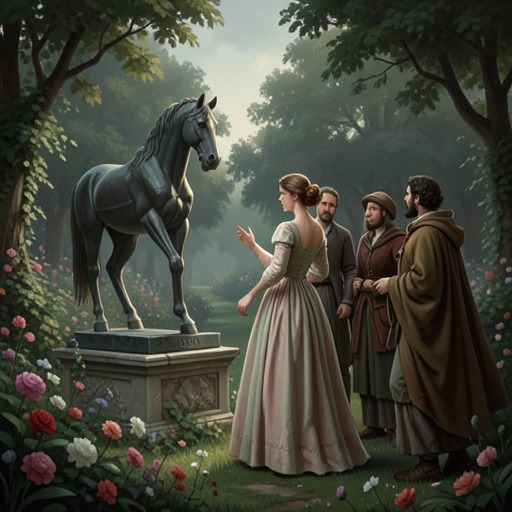
At Cor’s birth, a wise Centaur in Narnia saw the twins and prophesied that one of them would save Archenland from the deadliest danger the country had ever faced. The prophecy pleased King Lune and the queen, but it alarmed Lord Bar, who had already been dismissed from his office and was secretly sending information to the Tisroc. Believing that the prophesied child had to be removed, Bar kidnapped Cor and set in motion the chain of events that left him in Calormen.
Cor later learns the circumstances of his birth and disappearance after being reunited with his family. He recounts that Bar’s ship was pursued by King Lune’s warship, that Bar was killed in the sea battle, and that a knight escaped with the child in a boat. Cor regrets not knowing the knight’s name, recognizing that the unknown man must have kept him alive, even at personal cost. The story accounts for his arrival in Arsheesh’s household without claiming that Cor himself knew or remembered the events.
The prophecy is fulfilled through the crisis at Anvard. When Rabadash’s two hundred horsemen crossed the Arrow, Cor had not yet delivered his message; Aravis recognizes that Archenland was then in its greatest danger. Cor’s warning and arrival help bring the kingdom’s danger to the attention of its defenders. Asked whether he feels proud to have fulfilled the prophecy, he says that he feels frightened. The response makes the fulfillment less a triumphal claim than a sober recognition of the peril involved.
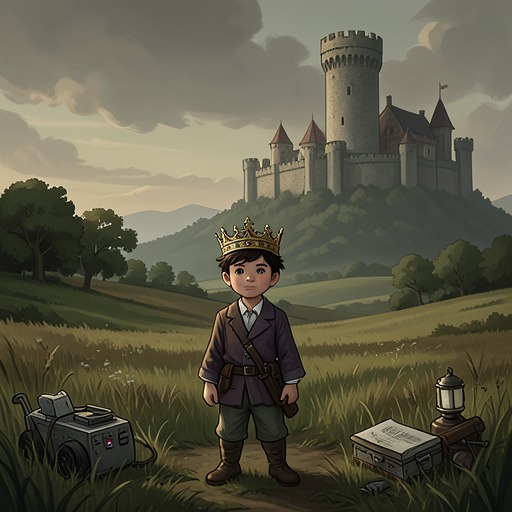
Cor’s identity is finally recognized when Aravis sees him at the court. She first notices a boy dressed as a prince, with a thin gold band around his fair hair and a bandaged left hand. Looking at his face, she recognizes Shasta. Cor explains that King Lune is his father, that he and Corin are twins, and that his true name is Cor. The revelation joins two relationships that had seemed separate: the boy Aravis travelled with is the missing son of the king she now stands before.
Kinship and the Succession
Cor’s reunion with King Lune does not make him treat kingship as a personal prize. He is pleased to discover that Lune is his father even apart from the king’s rank, but he is also apprehensive about the education and responsibilities awaiting him. When Lune tells him that he will inherit the crown, Cor protests that Corin would otherwise become king and apologizes to his brother for what his return means. Corin, by contrast, celebrates the prospect of remaining a prince rather than becoming king.
The succession is settled by law, not by the king’s preference or either boy’s wishes. Lune explains that Cor is the elder twin by twenty minutes and therefore his heir. When Cor asks whether the king can choose a different successor, Lune answers that the king is subject to the law that makes him king and cannot abandon his crown any more than a sentry can leave his post. The exchange presents inheritance as an office governed by a rule binding even the ruler who administers it. Cor’s restoration to his family therefore also alters Corin’s expected future, although Corin welcomes the change.
Cor’s relationship with Aravis is renewed through recognition and conversation rather than a formal announcement alone. Once she identifies him, Cor speaks quickly to assure her that his princely clothing and attendants are not an attempt to impress her or pretend to be someone different. His concern indicates that he wants their relationship to remain continuous with their earlier acquaintance, even as his name, family, and rank have changed. Aravis accepts the revelation and responds warmly to his true name.
Character and Narrative Significance
Cor’s story is structured around a return that is also a discovery. He travels north believing himself to be Shasta, a fisherman’s son escaping a life of service; only after the journey and the danger at Anvard does he learn that he is an Archenland prince. His return does not erase the experiences that shaped him in Calormen. Instead, those experiences lead him into the position foretold at his birth: the displaced child becomes the person whose warning is needed to protect his homeland.
His significance rests on the convergence of personal identity, providential guidance, and public duty. The infant’s rescue by an unknown knight, the boat’s arrival where Arsheesh could find it, and Cor’s eventual reunion with King Lune all connect his private history to events beyond his knowledge. Yet the prophecy is fulfilled not by birthright alone: Cor must travel, carry a warning, and arrive while the kingdom is in danger. At the end, the law of succession gives him a future he did not seek, while his father’s account of the castle’s defenses marks the beginning of his preparation to guard it.