Golden Age of Narnia
The Horse and His BoyThe Golden Age of Narnia is the era of peace and prosperity under Peter as High King in Narnia, with his brother and two sisters ruling as kings and queens beneath him. It frames the adventure with an ideal of freedom and safety, set against the bondage and imperial contempt encountered in Calormen; yet the woodland people’s confidence can also shade into complacency when danger returns.
Setting and Political Order
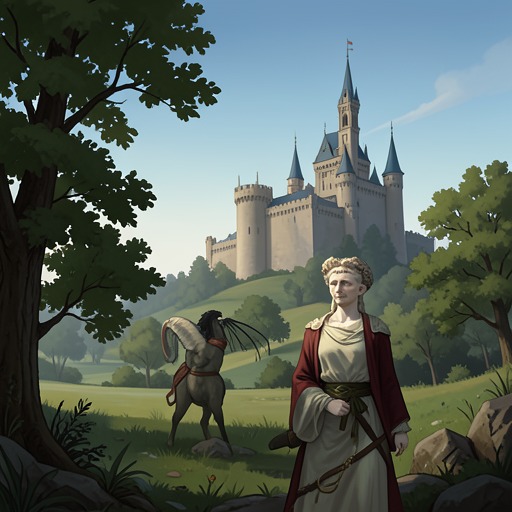
The story opens by locating its adventure across Narnia, Calormen, and the lands between during this Golden Age. Narnia’s political order is described through Peter’s high kingship and the subordinate rule of his siblings. Later, the woodland creatures recall this same period as one in which the Witch and the Winter had passed and Peter ruled at Cair Paravel, connecting the age’s prosperity with the end of an earlier season of danger.
The Golden Age is not merely a label for royal chronology. It establishes a world in which safety is widely felt, and in which the contrast between free Narnia and hierarchical Calormen is consequential. Rabadash and the Tisroc speak of Narnia as a small, supposedly unprofitable country that should be conquered; their contempt reveals how sharply their imperial assumptions oppose Narnia’s independence.
Freedom and Bondage
Shasta’s life in Calormen supplies an intimate counterpoint to the age’s Narnian promise. He lives with Arsheesh, a poor fisherman whom he calls Father, and performs household and fishing-related work: mending and washing nets, cooking supper, and cleaning their cottage. When Arsheesh’s fish sell badly, he finds fault with Shasta and may beat him. Shasta’s lack of freedom is made visible in ordinary routines and the threat of punishment, not only in grand political declarations.
Bree’s history makes the same contrast through captivity. Stolen as a foal after straying south beyond Archenland, he has spent years enslaved by humans, concealing that he can speak and pretending to be an ordinary, witless horse. He explains that disclosure would have led to being exhibited at fairs and guarded more closely, closing off his chance to escape. His longing for Narnia is therefore bound to a concrete alternative to captivity: the free life he associates with his homeland.
The contrast also carries an ethical complication. When Shasta questions whether they may use money taken from their captors, Bree reasons that captives in enemy country may treat it as booty, especially because they need it to obtain food for Shasta, who cannot live on grass and oats. Freedom is a condition they seek, but their escape still requires decisions shaped by immediate need and by the restraints of human society.
Security and Its Limits
The Golden Age’s protection is reflected in the woodland community’s response to news of danger near Anvard. Creatures gather in the wood, agree that someone ought to act, and yet continue talking rather than setting a response in motion. The narrator presents their delay as a consequence of living so safely and happily that the smaller woodland peoples have grown somewhat careless.
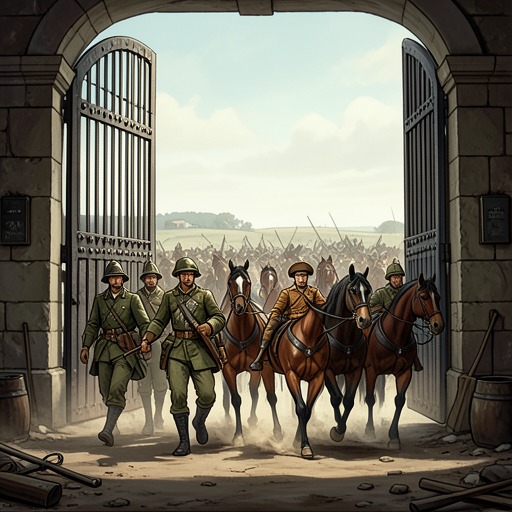
The arrival of Duffle, a Red Dwarf, and a stag changes the tenor of the gathering. Duffle insists that the news must reach Cair Paravel and that the army must be called out to aid King Lune. The scene places the age’s security beside its vulnerability: peace has made ordinary life easy, but defending that peace requires practical action when danger appears.
Narrative Significance
The Golden Age functions as both a setting and a standard against which the book’s opposing social worlds can be measured. Shasta’s hard domestic service and Bree’s concealed identity show what life under control looks like; the freedom associated with Narnia gives their flight its destination and meaning. At the same time, the woodland creatures’ initial inaction prevents the ideal from becoming effortless security. The age is peaceful, but its preservation depends on recognizing threats and responding to them.