Rabadash
The Horse and His BoyRabadash is the Calormene prince whose frustrated pursuit of Queen Susan turns into an unauthorized invasion and whose defeat ends in a transformation that makes his humiliation part of his political legacy. His story moves from entitlement and threats to enforced restraint: after becoming a donkey, he can return to human form only at the temple in Tashbaan, and cannot travel far from it without being transformed again.
Identity and Desire
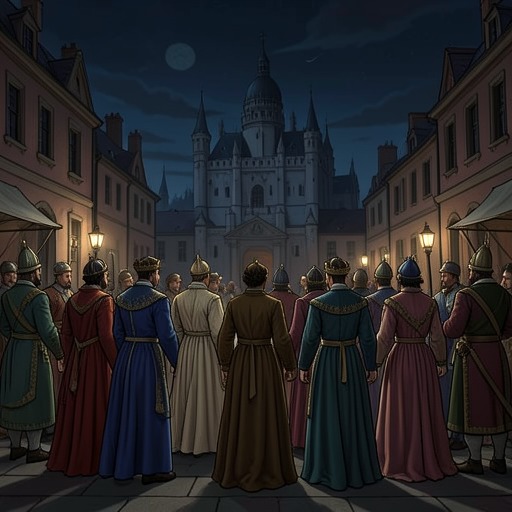
Rabadash is introduced in the court of Narnia as a powerful prince whose expectations have been challenged by Queen Susan’s reluctance to marry him. King Edmund reports that Rabadash is unused to having his will crossed and has grown angry at the delay and uncertainty of Susan’s answer. Although he maintains a courteous manner, Edmund detects a threat beneath it. The court’s concern is not abstract: Rabadash’s courtship is backed by rank and force, and the possibility of Susan being compelled to marry him is openly raised.
After Susan and the Narnian party have left Tashbaan, Rabadash goes to his father, the Tisroc, furious that the departure was not pursued at once. He blames the delay for losing the chance to overtake them and speaks of Susan in abusive terms. His insistence that he must have her is paired with a plan to make the desire a matter of state. Rather than accept her refusal, he proposes invading Narnia, killing its rulers and their kin except Susan, and taking her as his wife after she has been taught a lesson. The private grievance has become a proposed campaign of conquest.
The Invasion Plan
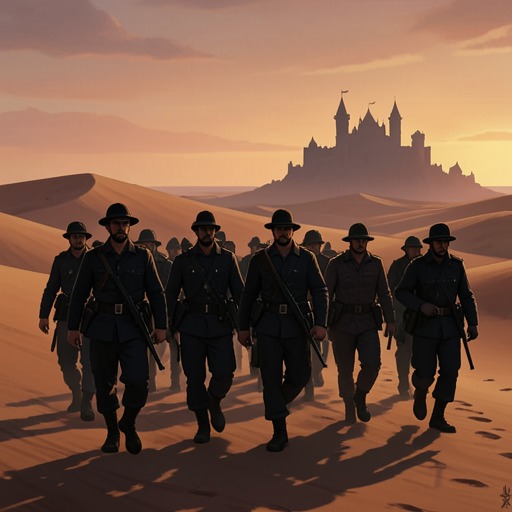
The Tisroc refuses to declare open war on Narnia. Rabadash responds by offering a way to attack while allowing his father to deny responsibility if the venture fails. He proposes taking only two hundred horsemen across the desert that night, reaching King Lune’s castle at Anvard on the second morning, and capturing it before its defenders can prepare. From there, his force would pass through Narnia toward Cair Paravel. Rabadash expects to find the castle open and its High King absent, then wait for the ship Splendor Hyaline to bring Susan back and seize her as she comes ashore.
The scheme depends on surprise and on a narrow distinction between Rabadash’s independent expedition and the Tisroc’s official policy. Its target is not merely a fortress: Anvard is the route into Archenland and onward into Narnia, while Susan is the personal prize around which the plan is organized. The invasion therefore exposes the political consequence of Rabadash’s refusal to accept a choice he cannot control. His desire for Susan does not soften into negotiation; it supplies the motive for an attack on a kingdom at peace.
Defeat and Public Humiliation
The invasion ends in defeat at Anvard. During the battle, a Giant’s spiked boot tears Rabadash’s chain mail without crushing him. Later, while fighting King Edmund near the gate, Rabadash stands on a mounting block and strikes down from above; when he tries to jump down, the torn mail catches on an old hook in the castle wall. He is left suspended above the ground, his armor caught and riding up, while the victorious defenders gather around him.
Rabadash demands to be released so that he can fight Edmund, or killed if Edmund is too cowardly to face him. King Lune rejects the challenge. By attacking Anvard in peacetime without first sending a challenge, Rabadash has, in Lune’s judgment, forfeited the standing of a knight and is to be bound and taken inside rather than granted an honorable duel. The legal and political judgment reverses Rabadash’s own language of courage: his defeat is not an invitation to heroic combat but the consequence of breaking the conditions that would make such combat legitimate.
The contrast between his reputation at home and his treatment in Archenland sharpens the humiliation. In Tashbaan, people had always taken him seriously; at Anvard, his failed attempt to appear formidable ends with him caught on a wall as the assembled company laughs. He is then kept in a comfortable room and given an excellent supper, but spends the night stamping, roaring, and cursing instead of eating. His distress is intensified by the collapse of the authority and fear on which he has relied.
Judgment and Transformation
When Rabadash is brought before the rulers in chains, King Lune offers to release him unharmed on conditions, citing both the law of nations and the poor upbringing he attributes to the land of slaves and tyrants. Rabadash refuses even to hear the terms. He demands that his bonds be removed and that he be given a sword, treating restraint as an insult rather than an opportunity to end the conflict. When Corin taunts him, Lune rebukes his son: a man should not be taunted unless he is stronger than his opponent.
Aslan then appears among those gathered and warns Rabadash that his doom is near but can still be avoided if he relinquishes pride and anger and accepts the kings’ mercy. Rabadash does not accept the warning. Instead, he continues to threaten Susan and insists that he will not desist from taking her. His refusal supplies the immediate setting for Aslan’s judgment: the transformation follows not simply the military defeat but Rabadash’s renewed declaration that he will persist in the same coercive aim.
Rabadash changes from a man into a donkey in full view of the gathered company. His ears lengthen, his face alters, and his arms become forelegs ending in hooves; his human speech lasts only slightly longer than his human shape. His plea that he would rather be a horse than a donkey ends in a bray. The scene turns the means of his self-presentation into its undoing: the prince who has relied on threats and grandeur is left in a form that provokes laughter and cannot command obedience.
Aslan declares that justice will be mixed with mercy. Rabadash is not condemned to remain a donkey permanently: he must stand before the altar of Tash in Tashbaan at the great Autumn Feast, where the transformation will fall away in public. But the reprieve carries a strict limit. As long as he lives, going more than ten miles from Tashbaan’s great temple will make him a donkey again, and after that second change there will be no return. The condition makes the restoration possible while binding Rabadash’s future movement and power to the place where he must appear.
Rule and Reputation
King Lune responds to the transformed enemy with pity and offers to send him back by boat to Tashbaan, with suitable transport and food. Rabadash answers with a bray and a kick at a guard. The gesture shows that the change has not made him conciliatory; the mercy is provided by others, not earned through a newly expressed change of heart.
Rabadash is taken to Tashbaan and brought to the temple at the great Autumn Festival. There, before four or five thousand witnesses, he becomes a man again, and the event cannot be concealed. When he later succeeds his father as Tisroc, he proves to be the most peaceable ruler Calormen has known. The reason is the restriction imposed by his transformation: he dares not travel more than ten miles from the temple, so cannot lead a war in person. He also does not want his Tarkaans to win military fame at his expense, since that could help bring about a ruler’s overthrow. His restraint benefits the smaller countries around Calormen, but the narrative makes clear that it arises from self-interest and constraint rather than a demonstrated renunciation of ambition.
During his reign Rabadash is called Rabadash the Peacemaker to his face. After his death, people call him Rabadash the Ridiculous, the name under which he appears in histories of Calormen. His reputation outlasts both his recovery and his political title: Calormene schoolchildren still use “a second Rabadash” for someone who has done something unusually foolish. The lasting joke condenses his arc into a public reversal. The prince who tried to make others submit becomes a cautionary name, while the limitation imposed on him produces peace beyond his borders for reasons that remain ignoble.