The Narnian party escapes Tashbaan
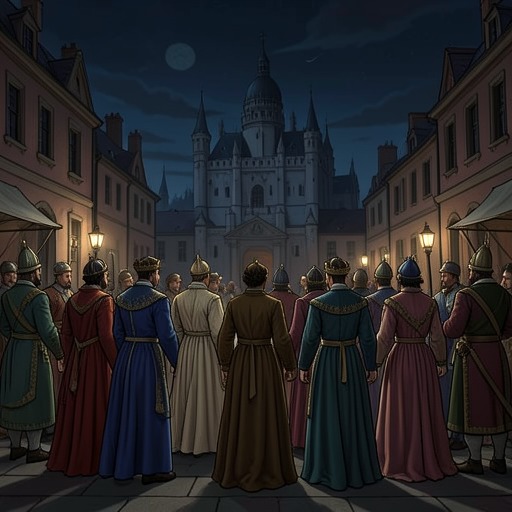
The Horse and His BoyThe Narnian party escapes Tashbaan through a deception devised by Tumnus: the Narnians pretend to prepare a banquet aboard their ship, the Splendor Hyaline, while arranging to leave under cover of darkness. The scheme turns the hospitality that has protected them into a dangerous interval after Queen Susan’s refusal, and converts the visible business of entertaining Prince Rabadash into concealment for a flight toward the north.
Causes and Danger
King Edmund identifies the turning point in the party’s position. While Rabadash still hoped that Queen Susan would accept him, the Narnians had been treated as honored guests. Edmund fears that her unequivocal refusal will strip away that protection and leave them no better than prisoners. The danger is not a future possibility detached from the negotiations: the prince’s expectations have been the condition of their freedom, and rejection threatens to make their hosts into captors.
That change makes departure difficult as well as urgent. Tumnus names the immediate problem as reaching the ship with stores without being seen and stopped. The party cannot simply walk down to the harbor openly; it needs a reason for carrying supplies aboard and for the Narnians’ movements to attract no suspicion. The escape therefore begins as a problem of appearances: they must make preparations for a real departure look like preparations for a feast.
Tumnus’s Banquet Stratagem
Tumnus proposes that the Narnians invite Rabadash to a great banquet aboard the Splendor Hyaline for the following night. The message is to be phrased graciously enough to give the prince hope that Queen Susan is weakening, but carefully enough that she does not pledge her honor. The invitation exploits the very prospect that makes the Narnians vulnerable: Rabadash’s hope of winning Susan gives him a reason to believe the apparent hospitality, while the queen’s wording preserves her freedom to refuse.
The promised feast supplies a public explanation for going down to the ship throughout the day and taking goods aboard. Tumnus’s plan calls for the party to spend its money at the bazaars on fruit, sweetmeats, and wine, as people genuinely preparing a banquet might do. Magicians, jugglers, dancing girls, and flute players are also to be ordered for the supposed entertainment. These details give the deception its practical texture: the party will not merely announce a feast but perform its preparations, making the false occasion visible enough to disguise its real purpose.
The plan is built around a sharp difference between what the prince is meant to infer and what the Narnians intend. To Rabadash, the banquet should appear to signal that Susan may relent. To the guests, the food, performers, and shipboard arrangements should make the Narnians’ movements seem ordinary. In fact, the preparations are logistical cover for loading the ship and gathering the party aboard before anyone recognizes that the invitation serves as bait rather than a promise of reconciliation.
Departure and Escape
The Narnians intend to be aboard that same night. Once it is quite dark, the signal is immediate: sails are raised and oars put out, and the ship heads to sea with its nose northward. The plan’s sequence is essential to its success: the banquet invitation explains the daytime activity, darkness provides cover for the actual departure, and the ship’s rapid transition from supposed venue to escape vessel leaves the party able to get away before the deception is exposed.
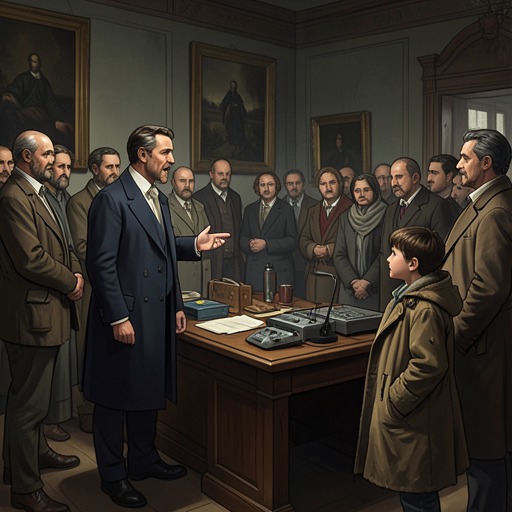
The mood changes as the plan takes shape. Edmund first speaks plainly of danger; after hearing Tumnus’s proposal, he recognizes its promise and joins in completing the plan. Tumnus dances, and Queen Susan catches his hands and swings with him, telling him that he has saved them all. Their movement gives visible form to the relief the scheme has produced, though the plan still depends on the Narnians being able to reach the ship and leave without being intercepted.
Pursuit and the Ship
One of the lords raises the obvious risk that Rabadash will pursue them. Edmund answers with an assessment based on the shipping he has seen in the river: there is no tall ship of war and no swift galley there. He believes the Splendor Hyaline could sink anything the prince could send after it, and doubts that the party would be overtaken at all. His confidence concerns the means of pursuit, not the original danger of being detained in Tashbaan; the escape depends first on getting away, after which the Narnians expect their ship to give them the advantage.
Sallowpad the Raven endorses Tumnus’s counsel as better than anything the group could have devised in seven days of council and urges them to eat and then set to work. The practical next step is already under way: the lords and creatures stand aside for Edmund and Susan to leave first, while Shasta remains in the room. Tumnus tells him to stay where he is and promises to bring him a small feast, explaining that Shasta need not move until everyone is ready to embark. The escape is thus arranged not as a sudden dash by isolated individuals but as a coordinated departure whose preparations include keeping Shasta safely in place until the party is ready.
The episode’s defining reversal is that a feast that will not occur is the means by which the real journey becomes possible. The Narnians answer the threat of confinement not with open confrontation in Tashbaan but with a carefully staged appearance of continued courtship and hospitality. Once night falls, the banquet’s promised shipboard gathering becomes the actual departure: sails up, oars out, and the Splendor Hyaline bound north.