The king’s duty
The Horse and His BoyThe king’s duty is a standard of leadership that joins legal obligation to personal sacrifice. King Lune describes a king as first into a desperate attack and last out of a desperate retreat, and says that in a famine he must endure a poorer meal while maintaining a public bearing of confidence. The rule makes authority a burden to be carried for the people, not a license to command them for private advantage.
The Law and the Crown
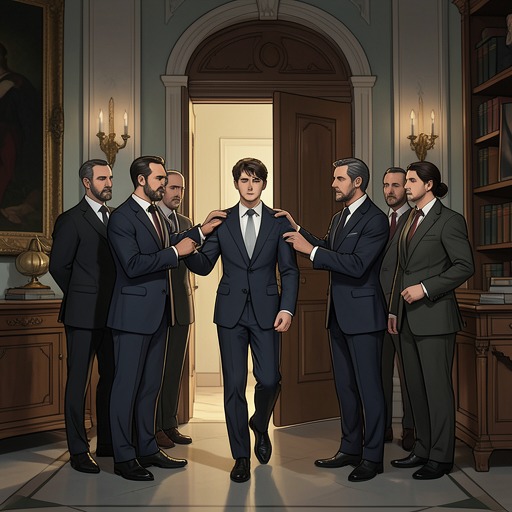
When Cor learns that he, rather than Corin, is heir to the throne of Archenland, he wishes the succession could be changed. King Lune answers that the crown passes according to law, and that the king himself is subject to the law that makes him king. His comparison of a king to a sentry at his post presents office as an obligation that cannot simply be set aside when unwelcome. Corin’s relief at being spared the crown and Cor’s reluctance to inherit it sharpen the distinction between personal preference and public duty.
King Lune’s explanation makes succession more than a question of who wants power. The lawful heir must accept the office because the institution, rather than a ruler’s whim, determines who holds it. In this account, the king is not above the rule that grants him authority.
Service in War and Famine
King Lune defines the conduct expected of a ruler in crisis through a pair of battlefield duties: the king must be first in a desperate attack and last in a desperate retreat. The sequence rejects a leader’s claim to safety while others bear the danger. It is a compact measure of responsibility, expressed through where the ruler stands when the community faces peril.
The corresponding duty in famine concerns both material hardship and public example. King Lune says that when hunger comes in bad years, a king should wear finer clothes and laugh more loudly over a scantier meal than anyone else in the land. The contrast is deliberate: outward dignity does not excuse the ruler from sharing scarcity, and the king’s composure is part of how he serves during hardship. The passage frames this not as a privilege of rank but as a demanding form of accountability.
Contrasts with Domination
The story places this ideal beside Calormene attitudes that treat other peoples and dependants as objects of power. Rabadash argues that Narnia is small enough to conquer with a thousand spears in five weeks and describes its freedom as an affront to empire; he proposes a sudden expedition against Anvard and Cair Paravel to seize the country and Queen Susan. His plan treats military advantage and personal desire as grounds for rule, in direct contrast with King Lune’s account of a ruler’s obligations.
Other episodes give that contrast a more ordinary, domestic scale. Arsheesh assigns Shasta the work of mending and washing nets, cooking supper, and cleaning their cottage, and may beat him or find fault when the fishing has gone badly. Bree recounts years of enslavement after being captured as a foal, while the horses’ captivity makes escape and freedom central to their choices. King Lune later judges Rabadash’s attack on Anvard in peacetime without a challenge to be treacherous, refusing to treat force alone as honorable authority. Together, these contrasts distinguish lawful kingship and service from coercion, enslavement, and conquest.