
Enclosure and Escape
The House of Bernarda AlbaDoors, windows, walls, and imagined journeys chart the women’s longing to leave a household that repeatedly converts escape into further confinement.
increasing Bearing strength in each event
 decreasing
Bearing strength in each eventdecreasingThe First Locked Room
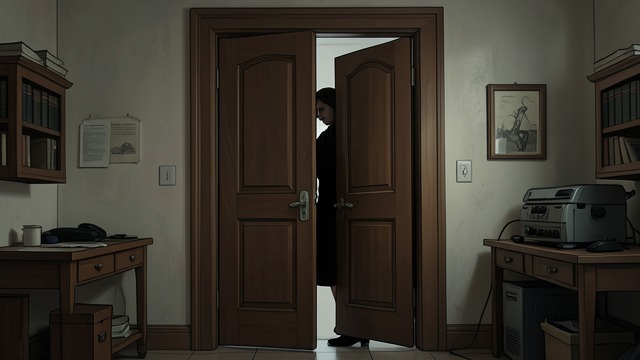
The First Locked Room
A Prison Established
María Josefa’s voice comes from behind a locked door before she appears. Her confinement is treated as a household necessity.
A Pattern Introduced
The family’s first visible response to disorder is to shut someone away. This pattern will extend to the daughters through mourning and surveillance.
Bricked Windows Imagined
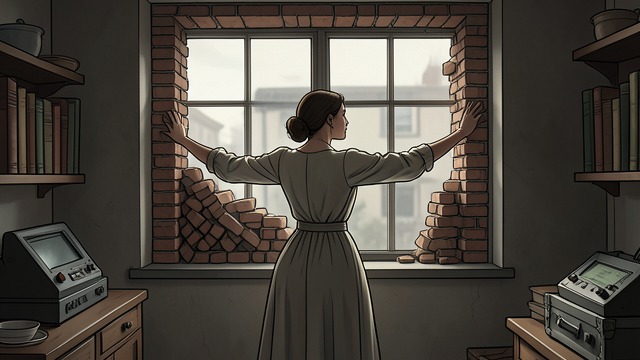
Bricked Windows Imagined
The Outside Barred
Bernarda tells the daughters to imagine that doors and windows have been sealed with bricks. The metaphor gives her decree the force of a physical wall.
Freedom Desired
Adela immediately rejects the prospect of confinement. The conflict between closed architecture and open movement becomes a central dramatic image.
The Courtship Window
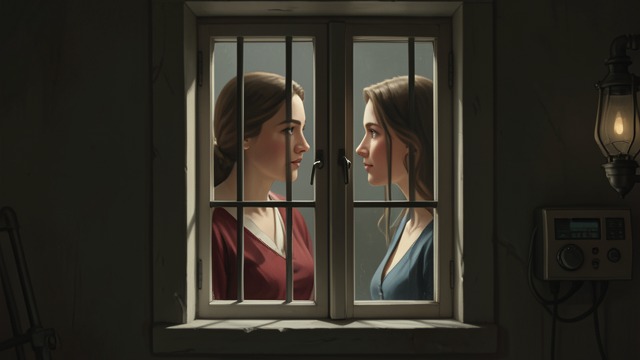
The Courtship Window
Contact Through Bars
Pepe courts Angustias at a window traditionally used for courtship. The arrangement permits communication while keeping the household’s boundaries intact.
A Permeable Boundary
Adela’s attraction and secret movements make the window more than a barrier. The threshold allows desire to enter even as the house seeks to exclude the outside.
The Seashore Imagined

The Seashore Imagined
An Open Destination
María Josefa dreams of going to the shore and living among open houses and waves. Her imagined landscape directly opposes Bernarda’s closed rooms.
Freedom as Fertility
The sea and foam suggest movement, children, and renewed life. The fantasy makes the household’s emotional sterility more pronounced.
No Escape After Death
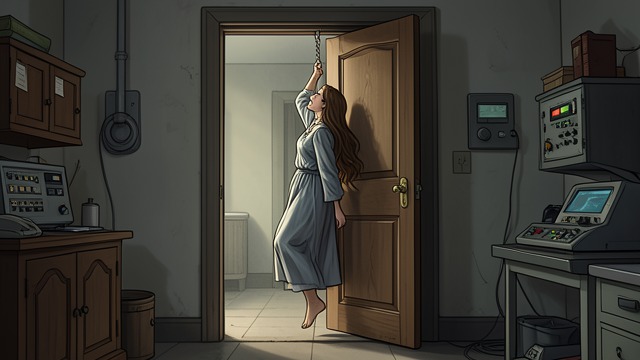
No Escape After Death
The Door Opened Too Late
Adela’s locked door yields only after she has hanged herself. The physical barrier cannot protect her or undo the crisis.
Confinement Renewed
Bernarda announces another period of mourning and commands silence. The household closes around the survivors rather than releasing them.
Act One, before the funeral ends
Act One, after the mourning order
Act Two, as the sisters discuss Pepe’s visits
Act Three, during María Josefa’s song
Act Three, ending
