
Amelia’s Quiet Accommodation
The House of Bernarda AlbaAmelia’s cautious and often passive manner reflects how fear and social rules narrow the choices of women who do not openly rebel.
increasing Bearing strength in each event
 decreasing
Bearing strength in each eventdecreasingA Cautious Sister

A Cautious Sister
Seeking Reassurance
Amelia listens as Martirio describes her fear of men and the family’s history of scandal. She reacts with sympathy but rarely pushes toward action.
Fear Learned at Home
Her caution reflects a world in which desire is associated with danger and disgrace. She has learned to treat uncertainty as a reason to withdraw.
The Engagement Observed

The Engagement Observed
A Limited Response
Amelia says Angustias has good qualities and initially presents herself as pleased by the engagement. Magdalena challenges her, suggesting that this approval conceals envy.
The Family’s Economy
Amelia recognizes that inheritance explains why Pepe has chosen Angustias. Her restrained response shows an ability to see the arrangement without being able to alter it.
Fear in the Dark

Fear in the Dark
A Frightening Vision
Amelia describes the white stallion as ghostlike and frightening. Her response contrasts with Adela’s wonder at the night sky and moving animal.
Safety in Withdrawal
Amelia’s fear keeps her from joining Adela’s outward-looking imagination. She remains aligned with caution even as the household grows more dangerous.
A Witness to the Struggle
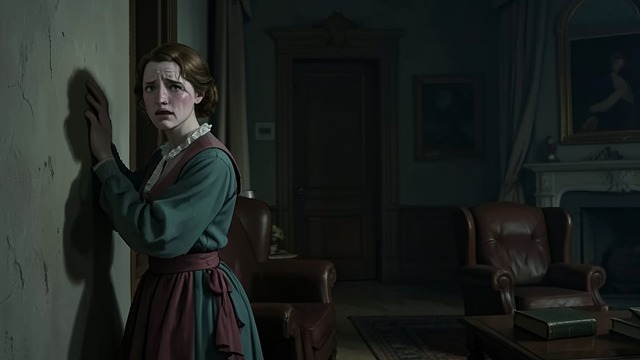
A Witness to the Struggle
Fear Replaces Speech
Amelia appears in terror with her head against the wall during the confrontation. She watches events rather than intervening.
Passivity’s Limit
Her silence reflects the family’s unequal power and the danger of speaking. It cannot protect her from the consequences of the struggle around her.
The House Remains

The House Remains
Mourning Imposed Again
Amelia is among the daughters Bernarda orders not to cry and to preserve silence. Adela’s death brings no opening in the rules that have constrained them.
A Future Narrowed
The play ends before Amelia’s later life is shown, but the new mourning period points toward continued confinement. Her cautious endurance offers no visible escape.
Act One, after Bernarda leaves the room
Act One, after the sisters discuss Pepe
Act Three, after walking in the yard
Act Three, when Bernarda enters the yard
Act Three, after Adela’s death
