Endless summer
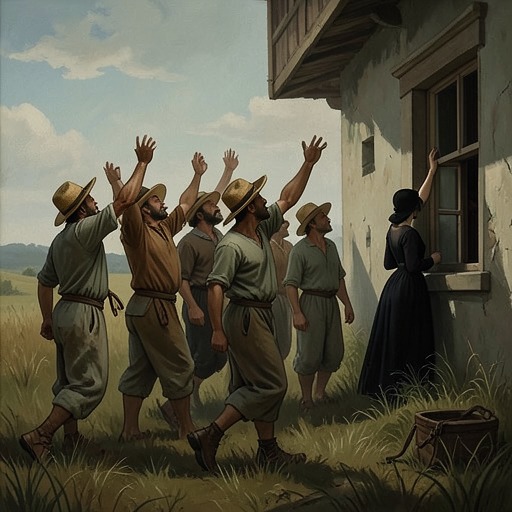
The House of Bernarda AlbaThe endless summer is the play’s recurring season of oppressive heat, voiced by Martirio as a condition she longs to escape but cannot permanently leave behind. In her exchange with Amelia, the wish for November’s rain and frost meets the reminder that summer will come again, turning the weather into a compact image of recurrence within the household.
The Season as a Physical Burden
Martirio says the heat is getting her down and wishes for November: wet days and frost, anything but the endless summer. Her complaint is concrete and seasonal; relief means a change in weather, not a change she can command. The intensity of the phrase also makes the summer seem to exceed a single spell of hot weather, imposing itself as a prolonged condition.
Recurrence and Conversation
Amelia answers that when the summer has passed, it will soon come round again. Martirio agrees, pauses, and asks what time Amelia went to sleep the previous night. The exchange therefore moves from heat and its repetition to a question about the night before, without resolving Martirio’s dissatisfaction. Its brief turns and pause allow the weather to remain present even as the conversation shifts.
The Household and Its Wider Context
The play was completed in June 1936, amid increasing political trouble in Spain. Lorca described it as a photographic documentary and presented village life through a strongly realistic world, while using realism that could also carry symbolic meaning. In that context, the return of summer offers a seasonal pattern that resonates with the play’s wider depiction of recurring conditions rather than a decisive escape from them.
The surrounding social order is marked by traditional expectations for women: Bernarda insists on domestic roles, while the daughters’ lives are constrained by household authority. Martirio’s longing for a different season and Amelia’s matter-of-fact prediction of its return sharpen the contrast between desire for relief and the expectation that the same conditions will recur. The exchange does not itself explain the heat as a symbol; its force comes from how its cyclical rhythm fits the play’s broader presentation of restrictive village life.