María Josefa
The House of Bernarda AlbaMaría Josefa is Bernarda Alba’s elderly mother, confined in her daughter’s house and described as affected by senile dementia. Her scenes move between extravagant wishes and unusually clear perceptions: she longs to leave the house, marry a handsome young man by the sea, and live among open homes and families, while recognizing that all her granddaughters desire Pepe el Romano and that he threatens them. The contrast makes her more than a figure of comic delusion. She gives voice to freedom, intimacy, and continuity of life in a household organized around confinement and mourning.
Identity and Confinement
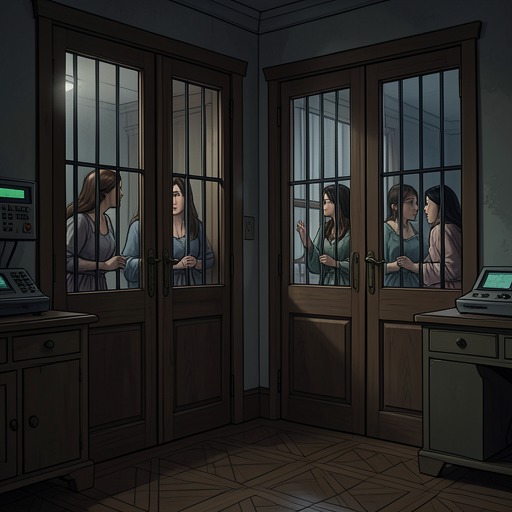
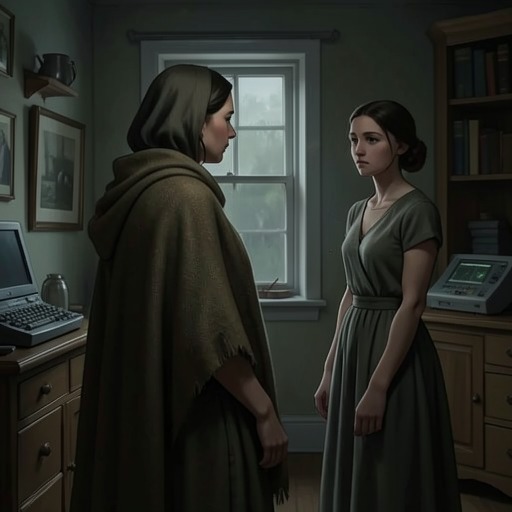
María Josefa appears in Act One when the news of Angustias’s inheritance and forthcoming marriage has unsettled the household. Wearing flowers in her hair and at her breast, she demands to be allowed out so that she can marry a handsome young man on the seashore. Bernarda orders that she be locked in her room. The episode establishes the practical terms of her life: her movements are controlled, and her wishes are dismissed as evidence that she must be kept from the world.
The play’s background connects her to a real source without making her a simple portrait. The commentary identifies her as based on a relative of Federico García Lorca who suffered from erotic hallucinations. It also describes María Josefa as sixty years older than Adela. That difference in age sharpens their parallel: the old woman and the youngest daughter occupy very different positions in the family, but each expresses desires that Bernarda’s authority cannot accommodate.
Fantasy and Perception
María Josefa’s imagined marriage is impossible within the household’s rules, but her speech does not remain in fantasy. The commentary distinguishes her dream of marrying a young man on the seashore from her perceptive recognition that the granddaughters all want Pepe el Romano and that he will destroy them. Her vision of Bernarda as predatory likewise gives unsettling form to the danger of the house’s authority. The play lets her apparent irrationality carry knowledge that Bernarda, in her pride and insistence on control, refuses to acknowledge.
Her scenes also reverse the values of the mourning household. Flowers, marriage, and the sea stand against the black clothing and restricted life imposed on the women. In Act Three, she speaks of children multiplying across generations, imagining white-haired descendants becoming waves and foam. She contrasts that abundance with the house’s mourning shawls. This is not a practical escape plan; it is an image of life continuing beyond the closed domestic order, where even old age need not mean the end of desire or futurity.
The Lamb and the Attempt to Leave
Late in the play, as the household prepares for the night, María Josefa enters carrying a lamb and singing it a lullaby. The stage directions place her amid the nocturnal movements of the others: Adela slips toward the stable-yard, Martirio keeps watch, and María Josefa appears from another part of the house. When Martirio asks where she is going, María Josefa asks for the door to be opened. Her request turns her recurring wish to escape into an immediate exchange, but Martirio instead attempts to direct her back to bed.
The lamb becomes part of María Josefa’s imaginative language about kinship and children. She insists that a lamb can stand for a child and pictures generations linked in an unending sequence. She recalls a neighborly exchange in which she brought chocolate to a woman with a new baby and the woman later brought some back. Against the isolation of Bernarda’s house, this remembered reciprocity imagines care moving between households. She laments that the neighbors will no longer come, and asks to leave the fields for open houses where women and children live and men sit outside. Her longing is for connection as well as escape.
Warning and Narrative Significance
María Josefa’s description of Pepe el Romano as a giant who will devour the women places the household’s romantic rivalry in the language of danger. She first identifies that all the young women want him; she then warns that this desire will not bring them freedom. Her image of them as grains of wheat, which she abruptly revises into frogs without tongues, combines vulnerability with enforced silence. The warning resonates with the conflict gathering around Adela, Martirio, and Pepe, while the family continues to suppress open speech and movement.
The commentary presents María Josefa as a figure of pathos because youthful dreams persist in a mind and body ravaged by time, and because lucidity and fantasy coexist in her speech. Yet her role is not merely to suffer or to supply a prophecy. The household labels and confines her, but her words disclose its contradictions: she wants children and open homes where mourning has closed off ordinary life; she sees the danger in the desire that the other women cannot safely speak; and she asks for a way out even as the family repeatedly returns her to confinement. Her visions give dramatic voice to vitality and freedom precisely where Bernarda’s authority tries to make them impossible.