María Josefa’s escape attempts
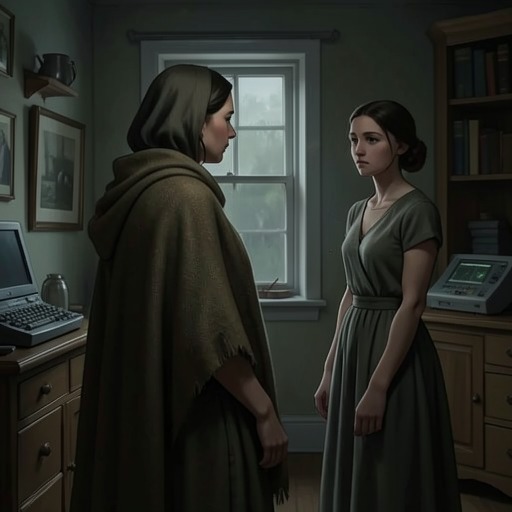
The House of Bernarda AlbaMaría Josefa’s escape attempts are recurring acts of resistance against her confinement in Bernarda Alba’s house. She seeks not merely to leave a room but to reach a different life: one of marriage, companionship, and freedom of movement. Each attempt is met by Bernarda’s command to lock her away, making the old woman’s voice a persistent counterpoint to the household’s enforced order and to the daughters’ constrained futures.
First escape and renewed confinement
In Act One, María Josefa appears after the household has been unsettled by news of Angustias’s inheritance and marriage prospects. With flowers in her hair and at her breast, she demands to be allowed out so that she can marry a handsome young man by the seashore. Bernarda responds by ordering that her mother be locked in her room; the women help restrain and remove María Josefa as she continues to ask to leave and marry. The episode establishes a pattern: her desire is spoken plainly, but the family treats it as a disruption to be shut away rather than a claim to be heard.
Her words also place marriage in a strikingly different frame from the household’s other discussion of it. Angustias’s proposed marriage is bound up with her inheritance and her status as the richest daughter, while María Josefa imagines marriage as a route to joy and a life elsewhere. Her wish to go to the seashore thus contrasts with the daughters’ restricted domestic world and the practical pressures shaping their marriage prospects.
The later escape attempt
The confinement does not prevent María Josefa from trying again. In Act Three, she gets away from the Servant, who admits that she escaped, and explains that she wants to marry a handsome man by the seashore because men in the house avoid women. She refuses Bernarda’s demand that she be quiet and says she does not want to watch the unmarried women suffer over marriage. She also wants to return to her own village and have a husband and happiness.
Bernarda orders the household to lock her up. The Servant takes hold of María Josefa, and Bernarda calls on the others to help; together they lead the old woman away. María Josefa continues to plead to leave and repeats her wish to marry by the sea. The quick fall of the curtain closes the episode on the conflict rather than on any escape: her longing remains audible, but the household has again contained her.
Connection to the household’s wider conflict
María Josefa’s repeated bids for freedom resonate with the daughters’ situation, though their circumstances differ. The play presents the unmarried daughters’ lives as restricted by domestic expectations, and its commentary identifies sewing and embroidery as examples of the traditional domestic role assigned to women. Against this background, María Josefa’s wish to leave makes visible the larger limits imposed on women’s choices: even her imagined future requires escape from the house and the authority that controls it.
Her escape attempts also sharpen the contrast between the household’s appearance of order and the desires it cannot extinguish. Bernarda responds to resistance with commands and confinement, but María Josefa continues to name what she wants: marriage, happiness, and departure. The repetition gives her scenes a structural force beyond their immediate household disturbance. They return the play to the question of whether a life governed by silence and domestic obedience can accommodate women’s independent desires.
Background and significance
The play’s commentary connects its domestic conflicts to contemporary Spanish provincial life. It describes long mourning periods and the division between men and women as recognizable features of rural society, and identifies the domestic role of women as central to that division. Lorca completed the play in June 1936 amid increasing political trouble in Spain; the commentary presents its social criticism as part of his intention to expose the moral and social conditions of his time. María Josefa’s attempts should therefore be read within the play’s grounded portrait of a community, rather than as an isolated comic or eccentric interruption.
The commentary also traces the character to a real-life source: María Josefa was based on a Lorca relative who suffered from erotic hallucinations. That biographical basis does not erase the dramatic function of her repeated escape. Within the play, the household’s view of her as half-crazed helps justify her confinement, while her direct statements about marriage and leaving give form to desires suppressed elsewhere in the house. The attempts end without her gaining freedom, but their recurrence makes confinement visible as an enforced condition, not a natural one.