María Josefa’s lamb song
The House of Bernarda AlbaMaría Josefa’s lamb song is a lullaby-like escape fantasy spoken by María Josefa while she holds a lamb in the nearly dark house. She imagines the two of them leaving for the seashore through a door that will open by itself, finding refuge in a coral cabin, and staying awake together. Its small domestic gestures of carrying, singing to, and feeding the lamb give the song a language of tenderness that stands apart from the household’s coercive rules and anticipates the play’s wider contrast between confinement and the desire for freedom.
Appearance and Setting
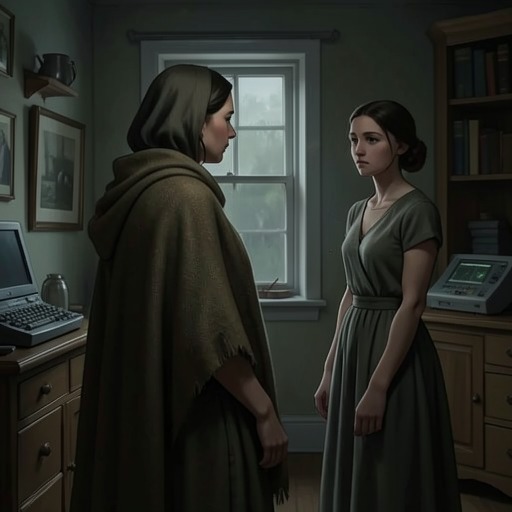
The song begins after the Servant and Poncia leave the stage, complaining that the dogs’ commotion will keep them awake. The stage is almost dark when María Josefa appears holding a lamb in her arms. The contrast is immediate: outside, the dogs are restless and the household is disturbed; inside, María Josefa addresses the lamb as a child and begins to imagine a journey away from the house.
The scene’s placement links the song to the earlier report of the village’s violence toward an unmarried mother. Poncia has described how the woman’s baby was killed and buried, how dogs uncovered the body and left it at her door, and how villagers are pursuing her. Bernarda urges the crowd to kill the woman, while Adela objects. After this public crisis, María Josefa’s quiet address to the lamb offers an intimate counter-scene, centered not on punishment but on imagined companionship and care.
The Journey to the Seashore
María Josefa begins by calling the lamb her baby and proposing that they go down to the seashore. In her imagined destination, the little ant will be at its door, and she will give the lamb both her breast and bread. The song’s details are simple and nurturing: a companion waiting at a doorway, food to share, and an animal held close. The image of the lamb as a baby makes the song’s care-giving impulse explicit without changing its status as a fantasy voiced to the animal in her arms.
The journey continues toward flowers at Bethlehem’s gates. María Josefa laughs and says that neither she nor the lamb wants to sleep. She then imagines the door opening by itself and the two of them making their way to the shore, where they can hide in a cabin made of coral. The movement from a shut household to a door that opens without anyone’s permission gives the song its central reversal: escape, normally blocked in the play’s domestic world, becomes effortless in her imagined one. The coral cabin is not a destination the drama makes real, but a shelter created by the song itself.
Care, Confinement, and the Song’s Dramatic Role
The song sets an imagined, shared freedom against the actual limits of María Josefa’s life in Bernarda Alba’s household. The open door and the seashore offer a route out, while the small shelter promises a place beyond the household’s authority. Yet the escape remains lyrical rather than enacted: María Josefa sings while still onstage, holding the lamb. The contrast makes the fantasy emotionally significant without turning it into a literal departure.
Her address to the lamb also differs from the play’s surrounding speech about women and social order. The song imagines a bond expressed through feeding and companionship, not obedience, reputation, or punishment. In the context of the threatened unmarried mother and Adela’s protest, that gentleness carries particular force: the episode places an intimate act of care beside a village response that denies care to a vulnerable woman and child.
The song therefore gathers the play’s pressure into a small, memorable image: a nearly dark room, a lamb in María Josefa’s arms, and an imagined door opening toward the sea. Its lullaby-like form does not resolve the confinement surrounding its singer, but briefly gives her a world of her own, organized around tenderness, movement, and refuge.