Aldino Mansutti
The HummingbirdAldino Mansutti, a childhood friend of Probo Carrera, is dead before the events surrounding his most consequential appearance. His sudden death on the Aurelia state road becomes the subject of Probo’s private mathematics of mourning: an effort to accept an absurd accident by calculating its probabilities, and then to confront a more intimate possibility—that, years earlier, he might have felt a fleeting urge to kill the friend he loved. Aldino’s presence in the story is therefore both biographical and ethical, returning through Probo’s effort to distinguish chance from guilt.
Identity and Background
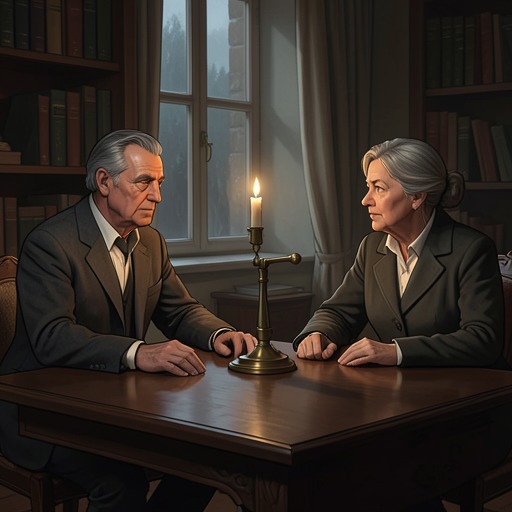
Aldino is introduced through the anniversary dinner held for his widow, whose fiftieth birthday brings Probo and Letizia to the seaside restaurant Il Gambero Rosso in San Vincenzo. Probo had discovered the restaurant and persuaded his wife to make the drive from Punta Ala. Though the celebration belongs to the widow, Probo has arranged and will pay for the evening; the gathering is also a way of keeping his dead friend in the company of the living. Aldino himself has been dead for eleven years, but he remains present in the story as the person around whom Probo’s memories, explanations, and unresolved questions gather.
Probo and Aldino’s friendship began when they were childhood companions. Probo remembers it as deep and full of adventures and emotions, not a simple, untroubled bond. They had two memorable quarrels and apparently never returned to either after they had passed. Their friendship could absorb anger without ending, but the later retelling of one of those fights gives that buried anger a disturbing afterlife.
Death on the Aurelia
Aldino died while riding a new Guzzi V7 Special along the Aurelia state road near the church of San Leonardo, between Pisa and Livorno. He had just crossed the bridge over the Arno when a bucket carrying 170 liters of water detached from the barycentric hook of a Bell Model 206 Jet Ranger helicopter and struck him. The helicopter was assisting Italian firefighters with efforts to extinguish a large fire in the lower Pisan hills that threatened Fauglia; it had been supplied to the neighboring American military base at Camp Darby. The collision was subsequently described as a motorcycle accident, a label that makes the event sound ordinary even as its circumstances resist ordinary explanation.
The machinery of the accident gives Probo precise facts to revisit: the helicopter’s route, speed and altitude; the bucket’s weight and its load of water; the wind; and Aldino’s speed on the motorcycle. Probo first used the investigation data in laborious calculations intended to establish how improbable the death had been. Instead, the results seemed to show the event as the inevitable outcome of a rigid field of forces. His attempt to make the accident intelligible thus produced the opposite of the reassurance he sought: calculation could describe the mechanics without making the death acceptable.
Friendship, Anger, and Probo’s Question
On the drive to the anniversary dinner, along the same Aurelia road where Aldino was killed, Probo tells Letizia about a different way he came to think about the accident. He had already tested the complicated calculations and found them unsatisfying. The simpler measure was that the helicopter traveled 43 meters in a second, while Aldino’s speed amounted to 23.5 meters per second. If the hook had broken a second later, the bucket would have fallen 43 meters farther east, toward the church of San Leonardo, and Aldino would have been 23.5 meters farther along the road. Probo’s account narrows the catastrophe to a margin of three tenths of a meter: a shift of only three hundredths of a second would have meant that the bucket missed him.
That tiny interval leads Probo from the accident’s physics to his own past. He compares Aldino’s death to events whose likelihood is so close to zero that ordinary probability seems inadequate, then names the thought he has carried since the loss: the possibility of himself killing his friend. The confession does not claim that he acted on such a thought or that he remembers it as a conscious intention. Instead, he asks whether an almost imperceptible impulse could have passed through him without leaving a clear memory.
The question takes him back to a hunting trip in the reserve of Titti’s father in Vallombrosa, when both men were married fathers and both carried guns. Aldino shot a partridge Probo had meant to shoot. He did so suddenly, appearing behind Probo with the barrel over his shoulder and firing close to Probo’s ear while Probo was aiming. Probo judged the act dangerous and unfair, but later judged his own response hysterical and disproportionate: he shouted insults, some of them unjust, then left Aldino alone with the dog and the partridge between its feet. He remembers the fury and fear, but not a definite decision to shoot. His question to Letizia is whether, for three hundredths of a second, rage might have contained an urge to raise the loaded gun and fire.
Memory and Continuing Significance
Letizia follows the account with unusual attention. She recognizes Probo’s long explanation not merely as a theory about Aldino’s death but as a self-portrait: an engineer trying to use calculation to approach what cannot be settled by calculation. Probo’s choice to tell her this on the anniversary journey makes the recollection an act of disclosure between husband and wife. His account does not resolve the question of responsibility; it brings a hidden possibility into the shared space of the car and leaves it uncertain.
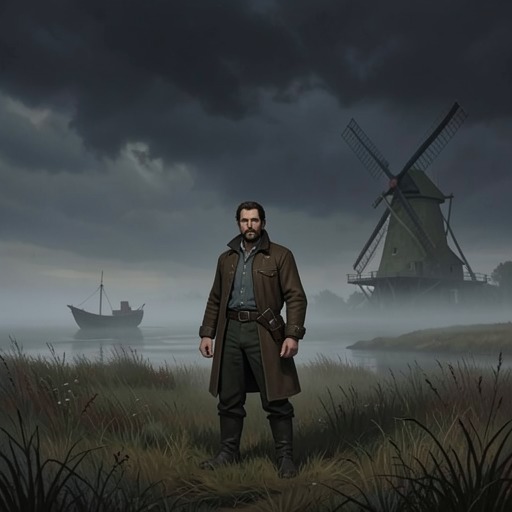
Aldino also remains part of Probo’s later life through the habits that follow their friendship. More than thirty years after Aldino’s death, Probo has not fished since the period when the two were friends. When his strength returns during a break in chemotherapy, he buys a used pilot boat in Marina di Cecina and takes up fishing every day. He catches garfish and uses them as live bait for bluefish; a photograph of a large catch is hung at Homer’s hut, the mooring where he bought the boat. The return to fishing does not erase the loss, but it marks a renewed engagement with a practice associated with Aldino and with the life Probo had left behind.
Aldino’s narrative importance lies in the way his death refuses to stay a matter of chance alone. The falling bucket is an external accident with a traceable physical sequence, yet Probo’s recollection of the hunting quarrel opens another, unprovable dimension: the thought that violence may have flickered inside friendship, however briefly, without becoming action or memory. The story preserves both possibilities rather than converting one into an answer. Aldino remains loved and mourned, but his death also forces Probo to ask whether the boundary between an impossible coincidence and a buried impulse can ever be calculated.