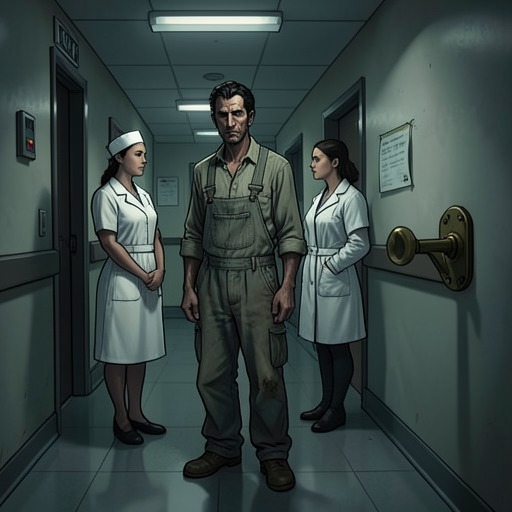
Carradori warns Marco of Marina’s dangerous plan
The HummingbirdCarradori’s warning to Marco turns a therapist’s duty of confidentiality into a tense, incomplete intervention: convinced that Marina’s disclosures reveal a grave danger to Marco, he breaks professional rules to alert him, then withdraws when Marco challenges the reliability of those disclosures. The visit exposes a rupture in Marina’s treatment and leaves Marco with an alarming possibility but no clear account of what his wife may do.
The Breach of Professional Boundaries
Carradori opens by asking Marco, himself a doctor, not to report him to the Order of Doctors or the Italian Psychoanalytic Society. What he is about to do, he says, is forbidden and severely sanctioned in his profession. He has never imagined violating this fundamental rule, but believes Marco is in grave danger and that he is the only person who knows. The warning is therefore framed not as routine clinical advice but as an exceptional act that Carradori considers necessary despite its professional consequences.
At first Marco asks why he would report him. Carradori does not yet explain the danger; instead, he asks Marco for a courtesy before continuing. The delay establishes the encounter’s guarded, conditional character: Carradori has come to disclose something, but his willingness to proceed depends on what Marco tells him and on whether he can still trust the account that led him there.
The Warning Withdrawn
Carradori begins to leave after concluding that Marina has not been honest with him. He apologizes for his mistaken evaluation and says that, because of what Marco has just told him, Marina is no longer in danger as he had thought. He asks Marco to disregard the visit and tell no one about it. Marco refuses to let the matter end there: he objects that Carradori cannot announce a grave danger connected to something his wife said and then leave without explaining it, and threatens to report him unless he tells the truth.
Carradori explains that he had always believed what Marina told him about herself and Marco. He had formed a clear idea of her illness on that basis, and, when a situation seemed very serious, felt compelled to act beyond the limits of professional ethics. But Marco’s denial of a basic claim makes Carradori question the wider body of information he had trusted, including the information that led him to believe Marco was at risk. He calls this his own serious error and apologizes again. His retreat is not a disclosure of the original threat: the central warning remains unsubstantiated within the conversation.
What the Visit Reveals—and Leaves Unresolved
In retracting his warning, Carradori lets slip a different fact: Marina has stopped coming to see him. Marco seizes on the revelation, asking whether his wife has discontinued therapy, and Carradori confirms that she has. The visit thus changes Marco’s understanding even as its initial purpose collapses. He learns that Marina’s treatment has ended, but not when or why, and Carradori gives no account of what she had said about the supposed danger.
The conversation remains unsettled. Marco asks why a fantasy involving Luisa would create danger, while Carradori says he is no longer in a position to speak to him and begs him not to tell Marina about the visit. The exchange connects the disputed information to Luisa without establishing that the imagined relationship is real. Carradori’s qualification is consequential: if the matter is only Marina’s fantasy about Luisa, he says, the situation changes substantially, and Marina may be the one at risk. The warning therefore reverses direction—from Marco’s supposed danger to possible danger to Marina—without resolving which account is true.
Narrative Significance
The encounter makes professional confidentiality part of the plot’s uncertainty. Carradori’s willingness to violate it signals how serious he believes the situation to be; his immediate withdrawal shows how dependent that judgment is on trusting Marina’s reports. The result is neither a clear revelation nor a clean correction. Marco receives enough information to know that his wife’s therapist believed a crisis existed, but not enough to determine its nature or whether Carradori’s first assessment was sound.
The episode also distinguishes the fact of Marina’s treatment from the truth of what she may have reported in it. Carradori had taken her accounts as the basis for understanding her illness and Marco’s circumstances; once one claim is challenged, he cannot confidently preserve the rest. His ethical breach opens a channel between therapist and husband, but the breach cannot deliver certainty. It instead leaves Marco with a newly disclosed interruption in Marina’s care and a suspicion whose object remains unclear.