Marco Carrera
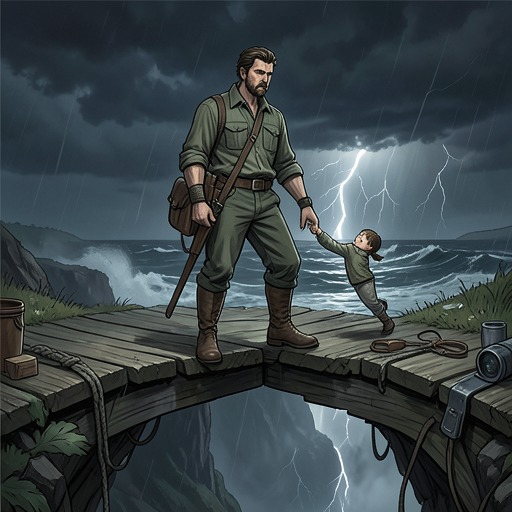
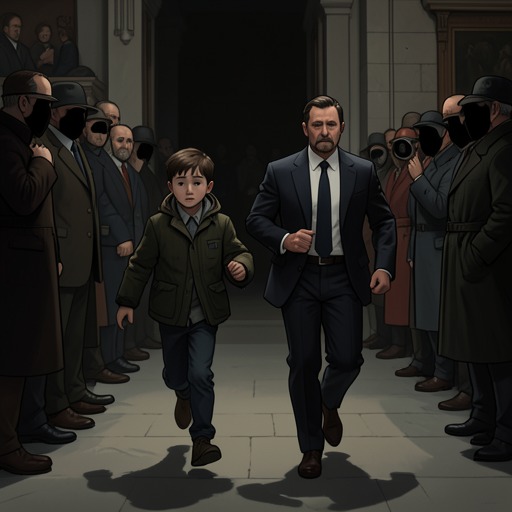
The HummingbirdMarco Carrera, the Hummingbird, is an ophthalmologist whose defining pattern is to remain standing through upheavals he cannot prevent. His life moves between suspension and sudden change, from an exceptional growth spurt in adolescence to family deaths and losses in adulthood. The purpose he eventually finds in these experiences is not private triumph but guardianship: he raises Miraijin after Adele’s death and comes to believe that his suffering has prepared him to help his granddaughter carry a new future.
Identity and the Pattern of Stillness
The novel introduces Marco as a man whose resilience is a form of continuous movement toward stillness. He does not escape grief or prevent disaster; instead, he endures, searching for a stopping point when events threaten to carry him into collapse. The Hummingbird image names this paradox: a life that seems suspended can still be full of effort, and survival need not mean living less.
His history is organized by a recurring contrast between long pauses and abrupt transitions. For years, Marco can appear to stand still while life proceeds around him; then an exceptional event throws him into unfamiliar circumstances. The transitions bring pain and provoke the question of why the misfortune has happened to him. Yet he tends not to ask that question until he has found an answer, a delay that, in the novel’s account, helps him continue rather than break beneath the weight of events.
Background and the Sudden Change in His Body
Marco grows up in Florence and studies medicine and surgery at Sapienza University of Rome before specializing in ophthalmology. At forty, he practices in Rome, where the plaque on his clinic identifies him as an ophthalmologist. He is the son of Letizia Delvecchio and Probo Carrera, both architects, and the brother of Giacomo Carrera and Irene Carrera.
His body first establishes the pattern of exception. For fifteen years, Marco’s small stature sets him apart from his peers. In the autumn of 1974, he receives treatment for his growth, and its effect is far greater than anticipated: he grows sixteen centimeters in eight months, from 1.56 meters in October to 1.72 meters the following June. His rapid growth then stops, settling into a more gradual course; he reaches 1.74 meters at sixteen, 1.76 at seventeen, and 1.78 at eighteen, adding one final centimeter the next year.
The change is not described as a crisis he tries to control. Marco inhabits it, growing by roughly two centimeters a month from November to June, and adapts to the sudden transformation from a child’s body to that of a grown boy. The experience becomes a memory, but the shape of it persists in his life: extended stillness followed by a startling, difficult passage into the unknown.
Love, Family, and Loss
Marco’s relationships make endurance both a private burden and a form of responsibility. His daughter Adele is at the center of his later life. He loves her intensely and devotes himself to her, while also feeling pity for what she has endured and guilt that he has not been able to provide the ordinary life he thinks a child deserves. He worries about her stability, particularly because she has previously experienced a disturbance involving a thread that seemed to connect her back to a wall. After Adele moves to Florence, however, that perception disappears, and she shows no sign of detachment from reality during the following nine years.
When Adele tells Marco she is pregnant, she refuses to identify the father and makes clear that she intends to raise the child without him. Marco initially has difficulty accepting this unexpected decision, but does not force the issue. He recognizes that insisting would mean imposing himself on a choice his daughter has made. Adele tells him that the child will be the Man of the Future; he initially responds to this claim without fully sharing her conviction, but accepts her determination to remain close to him and raise the child with his help.
Miraijin is born on October 20, 2010, a date Adele regards as special because it can be written 20.10.2010. Her name means the Man of the Future in Japanese. Marco’s life with Adele and Miraijin becomes a period of demanding, daily care. He works, shops, cooks, and tends to his family, holding together a fragile household through the illnesses and deaths of his parents, ruptures with his brother, and changing circumstances in his relationship with Luisa Lattes. He describes those nine years as a sustained effort of care, one that brings him a strength and pride he had not known before.
Adele dies at twenty-two, and Marco is left to bear the loss as the surviving family’s most immediate catastrophe. The Carreras had already been scattered by Irene’s death: it took years for some of them to breathe normally again, while another could not do so. By the time Adele dies, the family’s nucleus is broken. Probo and Letizia’s ashes have been scattered in the central Tyrrhenian Sea, and Marco and Giacomo are unable to speak to one another. The earlier death had shaken the family collectively; Adele’s death seems less extensive in its effects only because Marco alone bears its consequences directly.
From Grief to a Purpose
After Adele’s death, Marco does not choose a clean route out of grief. He remains, in the novel’s image, standing in the smoking crater of loss, and for a time lives wildly, following the advice of Dr. Carradori. He focuses on Miraijin and on the life he has left, though his way of caring for her is not presented as a model of orderly childcare. Even his gambling brings him into conflict with that responsibility: on February 29, 2016, he goes to play poker although Miraijin has a fever of thirty-eight degrees. He has given her medicine and reasoned that he can take her to a hospital in Siena if her condition worsens, but he still recognizes his decision as a source of shame.
Dr. Carradori, formerly the psychoanalyst of Marco’s wife, helps him in the aftermath of Adele’s death through a small number of saving interventions. One is to travel to the clinic in Upper Bavaria where Adele’s mother, Marina Molitor, is hospitalized, and tell her what has happened. In doing so, Carradori restores a degree of trust between them and helps bring the survivors toward mutual pity rather than leaving them in isolated reactions to trauma. His intervention also makes possible a renewed relationship between Marina and Marco after their separation.
Marco’s recognition of his purpose arrives after a high-stakes poker duel with his friend Dami Tamburini, when he gives up the fabulous winnings. That act prompts him to reconsider the losses and reversals that have defined his life: escaping a plane crash, losing Irene, enduring a terrible divorce, ending his father’s life, and burying Adele at twenty-two. Rather than treating these experiences as a meaningless sequence of injuries, he now understands them as a preparation for raising Miraijin. What Adele had said about her daughter becomes, at last, Marco’s own belief: that humanity can begin again through this child.
This conviction changes the meaning of his endurance. Earlier, he accepted Adele’s claim partly out of consideration for her, as he had once played along with her belief in the thread attached to her back. After her death, he comes to believe the claim himself. He sees Miraijin as the purpose that connects his past to her future, and regards raising her as a privilege entrusted to him. His resilience is no longer simply the capacity to stay upright; it becomes the work of carrying a child forward.
Final Choices and Narrative Significance
The novel’s account of Marco’s final period continues to join care with endurance. He has advanced pancreatic cancer and, with help from Miraijin, arranges a final gathering. In his last moments, he reaches for the red tap, then invites Miraijin to bend toward him. He looks at her once more and touches her hair. As the anesthetic takes effect, he recognizes that Miraijin has moved her hand into his, joining their right hands in the position he calls the strong point. His thoughts turn to Irene, Adele, and his parents, and to the creature he is leaving to the world.
That ending gathers the book’s central contrast into one gesture: Marco’s life has been a long effort to hold still while time, loss, and change moved through his family, but his final attention remains fixed on the future beyond himself. The novel does not make survival equivalent to victory or erase the cost of what he has suffered. It gives his endurance a purpose in his care for Miraijin, the child he believes will change the world. Through Marco, the Hummingbird motif connects bodily exception, recurrent upheaval, familial grief, and the possibility that steadfastness can become an inheritance passed on to the next generation.