Marco Carrera and Giacomo Carrera's brotherly relationship
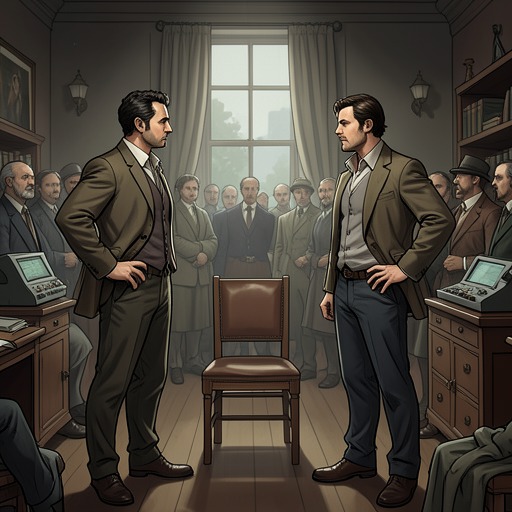
The HummingbirdMarco Carrera and Giacomo Carrera are brothers whose bond is shaped by affection, rivalry, and an old accusation neither can resolve by simply returning to the past. Their estrangement grows out of the family’s grief after Irene’s death and Marco’s belief that Giacomo had failed her; when they meet again as adults, their parents’ illness creates opportunities for reconciliation, but shared duty does not automatically undo decades of silence. The eventual revelation that Giacomo had also loved Luisa Lattes exposes how much of the brothers’ history Marco had misunderstood—and how late the truth arrives.
Family History and the Old Accusation
As boys, the brothers belonged to a family whose children had first drawn close amid the isolation of neighboring summer households. Their intimacy did not prevent rivalry or misunderstanding. In the aftermath of Irene’s death, Marco fixed blame on Giacomo for the night she died, despite having left the house himself to go out with Luisa. Marco later recalls that Giacomo had stayed with Irene, a fact that had made him feel safe enough to leave; nevertheless, he accused his brother directly, called him a coward, and said Irene had died because of him. He recognizes the cruelty of the charge and regrets it, but its consequences extend far beyond the moment of accusation.
For years Marco understood Giacomo’s departures as flight from him. He continued writing to his brother even when Giacomo did not answer, and the silence became part of their estrangement. A letter about the family home in Piazza Savonarola shows Marco trying to make contact through a practical matter: the house is to be sold, and he wants Giacomo involved in deciding what should happen to its furniture. These are not merely items to be priced. Marco describes them as what remains of a life and family in which the brothers shared more than twenty years, and he objects to treating them as things to discard. His insistence that they decide together turns the inventory into an appeal to acknowledge a common past.
Separation, Rivalry, and Missed Reconciliation
The history of the brothers’ distance is complicated by their separate, overlapping attachments to Luisa. When they were young, Giacomo had already been in love with her and had invited her to dinner on the same day that Marco did. Luisa refused Giacomo, but she did not tell Marco about his feelings. Marco therefore interpreted Giacomo’s later withdrawal as part of their own conflict, without knowing that Luisa herself was among the reasons his brother had gone away.
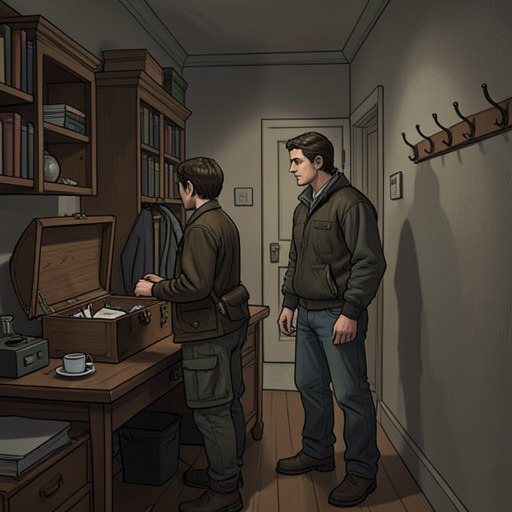
Their adulthood offers several moments when old grievances might be addressed. More than twenty years after moving to America, Giacomo returns to Florence to help care for their dying parents. He stays after his wife and daughters go home, putting aside his usual distance from his origins to assist Marco with the demands of their parents’ care. He accompanies them to chemotherapy, helps arrange support at home, and takes on practical tasks in the family apartment. His devotion is intense enough to narrow his life to their needs: he does not seek out old friends, and Marco notices that he makes little effort to build a relationship with his niece Adele.
Yet the brothers’ shared work does not bring the conversation they need. During a night-time scare about their mother, Marco comes to the Piazza Savonarola home and finds himself with Giacomo in the large living room where they had grown up. The immediate emergency passes, but neither brother uses the moment to speak openly or repair their relationship. At the hospital, too, they sometimes find themselves together in the corridor while their parents rest. These intervals seem to offer a chance to forgive and move forward, but embarrassment and the age of the conflict keep them silent. Their parents’ decline also makes clear that the family’s damage cannot be reduced to the brothers’ disagreement alone.
Luisa and the Belated Truth
At the end of January, during a respite in their parents’ chemotherapy, Giacomo abruptly returns to America. His departure leaves Marco with a familiar sense of absence. Soon afterward, Luisa writes to Marco after nearly four years without contact. Her letter says that she misses him and refers to an Aztec belief that those who die in battle may be reborn as hummingbirds; it also apologizes for the confusion she had caused. Marco answers with an open, passionate account of his life, including Giacomo’s return and departure. Their correspondence resumes, but it does not yet disclose the key fact about the brothers’ shared love for Luisa.
After their mother Letizia’s funeral, Luisa tells the brothers that Giacomo had been in love with her too. The revelation changes Marco’s understanding of both his brother’s distance and his own accusation. He had believed for years that Giacomo was running away from him; he now realizes that Giacomo had also been running away from Luisa. Marco is especially wounded by the timing. Luisa had not told him when they resumed writing, when Giacomo returned to Florence, during the funeral, or in the years that followed. He asks why she disclosed it only after so much had happened, when he had already learned to live with his guilt over what he said to Giacomo.
At the airport after the funeral, Marco sees Luisa and Giacomo leave together. Giacomo carries some of their mother’s ashes in his suitcase, while the rest of the urn remains Marco’s responsibility. Watching the two of them, Marco recognizes that the world of memory and intimacy he associated with Luisa was not his alone: Giacomo had seen those same qualities in her during those same summers. For the first time, Marco feels jealousy toward his brother—not over what Giacomo had been or possessed, but over what might have been. The realization arrives three days after their mother’s death, when both brothers are already separated again.
Inheritance, Memory, and Unfinished Repair
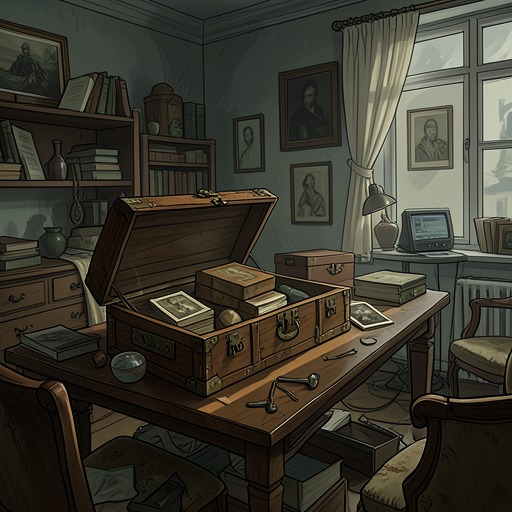
The family’s belongings make the past tangible. In a letter about the house, Marco asks Giacomo to help determine what should happen to the furniture, whether it should be sold gradually through the dealer who appraised it or divided between them according to need and attachment. The choice carries emotional weight because the furnishings survived the events that emptied the home and damaged the family. Marco insists that the objects are innocent, and that deciding their fate should not become another occasion for treating their shared history as worthless.
A later letter turns from objects to the brothers themselves. Marco apologizes for blaming Giacomo, acknowledges that the family endured years made harder by the accusation, and asks them not to let time turn them into strangers. He imagines reconciliation over their inheritance as a reversal of the usual pattern of siblings fighting after their parents die. The appeal is not proof that their estrangement has been healed; it is evidence that Marco still wants a relationship in which the past can be faced together. The brothers’ story remains suspended between that invitation and the many missed opportunities that precede it: they repeatedly share a home, a vigil, a funeral, and a family history, yet the necessary words arrive late, unevenly, or not at all.