Marco Carrera’s €840,000 poker win and surrender
The HummingbirdMarco Carrera’s €840,000 poker win and surrender is the reversal in which Marco defeats Dami Tamburini at a gambling table, then refuses the winnings and reclaims his mother’s photographic archive instead. The choice converts a potentially ruinous sum into a recognition of what he had given away: the photographs left by his mother, a trace of her passage through the world. In the later account of Marco’s life, this renunciation also marks his understanding that the pain and losses he has endured belong, in his mind, to the purpose of bringing Miraijin into the world.
Background and the game
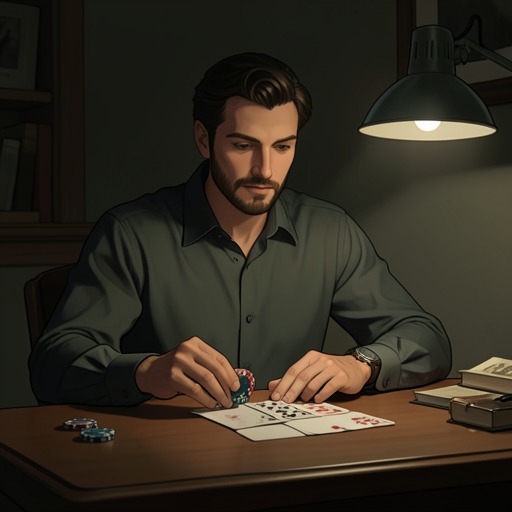
Marco describes poker as differing across American states. Texas, he explains, is designed to limit winnings and losses so that players do not end up ruined as they can in Tennessee. Yet that protective design fails to contain the night’s outcome: Marco says he went far beyond ruin, while Dami began losing and continued to replay in an attempt to recover. Their contest narrows until it is no longer simply a game among several people but a personal account between the two men.
Marco emphasizes the speed and scale of the reversal. In roughly fifteen minutes, he says, he won an extraordinary amount. Asked how much, he initially expresses shame at saying it; the sum is €840,000. The figure is the result of a duel that has gathered force through repeated attempts to recover losses, not a measured or planned accumulation. Dami’s losses and Marco’s victory make the apparent success inseparable from the danger of the game.
The refusal and the exchange
After winning, Marco says he voiced what every player knows: money won through gambling cannot be put to good use. On that basis, he tells the others that he does not want the €840,000. The choice is striking because the victory would ordinarily appear to settle the contest in his favor; instead, Marco rejects its apparent reward and asks for something else.
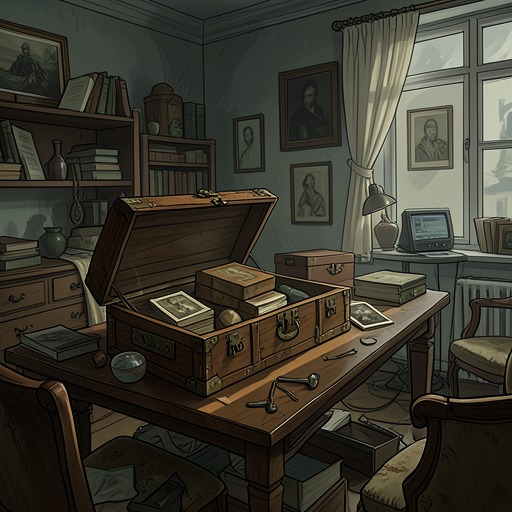
He wants his mother’s entire photographic archive returned. Years earlier, he had donated it to the foundation associated with Dami Tamburini’s bank. Marco later corrects his own description of that transfer: he had not truly donated the photographs, he says, but got rid of them. Entrusting them to people he supposed would value them more than he did had allowed him to dispose of what his mother had left behind. The money is therefore not exchanged for another material prize. Marco turns down the winnings to recover the archive, the inheritance he now recognizes as precious.
What the archive means to Marco
Marco explains that the change came suddenly, after the pain he had described seemed to let him see things as they were. He realized that the most precious thing Dami possessed was the archive Marco had given him. The realization reverses the apparent balance of value at the poker table: €840,000 is the conspicuous prize, but the photographs carry the personal significance that the money cannot replace.
The archive matters as more than a collection. Marco identifies it as the trace of his mother’s passage on earth, and his decision to retrieve it acknowledges that his earlier transfer had been a form of relinquishment rather than generosity. He says he will take it back the next day and calls this his real win from the night. He does not regret refusing the money, not even in a dream. He has no financial need, enjoys working, and has never wanted to make a living from gambling proceeds; to him, the money would have been a damnation.
Consequences and meaning in Marco’s later life
The episode also changes Marco’s understanding of gambling. He calls the game a piece of adolescent foolishness that he had never outgrown, a threat he had carried throughout his life. That night, he says, he saw the threat and the surrounding circumstances as they were. His account ends not with triumph over Dami but with the need to tell someone what he has understood.
In the later account of his life, Marco’s decision to give up the fabulous poker winnings is identified as the act through which enlightenment arrives. It follows Adele’s death and his struggle to endure the void while caring for Miraijin. The painful events of his life—including escaping a plane crash, losing his sister, enduring a terrible divorce, ending his father’s life, and burying his twenty-two-year-old daughter—become, in his reckoning, the foundation of a new world. He interprets his suffering as serving a purpose: delivering Miraijin, whom Adele believed would be the new human being, to the world. The poker surrender does not erase those losses; it gives Marco a framework in which to understand them, while the recovered archive makes that inward change tangible.