Passive psychoanalysis
The Hummingbird“Passive psychoanalysis” is Marco Carrera’s term for what he sees as the damage inflicted by other people’s analysis on those around them. It is more than a complaint about therapy: rooted in his family history and sharpened by the women in his life, the phrase names a defensive conviction that repeatedly collides with the relationships he wants to protect.
Origin and Meaning
Marco traces his aversion to psychoanalysis to his mother. His father’s exacting order had its own effect: living among his father’s meticulously kept possessions made Marco contemptuously unkempt. In contrast, the mother’s influence, as Marco understands it, left him with an enduring suspicion of analysis that became consequential in his relations with women.
He sees the pattern spreading across the family and beyond it. His mother and sister Irene, followed by friends, girlfriends, colleagues, wives, and daughters, are all, in his account, governed by different kinds of analytical therapy. Their presence makes his objection feel to him like something learned through experience, not an abstract prejudice.
A Defensive Theory
Marco calls the harm “passive psychoanalysis.” He argues that it is not enough to refrain from analysis oneself: a person must also protect himself from those who practice it. When others dismiss the idea as a prejudice, he maintains that the costs he has experienced leave him entitled to his view. Yet he also recognizes the contradiction built into his position: the only known way he can protect himself from other people’s psychoanalysis is to undergo analysis himself, something he does not intend to give up.
His questions expose a further tension. He wonders why, among so many women who do not go to an analyst, he has become involved only with those who do. He also asks why he prefers to explain his theory of passive analysis to them, even at the risk of seeming superficial, rather than to women who do not practice it, with whom he might have had more predictable success. The formulation makes his resistance inseparable from the relationships that sustain it: he objects to being interpreted, yet keeps returning to the explanation.
Adele’s Thread and a Forgotten Recognition
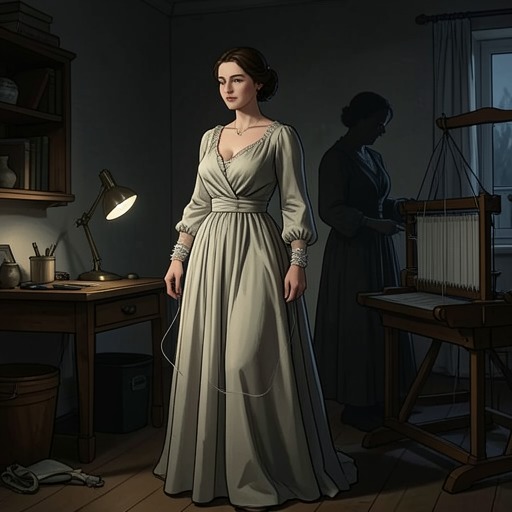
When Adele is about three, she tells Marco that a thread runs from her back to the nearest wall, so she must manage it carefully to stop others from getting caught. She says that he and her mother do not pass behind her. As she explains this, Marco feels a shiver and recognizes the significance of the fact that he never goes behind his daughter. He sees and knows something that frightens him, then immediately forgets that he has seen it.
The narration directly connects his aversion to psychoanalysis with that act of forgetting: Marco wonders whether analysis might have helped him recover the vision, while a psychoanalyst might understand his aversion as the very mechanism by which he represses it. The recognition never returns to him, even after events unfold as he briefly anticipated. The episode thus gives “passive psychoanalysis” an intimate consequence: his distrust of analysis sits beside an insight about his daughter’s attachment that he cannot retain.
Therapy, Family Roles, and Limits
Adele’s difficulties at school bring the family into contact with professional interpretations despite Marco’s resistance. After her parents tell the school director about the thread, the director identifies it as a perceptual disturbance and recommends a specialist. Adele begins visiting Dr. Nocetti, whom she calls the Magician Manfrotto. When he tells Marco and Marina that the thread connects Adele not to the walls but to her father, expressing an exclusive bond and fear of losing him, the interpretation persuades them. He recommends that Marco spend much more time with her, ideally more than Marina does.
That recommendation asks the family to change its established division of care. Marco is happy to be with Adele, but the change also unsettles the arrangement in which Marina does more of the everyday work. The episode complicates any simple opposition between Marco and psychoanalysis: he distrusts the practice and resents its influence, but a therapist’s account of Adele’s thread helps him understand a bond he had not otherwise articulated. His phrase names a durable suspicion, not a clean escape from the interpretations on which family life comes to depend.