Resisting grief through pleasure
The HummingbirdResisting grief through pleasure names the struggle to keep mourning from censoring every source of desire. After Adele’s death, Daniele Carradori urges Marco Carrera to pursue what still gives him pleasure—not because pleasure will repair his loss or restore a will to live, but because continuing to act and feel pleasure prevents grief from claiming the whole of life. The principle becomes concrete in Marco’s determination to keep Miraijin with him, and in the small, sometimes audacious accommodations that let him care for her without surrendering every other part of himself.
The Counsel: Desire Against Self-Punishment
Carradori speaks to Marco both as a psychiatrist and as a friend. His advice is not to place all responsibility for survival on Miraijin: Marco needs a desire of his own, he says, if he is to care for his niece. A child, Carradori observes, registers what adults leave unspoken as well as what they say. If Marco cares for Miraijin with an inner void, that void may reach her; if he tries to fill it, whether or not he succeeds, she will encounter the effort itself. Carradori treats that effort as a form of life, not as proof that grief has been overcome.
His clinical experience gives the advice its emphasis. He works with people who have lost everything, some of them the sole survivors of their families, and asks what remains possible even amid material troubles and illness. His answer is desire and pleasure. Grief, in his account, leads people to censor their libido precisely when it might help them resist suffering. The pleasures he names are deliberately ordinary and bodily: playing football, walking by the sea, eating mayonnaise, painting one’s nails, catching lizards, singing. None solves the underlying problems. Their value is that they do not make those problems worse, and that the body can escape pain’s attempt to mortify it.
Carradori does not promise Marco that pleasure will bring back his will to live. When Marco asks whether he must play tennis with Miraijin in order to regain it, Carradori answers that it probably will not return. Yet Marco will still be living, still doing something bereavement would prefer to censor because it produces pleasure. The distinction matters: this is not a prescription for recovery on demand, but permission to go on acting without requiring grief to be settled first.
The Hammock as a Practical Rebellion
Marco initially resists the idea of returning to tennis because he no longer wants to entrust Miraijin to anyone else—not surfers, climbers, or babysitters. Carradori accepts the concern while pointing out that Marco can take the child with him. The suggestion turns a psychological principle into a practical problem: how can Marco do something he likes while keeping the two-year-old in his care?
Carradori’s answer takes the form of a gift. Returning from his first visit to Marina’s clinic, he brings Marco a Japanese-made hammock with a folding stand, small enough to carry in a bag and quick to assemble. He had found it in a sports shop at Munich airport while waiting to board: the Hanmokku was on offer for 62.99 euros rather than 104. It came in adult and child sizes, folded compactly, and occupied about as much space as a tennis bag. These details make the hammock less a symbol imposed from outside than an instrument fitted to Marco’s objection: the child can come along, and the activity need not be abandoned.
The solution is knowingly excessive. Strollers already exist; the hammock cannot address the desperation in Marco’s chest. But its very oddness creates room for action. Carradori understands that rebellion against mourning’s mortifying rituals may begin in peripheral rebellions, even ones that seem senseless or dangerous. The hammock lets Marco stay out with Miraijin rather than remain home simply because he will not leave her with someone else. Its portable support makes the compromise possible; its association with Miraijin’s Japanese name gives it an additional personal resonance. The object does not lessen the bereavement. It allows Marco to be insolent toward it.
Pleasure Made Public: Tennis and Work
Marco carries Miraijin to tennis tournaments across Tuscany, first in the over-50 category and later over 55, and in doubles over 100. He plays against former opponents from his youth, sometimes at night, without hair or a referee. In winter he assembles the hammock beneath the pressure balloon; if Miraijin has fallen asleep in the car, he bundles her in a blanket and lets her sleep while he plays. He usually wins, then packs everything up and goes home, sometimes with a cup in his hand. The routine shows the advice taking hold not as a private conviction but as repeated, logistical labor: child in tow, hammock assembled, match played, equipment folded away.
The arrangement also makes Marco conspicuous. Word of his practice spreads, and he likes that people talk about him. Yet the narration distinguishes that attention from the pleasure that protects him. The point is not that tennis, winning, or notoriety can compensate for Adele. Their importance lies in Marco’s refusal to let care for Miraijin erase every activity that belongs to him.
He also makes himself available for conferences. For years he had stopped keeping up with his science and had become an ordinary ophthalmologist, unable to catch up with research. Friends who were neurologists, psychiatrists, or lovers of art and music organized gatherings that brought their interests together, giving him a way to contribute from his own expertise: the eye, photography, and animals. Two or three times a year, he speaks about the mystery of looking and being looked at, among other subjects, in Florence, Prato, and Chianciano Terme.
Miraijin accompanies him even to daytime sessions. Marco sets up the hammock in the front row, although she is awake and prefers to sit beside him; she listens to the other talks while he delivers his own. Afterwards he packs the hammock away and takes her home, skipping aperitifs and official dinners. The physical arrangement again enables a refusal: he can accept invitations and speak in public without separating from the child. His willingness to be talked about is part of the transgression, but, as with tennis, the narrative says it is not itself what saves him.
The Deeper Return: Gambling and Mourning
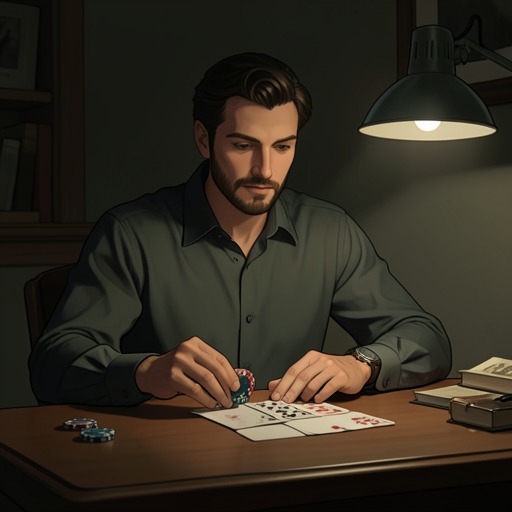
The true rebellion, the narrative finally identifies, is Marco’s return to gambling. Nothing in his life had given him pleasure comparable to the game. He had sacrificed that pleasure to the obligations of family, but the passion had never disappeared; keeping it outside his life had taken effort, and it remained ready to emerge from beneath the more respectable pursuits he had chosen. After Adele’s death, he stops making that sacrifice. The movement from tennis and lectures to gambling is therefore not simply a list of pastimes: it marks the discovery that the strongest surviving desire is one he had long tried to suppress.
The contrast sharpens the meaning of Carradori’s advice. Tennis and conferences create workable ways for Marco to keep Miraijin beside him, and they offer forms of pleasure and competence. But the gambling passion had a different history: it had been buried under family life, not extinguished. Its return is described as the pleasure that saves him, a more forceful rebellion against grief’s dictatorship than the activities that precede it. The text does not claim that gambling resolves bereavement; it presents the re-emergence of desire as resistance to the demand that Marco punish himself by renouncing pleasure.
The principle thus joins bodily action, caretaking, and risk without confusing them with healing. Carradori’s counsel refuses to make pleasure a cure, while Marco’s hammock, tennis matches, conference appearances, and return to gambling give that refusal a material form. Grief remains; what changes is its claim to rule every choice. Continuing to want something, and making room for that wanting while caring for Miraijin, becomes a way of continuing to live.