Stillness versus Change
The HummingbirdStillness versus Change names a central tension in Marco Carrera’s account of living: change is celebrated as courage and progress, yet the upheavals that have defined his life have largely brought pain. His wish to remain still is not simple passivity. It is a hard-won effort to hold on to what remains, and eventually the condition from which he can dedicate himself to raising Miraijin. The contrast never resolves into a choice between movement and immobility; Marco’s life keeps making him inhabit both.
The Value Assigned to Movement
In a letter to Luisa Lattes, Marco begins with a concrete sign of change: she has moved again. He wonders whether she has separated from the Jewish philosopher she once described as living in the Marais, or whether the new address belongs to a study. He rejects the idea that she has simply moved while remaining with him, because he cannot imagine that man leaving the Marais for the sixteenth arrondissement. The questions make her relocation more than a change of address: for Marco, movement invites the search for a reason.
He contrasts that legibility with the difficulty of finding a reason behind immobility. In his view, their time has assigned ever greater value to change for its own sake. The resulting moral shorthand casts those who move as courageous and those who stay as fearful, the changing as enlightened and the unchanged as dull. Marco pushes back against that hierarchy. He is pleased that Luisa seems to recognize that standing still, too, requires courage and energy.
His account is personal, not an abstract defense of inertia. At fifty-two, Luisa writes that he has more or less become stuck; Marco answers by measuring the movement in her life against what he knows of her many removals, changing jobs and loves, marriages, companions, children, abortions, homes, habits, pains, and pleasures. The catalogue underscores how much energy her successive changes must have required. It also clarifies that his apparent stillness is being judged against a life of conspicuous motion.
Change as Disruption
Marco does not claim that he has literally stayed still. He points to his terrible shoulders as one change that moved him from the place where he had meant to stay and left him with little strength. More broadly, he says that the changes he has known have been for the worse. He acknowledges that change can improve lives, including lives on a mass scale, but says that his own experience has gone differently. His argument does not deny the possibility of beneficial change; it insists on the unevenness of its effects.
He describes each change he underwent as a tremendous bump that shifted his weight and knocked him, literally, from one life into another. There was no gentle passage between these lives: he had to adapt brutally, without mediation. This is why holding on to as many things as possible brings him relief. Stillness, in this account, is not a claim that life has left him untouched. It is his response to being repeatedly displaced, an attempt to preserve continuity where the transitions themselves offered none.
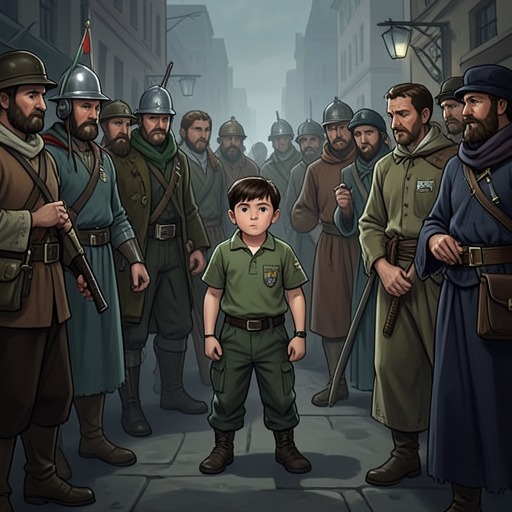
The pattern extends beyond the letter. Marco’s life, the narration observes, often consists of years of standing still while other people’s lives move forward, followed by a sudden, exceptional event that throws him into an unknown elsewhere. The transitions almost always hurt. They bring with them the angry, self-pitying question of why this has happened to him. His recurring pattern is therefore not stillness against change as two stable alternatives, but prolonged suspension interrupted by violent change.
A Reversal of the Hummingbird Image
Marco and Luisa’s possible life together gives the opposition an intimate cost. Marco thinks that if Luisa had been able to stop, the two of them might have been together. But he also calls destiny destiny, casting himself as the hummingbird and her as the lion or gazelle in the saying about getting up each morning and running. The image makes their difference vivid: his identity is bound to staying in place, while he sees her as belonging to the world of continual motion.
The image does not mean Marco has been spared movement. His own explanation is almost the reverse: he has changed because events forced him to, not because he sought change as a virtue. In the same way, remaining still is not a proof that he has never been displaced. It is a chosen defense after involuntary disruptions, and a way to keep faith with things he fears losing. His distinction between his own imposed changes and Luisa’s many successive movements also leaves their missed life together unresolved: he imagines that stillness might have brought them together, but does not suggest that it could undo what has happened.
Stillness as a Promise to Miraijin
Marco’s clearest purpose is to raise Miraijin, the eight-year-old girl who sleeps under his roof. He says that raising her gives meaning to everything he has had and not had, including his lost relationship with Luisa. His account of their life together ends with a promise to protect the child from the changes that have exhausted him. He has strength, he says, only for this mission. After loving Luisa for forty years and thinking of her first and last every day, his first and last thoughts are now for Miraijin, with the rest of his thoughts belonging to her as well. The letter is his last to Luisa, making stillness a commitment to a new center of life rather than a return to the past.
That commitment emerges beside Miraijin’s mother Adele’s belief that her daughter would be the new humanity. While Adele is alive, Marco does not argue with her; he repeats the idea, though the narration says he does so partly out of indulgence toward his daughter. Later, after enough time has passed, the belief becomes the answer to the question of why Marco has endured so much. Miraijin, the narration says, was the new human being from the moment she was conceived, and Marco has been granted the privilege of raising her. His purpose changes the meaning of his previous disruptions without making them less painful: the answer arrives not as a justification for every wound, but as a reason to continue.
The future Marco imagines for Miraijin is full of movement. He foresees her growing famous through a YouTube channel devoted to ordinary, serious things, while young people follow and imitate her. He imagines her sharing much of her money with those in need and leaving the rest to help change the world. As her grandfather, Marco would manage the practical burdens of her success, keeping agents, promoters, entrepreneurs, and exploiters at a distance so that celebrity did not turn her into a company or brand. The protection he imagines is an effort to preserve a normal life—school, education, piano, travel, parties, and holidays—against the forces that would convert Miraijin into a public product.
The same imagined future carries Miraijin away from him. At eighteen, she and others like her will gather to save a world in danger and fight a war between truth and freedom. At nineteen, she will have to leave her home, life, and city for secret places, constantly moving under threat while continuing to testify to the possibility of a beautiful and welcoming world. Marco imagines her followers growing and young people detaching from their parents, joining together, and putting culture first. In this forecast, his steadiness cannot keep time still for her: he remains planted while the world around her changes, and her mission depends on the very movement and separation he would prefer to prevent.
The Pattern’s Final Limit
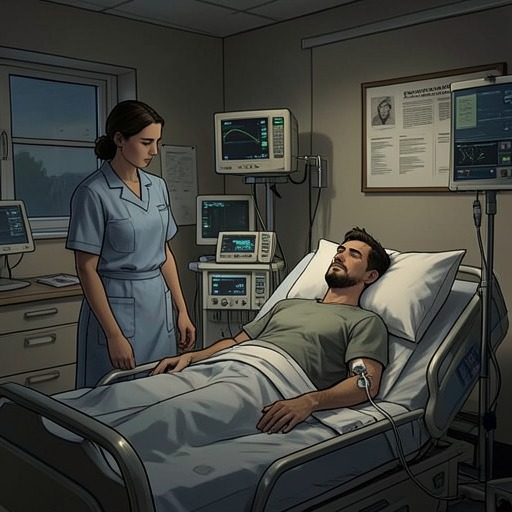
Marco’s future in the letter is also marked by illness. He imagines Miraijin visiting him at the old house in Piazza Savonarola or the old house in Bolgheri, both preserved through his efforts. She will travel with an escort and find him still young and active, still standing still while everything around him has changed. Yet he knows that his own moment of abrupt change will come. The medical report will identify a large, extensive pancreatic carcinoma, despite regular checkups every six months and no indication of it six months earlier. As with his sudden growth, change will arrive not gradually but with shocking speed.
The ending makes the contrast bodily and finite. Marco imagines telling Miraijin that he will fight, while she understands that he believes he is already dead. The thought recalls his mother’s response to her own turn toward death, and it stands against the earlier hope that he might keep the surrounding time still. His steadiness cannot avert illness or prevent Miraijin’s future from carrying her away. What it can do is give shape to his care: he protects the houses, imagines safeguarding her ordinary life, and raises her toward a purpose that will outlast his ability to remain beside her. Stillness is therefore neither an escape from change nor its cure. It is the form Marco’s devotion takes as change continues to claim its due.