The eye of the storm
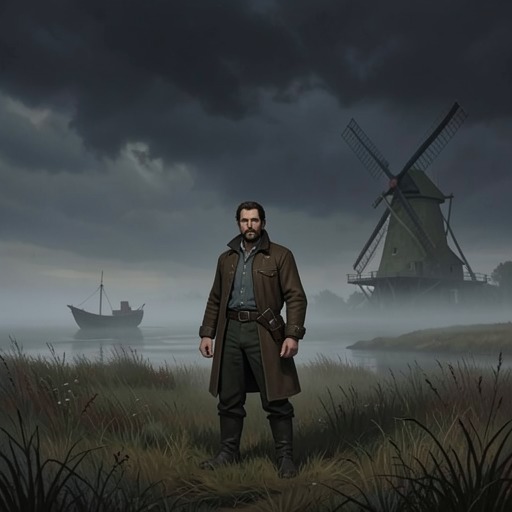
The HummingbirdThe eye of the storm is a half-joking, half-serious theory built around Duccio Chilleri’s reputation as the Unnameable. It holds that Marco can remain close to Duccio without harm, like someone sheltered at the center of a cyclone, while anyone who shifts away—even into a chance encounter, a car ride, or a greeting from afar—risks being swept into catastrophe. The idea gives a name to the story’s uneasy balance between coincidence and curse, and later turns Marco and Duccio’s escape from a doomed plane into apparent evidence for the very superstition Marco disputes.
The Theory and Its Logic
Duccio’s reputation had gathered a hard crust that Marco could no longer simply talk away. The eye-of-the-storm theory emerged as a way to answer Marco’s insistence that nothing had ever happened to him despite his closeness to Duccio. In its logic, the center of a cyclone is the one place spared the devastation that destroys the surrounding coast and towns. So too, it claims, does intimacy with Duccio offer protection: Marco remains unharmed because he stays near, whereas a slight separation leaves others exposed.
The theory converts a contradiction into a rule. Duccio is associated with misfortune, yet Marco—his close companion—escapes it. Rather than abandon the omen, the friends explain Marco’s immunity as an effect of his position within it. The theory’s apparent precision is comic, but its terms are elastic enough to preserve belief: even a greeting from a distance can count as the fatal shift away from the safe center.
A Social Compromise
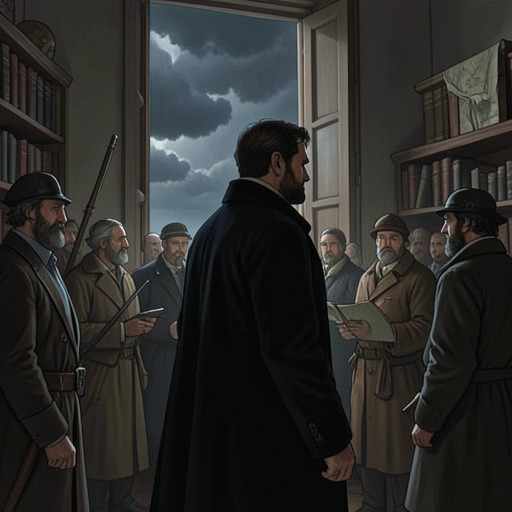
The theory serves both sides of the group’s disagreement. Marco can keep seeing his friends while condemning their superstition; they can continue joking with him while seriously entertaining the bad omen attached to Duccio. The story names this arrangement a balance—the only one possible. The theory does not settle whether Duccio is truly cursed. Instead, it lets friendship and fear coexist without requiring either to yield.
Duccio’s many ominous names, including Baron Samedi, Loa, Bokor, Mephisto, and Ypso, belong to the same atmosphere of accumulated rumor. The eye-of-the-storm explanation gives those rumors a structure: the danger is not merely attached to Duccio, but supposedly governed by distance from him. Its ingenuity is also its irony. The more completely it accounts for every outcome, the less available it becomes to disproof.
The Plane and the Cost of Silence
The theory acquires a more consequential echo when Marco and Duccio get off a plane shortly before it crashes. Although both boys expect to be implicated in the event, neither tells anyone. After several days of silence, the story they would have to reveal—that they had left the plane at the last moment—seems increasingly impossible to voice and unlikely to be believed.
Their silence is tied not only to their own stunned embarrassment but to what disclosure would mean for Duccio. If people learned what had happened, they might treat the escape as final confirmation of the rumors and flee from him. Marco’s survival, meanwhile, would look like scientific proof of the eye-of-the-storm theory: the person closest to Duccio had been spared. The theory thus moves beyond a device for managing friendly disagreement. It becomes a social threat that helps keep the boys from speaking, even to each other; when they try, embarrassment overwhelms explicit discussion.
Meaning and Narrative Function
The eye-of-the-storm theory sustains a hesitation between natural coincidence and supernatural explanation. A plane crash and two passengers’ last-minute departure can be understood without a curse, but the surrounding rumors make the survival legible as an omen to those already disposed to believe. The theory does not resolve that uncertainty; it shows how people turn an unlikely event into a pattern that protects their existing convictions.
Its central paradox is that safety depends on closeness to the person everyone else fears. For Marco, the theory preserves an ordinary friendship under the pressure of public superstition. After the plane incident, the same logic threatens to isolate Duccio and silence Marco. What begins as a comic explanation of why one friend escapes misfortune becomes a way of showing how rumor can shape behavior even when its claims remain unproven.