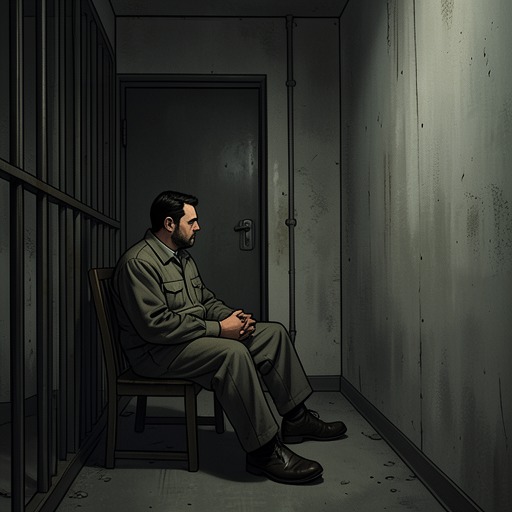
“Tentative steps” and the thin-ice image
The Innocent“Tentative steps” and the thin-ice image make Matt Hunter’s lasting insecurity after prison tangible: the prison gate marks his release, not the end of his fear that the ground beneath him may give way. Recalled in his marriage and discussed with Sonya McGrath, the motif connects bodily caution with guilt, grief, and the fragile possibility of continuing to live.
The Image of Release
When Matt walks out of prison, he steps tentatively, as though the ground might give or the earth might cave in at any moment. The physical caution turns release into something less than a clean return to ordinary life: the gate opens, but safety does not follow automatically. The narration stresses the persistence of the sensation, saying that in some ways Matt will always walk like that.
The image recurs years later in Matt’s memory of leaving prison. He recalls blinking and stepping through the gate, still feeling as if the thin ice beneath him could crack and plunge him into freezing water. The recalled scene extends the original image: what first appeared as careful movement becomes an enduring expectation of sudden collapse. The danger is not an event that actually happens beneath his feet, but a condition through which he experiences the world.
Recurrence in Matt’s Life
The prison memory returns while Matt sits with Olivia Hunter, after the brightness of her smile has briefly dimmed and then returned. He remembers the thin ice at precisely a moment when their shared happiness seems vulnerable to disturbance. The juxtaposition does not make Olivia the source of his insecurity; instead, it shows how an old fear can enter an intimate present, where even a passing change in expression makes happiness feel precarious.
The motif also gives language to an experience Matt cannot readily explain. In conversations with Sonya, he and she talk about tentative steps and the feeling that the ground could give way at any time. The phrase moves beyond the prison memory without erasing its origin: it becomes a way for two people marked by the same death to speak about instability in their lives.
Sonya and the Limits of Consolation
Matt’s meetings with Sonya last two hours. He describes feeling strangely free because he aches, hurts, and feels; their conversations include the night Stephen McGrath died, their lives, and the recurring sense of precarious footing. The image belongs to a difficult exchange rather than a simple lesson in forgiveness. Sonya never tells Matt that she forgives him, that the death was not his fault, or that serving his time settles the matter.
That refusal keeps the metaphor morally unsettled. The thin ice signifies Matt’s continuing vulnerability, but it does not promise that suffering will be repaired by a reassuring declaration. In the meetings, speaking about the unstable ground allows pain to be acknowledged without converting acknowledgment into absolution.
Narrative Significance
The motif gains force through repetition with variation: first Matt’s cautious steps at the prison gate, then his later recollection of ice that may break, and finally a shared phrase in conversation with Sonya. Each return carries the image from physical motion toward memory and relationship. The threat of falling remains figurative, yet its bodily terms keep the past present in Matt’s ordinary life.
The image also resists a simple before-and-after account of imprisonment. Matt is free to leave, to marry Olivia, and to meet Sonya, but the sensation of precariousness persists across those different settings. Tentative movement is therefore both a consequence of trauma and a measure of continued life: Matt proceeds, carefully, without being promised that the ground will hold.