Adam Yates
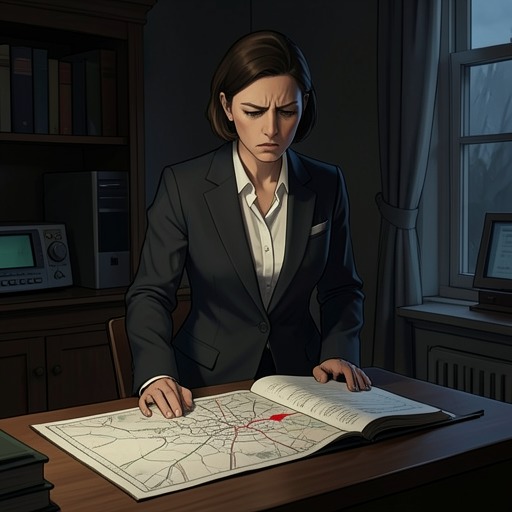
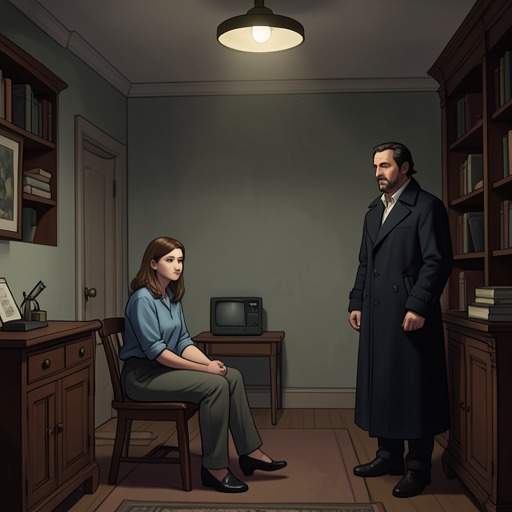
The InnocentAdam Yates is a senior FBI official whose polished public standing conceals a history of compromised decisions. Introduced as Nevada’s Special Agent in Charge, he becomes entangled in the investigation surrounding Olivia Hunter and a videotape that threatens to expose his past. His ascent, his reliance on Cal Dollinger, and his eventual suicide make him both an investigator and a subject of scrutiny: the person charged with enforcing the law has also used informal power to protect himself and his friend.
Identity and Public Position
Yates’s story opens with the contrast between an ordinary workday and the career he has built. Ten years earlier, he had been a young agent working undercover; by the time of the main action, he is the FBI’s Special Agent in Charge for Nevada, a position described as one of the bureau’s most desirable. He has risen through the ranks without any apparent hint of trouble. That clean public record matters: the later revelations do not concern a marginal figure but a man entrusted with substantial federal authority.
His standing is made visible in his dealings with other investigators. He is introduced to Ed Steinberg as the Special Agent in Charge of the Las Vegas office, and he accompanies Loren Muse to the county prosecutor’s office after their meeting with Joan Thurston. When Loren mentions strange developments, Yates asks what is happening. These exchanges establish him as a professional presence within official channels before the plot reveals how much of his own conduct lies outside them.
The Investigation and the Hidden Tape
Yates’s name enters the case through a hidden recording connected to Clyde Rangor. Olivia watches footage showing a man identified as Mr. Douglas on a bed; she recognizes him as Yates. The recording also shows Cassandra Meadows entering the room and helping him undress. For Olivia, this explains why Rangor had become desperate: he had captured compromising material involving a federal officer and apparently tried to use it as leverage, without understanding the full significance of his target.
The tape changes the meaning of the investigation. What first appears to be a search for the truth about Rangor’s criminal activity also exposes the vulnerability of an official who has kept his private conduct separate from his public identity. Yates is not merely investigating the consequences of the recording; he is one of the people whose actions it records. The discovery puts his professional authority and personal security on the same side of the threat.
Cal Dollinger and the Choice to Intervene
When Yates explains the crisis, he describes the tape as a weapon directed at himself, his wife, his children, and his job. He says a caller demanded money in exchange for it. Rather than relying on a formal response, Yates and Cal Dollinger went to confront Rangor. In his account, Dollinger did the pressuring: Yates calls him a good man but acknowledges that he had a violent streak and had once beaten a suspect to death. Yates had saved Dollinger from the consequences then, and Dollinger had later returned that protection. Their friendship is therefore not just personal loyalty; it has a history of reciprocal rescue that blurs the boundary between partnership and shared liability.
That history gives the confrontation its moral weight. Yates’s fear for his family and career is understandable within the facts he recounts, but it does not erase his choice to handle the threat through an unofficial visit. Dollinger’s forcefulness is not an unforeseen trait: Yates already knows his partner’s capacity for violence and has previously protected him. The episode reveals a pattern in which loyalty and institutional position reinforce one another, allowing the two men to treat personal danger as a problem to manage privately.
Yates’s professional persona also makes the contrast sharper. In one scene, he asks Loren calmly what her strange developments mean; later, the recording and his account of the meeting with Rangor uncover the private stakes beneath that composure. His authority is real, but it cannot make the tape disappear or convert an improvised response into a legitimate investigative procedure. The plot’s reversal is not simply that a senior agent has a secret; it is that the machinery of law is compromised by the very relationships and favors that Yates has treated as protection.
Exposure, Death, and Narrative Significance
Near the end, Yates’s voice is slurred when he speaks about the threats and the confrontation. He asks whether Dollinger is dead, confirming that his partner’s fate weighs on him even as his own situation unravels. The narrative then states that Yates has killed himself and that Grimes will not be able to cover it up. His children—Ella, Anne, and Sam—will know the truth, though not about the videotape. The distinction preserves the family’s knowledge of his death while leaving the recording itself outside what they are told.
Yates’s ending makes concealment both a plot mechanism and a human cost. The tape exposes one hidden part of his life, while the deaths and official efforts to contain events bring a broader failure of accountability into view. His children will be left with the truth that their father is gone, but not with the full story that shaped his final crisis. The man who had spent ten years rising without visible trouble cannot separate his public office from the private choices that helped create the danger; his suicide closes his personal arc, while the concealed facts continue to matter to those left behind.