Carmen
The InnocentCarmen, the mother of Loren Muse, is introduced through a strained domestic life of smoking, television, and small acts of neglect. Their early exchanges make her seem inconsiderate and emotionally difficult, yet the novel later reveals that she has allowed Loren to carry blame for years rather than explain the pain behind her father’s suicide. In their closing scene, Carmen offers Loren comfort without resolving the past into an easy reconciliation: she draws her daughter close, and Loren accepts the contact.
Identity and Home Life
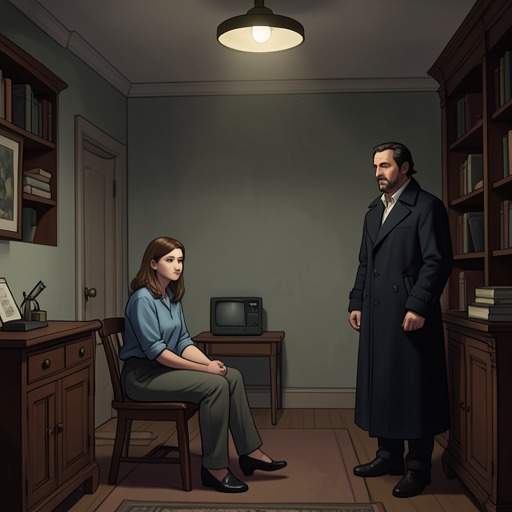
Carmen lives with Loren in a garden apartment where the air conditioner rattles against the windowsill and keeps the room cold. When Loren returns, Carmen is asleep on the couch with the television still playing an infomercial. Her smoke-phlegm snore is familiar enough to comfort Loren, though Loren also feels uncertain about what she feels for her mother. The scene establishes a household marked not by open intimacy but by routines, irritation, and an underlying attachment neither woman readily articulates.
Carmen’s everyday habits contribute to that tension. Loren notices the overflowing garbage and takes it out herself; when she returns, Carmen has woken and wants to know where she has been. Loren says she had to work late, but Carmen’s complaint is not simply about that evening: she says she waited and accuses her daughter of failing to call. The conflict grows from a small absence into a familiar dispute about consideration and attention.
A Relationship of Complaint and Withdrawal
Carmen’s concern for Loren emerges awkwardly through reproach and advice. She says that she wants Loren to be happy and wants her to find someone, then explains that she does not want her daughter to be alone. Loren answers, “Like you,” a cutting comparison she immediately regrets. The exchange exposes their shared loneliness while also showing how easily concern becomes accusation between them.
Loren withdraws rather than continue the argument. She goes into the bathroom to get ready for bed; when she returns, Carmen is back on the couch, the television is off, and the air conditioner is running again. Loren apologizes, but Carmen does not reply. The scene offers no explicit resolution: their reconciliation consists of a brief apology and silence, with the household’s familiar arrangements restored around them.
The Grief Behind Loren’s Blame
Two days later, Carmen and Loren share the same domestic setting, but the emotional balance has changed. Loren is making a ham-and-cheese sandwich while Carmen watches Entertainment Tonight. As Loren spreads mayonnaise on the bread, she begins to cry. She waits for the sobs to pass before speaking, then calls her mother’s attention to her. The ordinary preparation of food becomes the setting for a long-delayed question.
Loren asks why her father did not love her enough to want to live. Carmen answers that he loved Loren deeply, but Loren insists on the painful interpretation she has carried: he died despite that love. Carmen responds that his death was not a measure of his love; he was in great pain, no one could save him, and Loren had been the best thing in his life. The exchange makes clear that Loren’s grief has attached itself to a child’s fear of being insufficiently loved, while Carmen tries to separate her father’s suffering from his love for his daughter.
Loren then identifies Carmen’s part in that burden: she had let Loren blame her. Carmen says nothing in response. The silence matters because the scene does not turn the revelation into a neat defense or absolution. It leaves the history of blame between them visible even as Carmen has finally supplied the explanation Loren needed to hear.
Comfort Without Erasure
After the conversation, Loren sits on the couch and Carmen moves over to make room. She throws an afghan over her daughter, who leans against her shoulder. Loren can smell Carmen’s stale cigarettes, once part of the household’s discomfort but now a source of comfort. Carmen strokes Loren’s hair; Loren closes her eyes. When Carmen starts flicking through the channels and remarks that there is nothing good on, Loren smiles and moves closer.
The ending does not claim that their earlier conflict or Loren’s grief has disappeared. Instead, it gives their relationship a small, physical form of repair: space made on the couch, a blanket shared, a hand in Loren’s hair, and a daughter willing to lean in. Carmen’s final importance lies in this movement from a mother whom Loren watches with uncertainty to one whose familiar presence can, at last, provide comfort while the pain remains acknowledged.