Cingle Shaker
The InnocentCingle Shaker is a professional investigator whose conspicuous appearance and unflappable handling of evidence make her both memorable and useful to Matt Hunter. She helps Matt investigate threats and apparent evidence against him, and her story turns on the uncertain boundary between what digital traces seem to show and what careful examination can establish. After becoming caught up in the investigation herself, she is cleared of all charges and builds an independent agency, Cingler Service.
Identity and Professional Presence
Matt meets Cingle in her office, where she is presented as one of the exceptions to a general rule about investigators. She uses Cingle Shaker as her professional name, and Matt suspects it is not her real one. That uncertainty gives her name a deliberately managed quality: it is the identity under which she conducts business, whether or not it is the one she was born with.
The narration emphasizes how striking she appears, describing her as six feet tall, blue-eyed, and honey-haired. A story circulates that she was a Rockette at Radio City Music Hall and that fellow dancers objected because she disrupted their symmetry. The anecdote reinforces the force of her public image, but the professional scenes give that image a counterweight: Cingle is not merely an arresting presence, but a working investigator who listens, takes notes, and assesses evidence.
Working with Matt Hunter
Cingle assists Matt as he tries to understand suspicious incidents and the evidence gathering around them. When he tells her about questions from his former classmates Lance Banner and Loren Muse, and about a computer cookie that led to a stripper website, she listens and takes notes. Her response is restrained; she does not leap to a conclusion, but says she will look into it.
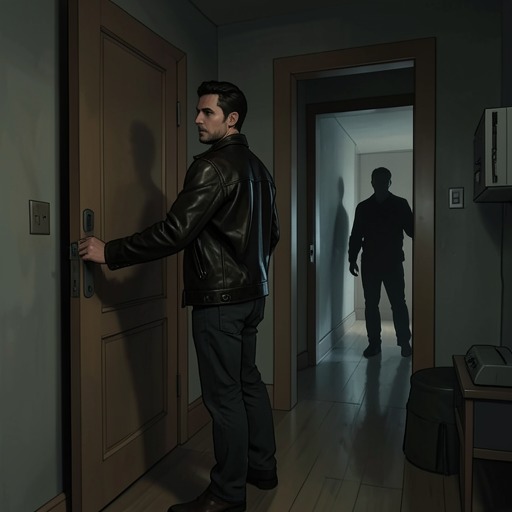
The investigation also involves the limitations of early camera-phone imagery. Matt notices that the incoming photograph is curious because Olivia Hunter had not yet learned to use the phone’s camera feature. Later, when Matt and Cingle examine a video, he asks her to play it slowly. He points out that the window is gray and that raindrops are visible, details that matter to interpreting what the image can prove. Cingle recognizes the implication and calls it a setup. The exchange shows their complementary roles: Matt directs attention to a specific visual clue, while Cingle gives its investigative significance a clear name.
Cingle also pursues a vehicle lead, telling Matt that she has information about the license plate. Her contributions are practical rather than theatrical: she follows a trace, reviews material, and helps distinguish an apparent record of events from a constructed one. That work makes her an ally in an investigation where images and other digital traces cannot simply be treated as transparent evidence.
Evidence, Trust, and Scrutiny
The novel repeatedly complicates the meaning of evidence. Matt discovers that Olivia’s old email contains information he had not found among the new messages, while camera-phone images and video become objects of close examination. Cingle’s work belongs to this same chain of interpretation: what a device records, what its user knows how to operate, and what an image actually establishes are separate questions. Her recognition that a video points to a setup is a decisive moment of investigative judgment, not a claim that every digital clue speaks for itself.
That interpretive role is tested when the inquiry turns toward Cingle. Loren confronts her with photographs and says she knows Cingle is working for Matt. Loren also refers to a late-night meeting between them before Cingle went to a hotel and asks what they discussed. The confrontation puts Cingle’s professional association under suspicion, joining the questions about manipulated images to a more personal question of trust: who is working with whom, and what does the available evidence really show?
Cingle rejects the photographs as false. When Loren raises what was found on Cingle’s office computer, Cingle says that the claim is not right; she insists that the pictures are fakes. Her insistence matters because the images have helped make her a target of scrutiny, but the eventual outcome confirms that the accusations do not stand. All charges against Cingle are dropped.
Change and Narrative Role
Cingle’s arc moves from investigator assisting Matt to a person whose own conduct and professional ties are examined. She remains present in the story’s final developments: Matt says that he has already called her, an indication that he continues to rely on her as a contact. The novel does not present her as merely a temporary helper whose usefulness ends when the immediate accusations are resolved.
After the charges are dropped, Cingle opens her own private investigation agency, Cingler Service. Ike Kier and Carter Sturgis send as much business her way as they can, and she has three investigators working for her. The shift is concrete: she goes from operating as an individual professional whose real name Matt doubts to leading an agency with staff and a stream of referrals.
Cingle’s narrative importance lies in the way her competence gives the book a counterpoint to suspicion and misinterpretation. Her appearance invites comment, but her decisive contributions come through patient inquiry and skepticism about what images prove. The false-picture accusation then subjects her to the same uncertainty she has helped Matt investigate. Her exoneration and new agency close that arc not with a retreat from investigative work, but with a larger professional footing.