Ed Steinberg
The InnocentEd Steinberg is a county prosecutor and Loren Muse’s boss, a smart, fair-minded figure who understands the politics surrounding his work and knows how to navigate them. He supports Loren’s investigation into the identity of the murdered nun, Sister Mary Rose, and later agrees that the evidence against Matt Hunter is sufficient for arrest. Across those scenes, Steinberg represents both the practical workings of prosecution and the moral pressure that enters when legal power can be used to keep a suspect in the system.
Identity and Working Style
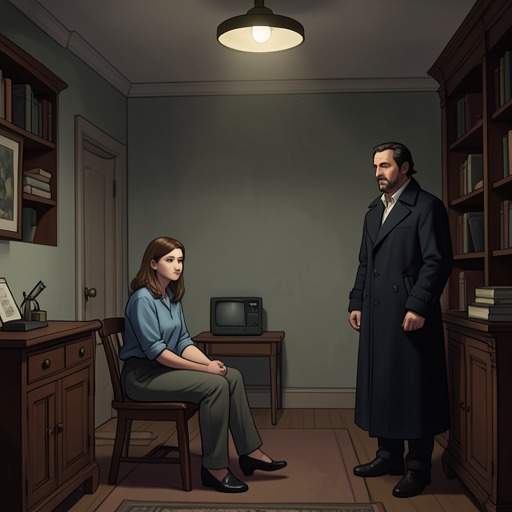
Steinberg works alone in his office on the third floor of the new county courthouse when Loren returns from Wilmington, Delaware. His appearance is characteristically disheveled: his tie is loose, his collar button undone, and one sleeve rolled higher than the other. That informality contrasts with the authority of his position, but Loren’s assessment emphasizes substance over polish. She likes and trusts him because he is smart and plays fair; he dislikes the politics of the job, yet understands that the game is necessary and plays it effectively.
Support for Loren’s Investigation
When Loren tells him she is following a lead on the nun’s identity, Steinberg listens as she explains the identification code on the implants, the initial cooperation she received, the subsequent refusal to cooperate, and the connection to federal officials. Rather than dismissing the obstacles or treating the lead as settled, he offers a concrete next step: he will call the area’s special agent in charge, Pistillo, the following morning to find out what the federal side can tell him. His response shows him using his position to open a channel Loren cannot readily access on her own.
Steinberg also reports the forensic findings from the nun’s room. Investigators dusted it and recovered eight sets of fingerprints; one set matched Sister Mary Rose. The number and match make the investigation tangible: the room is not merely a setting for the crime but a source of physical evidence that may help establish who was present. Steinberg’s role here is concise but consequential, conveying what the lab has found as Loren pursues the nun’s identity.
Judgment in Matt Hunter’s Case
Later, amid discussion of the evidence against Matt, Steinberg stands with the view that the threshold for arrest has been met. Joan Thurston points to the fight and the call and says investigators expect DNA to link Matt to the dead man. She also discusses how his record might support a no-bail arrangement and allow authorities to keep him in custody. Steinberg does not hesitate when she asks whether they have enough to arrest: he says that they do.
That conclusion is narrower than a declaration of guilt, but the scene makes its practical force clear. An arrest can begin the process of indictment and confinement before the anticipated DNA result arrives. Steinberg’s confident agreement thus places his procedural judgment at a consequential junction: he helps authorize the immediate use of state power while the investigation’s evidentiary case is still being assembled. The contrast between Loren’s stillness and Steinberg’s certainty further marks the moment as one in which the same facts produce different degrees of caution.
Narrative Role and Significance
Steinberg’s characterization rests on a tension between fairness and institutional effectiveness. Loren sees him as someone who plays fair, while also recognizing that he understands political necessity and knows how to operate within it. His offer to contact the federal official illustrates that competence as constructive support; his ready agreement to arrest Matt shows its more forceful application. The character is not defined by a dramatic personal revelation but by decisions made in professional exchanges—what he investigates, whom he calls, and when he considers the evidence sufficient to act.