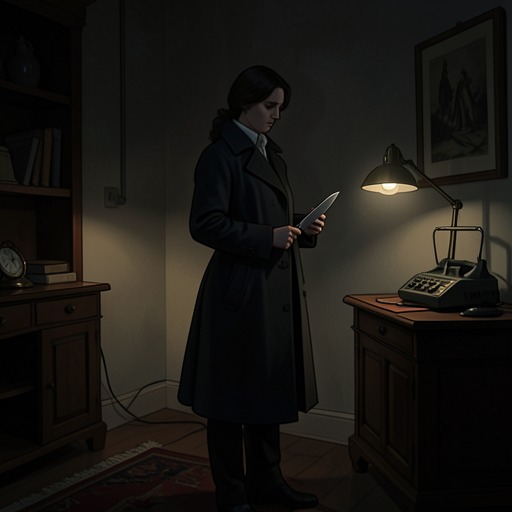
Kimmy Dale's final armed confrontation with police
The InnocentKimmy Dale's final armed confrontation with police ends with her death and Olivia Hunter at her side. A police demand to open the door becomes a brief, decisive standoff: Kimmy fires toward the floor, then turns her weapon toward the officers as they enter. Their gunfire kills her. Olivia kneels beside her, making the confrontation not only Kimmy’s final act but also a last moment of friendship and witness.
The confrontation
The scene begins with an abrupt order from outside: the police announce their presence and demand entry. Kimmy responds by firing at the floor. In the ensuing panic, the door bursts open; she turns and aims at the officers. The encounter moves rapidly from warning to armed confrontation, leaving no space for negotiation or retreat.
The police fire, and Kimmy falls. The narration compares her final turn to the movement of a marionette, then shifts immediately to Olivia’s response: she drops to her knees, cups Kimmy’s head, and lowers her lips to her ear. The scene does not explain what Olivia says. Its emphasis is on the physical closeness of the final gesture and on the sudden conversion of a confrontation into a death witnessed by a friend.
Olivia as witness
Olivia’s presence gives Kimmy’s death a personal consequence beyond the police action. Earlier, Olivia had described being eighteen and frozen when confronted with the aftermath of violence against Cassandra: unable to move even as events continued elsewhere. The later scene returns her to the position of witness, but now she acts, kneeling beside Kimmy and holding her head. The contrast marks a change in what Olivia can do in the face of a death, without suggesting that witnessing has become easy or that the loss can be undone.
That connection also recalls the novel’s broader account of trauma as something that persists beyond the immediate event. Matt Hunter’s imprisonment leaves him with lasting effects, while his later reflections on Olivia dwell on the intimate habits and gestures that bind them. Set against those lingering forms of memory, Olivia’s final contact with Kimmy becomes a small, concrete act of care at the end of a violent sequence.
Ending and significance
The narration closes the episode with the observation that it was finally Kimmy’s turn. The line gives her death the weight of an ending in the story’s succession of violence, without turning it into a victory. The immediate outcome is clear: Kimmy is dead, and Olivia has been left to witness and respond to her loss.
The aftermath also sits beside the novel’s account of Adam Yates’s suicide and the truth his children will eventually know. These endings do not erase what preceded them; they leave other people to live with the consequences and the knowledge. Kimmy’s final confrontation therefore joins the book’s recurring pattern of sudden violence and enduring aftermath, while Olivia’s gesture preserves a human bond within the scene’s abrupt conclusion.