Livingston, New Jersey
The InnocentLivingston, New Jersey is both Matt Hunter’s childhood home and the suburb to which he returns as a convicted killer, making the town a measure of how much the past can outlast a change of address. Its polished schools, sports, civic life, and uniform houses promise security and the American dream, but that promise is shadowed by exclusion and vigilant suspicion. The novel’s repeated return to Livingston turns the place into more than a hometown: it is where Matt must test whether a life can be rebuilt under the gaze of people who remember.
Suburban Setting and Local Identity
Matt grew up on the poorer side of a wealthy town in northern New Jersey, not far from Manhattan. Livingston offered the familiar routes of suburban aspiration: school achievement, athletics, extracurricular activity, and the prospect of college. Matt earned an A-minus average, served as school treasurer, and lettered in football and basketball. The town’s relative affluence is part of the setting’s tension: it is a place of opportunity and comfort, yet social standing and the fear of disruption shape how its residents regard one another.
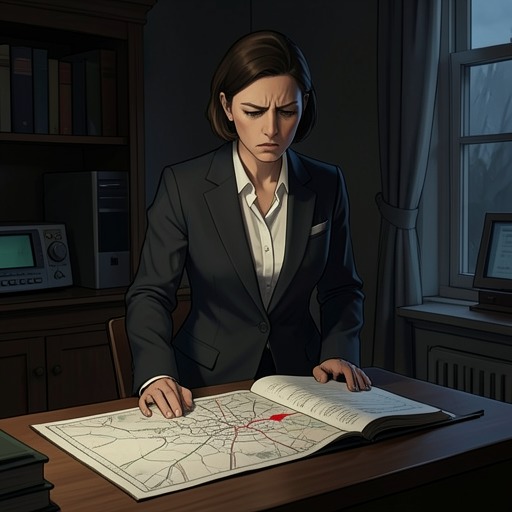
Loren Muse’s recollection gives the town a more complicated history. At 38 Darby Terrace, the home of Marsha Hunter, she remembers Livingston as her own hometown, where growing up was difficult despite the cushioning effect comfortable communities were supposed to provide. The town had excellent schools and sports programs, a Kiwanis Club, a PTA, and high-school productions. Its honor roll had changed over time: Jewish students had dominated when Loren was young; later, Asian and Indian students formed the next generation of ambitious immigrants. Her portrait places the town within a changing suburban order, where the American dream is expressed through buying a house, paying taxes, and claiming a place in the community, but belonging is not equally assured.
Matt’s Return and the Politics of Belonging
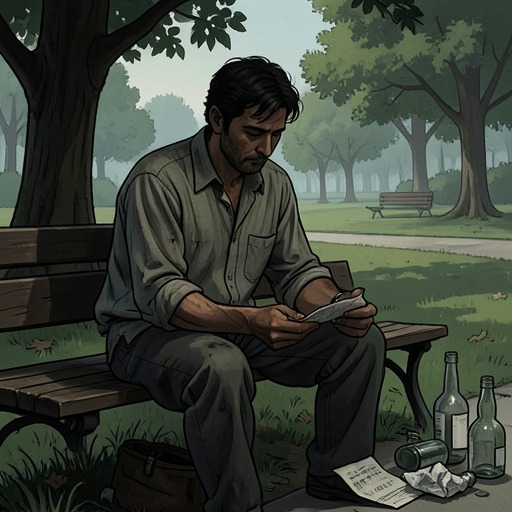
After Matt and Olivia Hunter decide to build a family, they move toward buying a house near Marsha and the boys, in the town where Matt and Bernie Hunter grew up. The return is both domestic and exposed. Matt worries that local people will remember his past and continue to make him the subject of whispers and innuendo. He says he is largely past caring about such talk, but his concern for Olivia and their expected child makes the move feel consequential: the judgment attached to him could reach the family he hopes to protect.
The house itself sharpens the contrast between familiarity and estrangement. It stands in a suburban tract built in 1965, on land that, like much of Livingston, had once been farmland. The houses look much alike. Olivia nevertheless regards the particular house with intense enthusiasm and calls it perfect, dissolving Matt’s doubts about moving back. Standing where his front yard will be, Matt feels that he no longer belongs in the town—until Olivia’s presence changes what return might mean. That fragile possibility is interrupted when a police cruiser arrives and Lance Banner, a former schoolmate now working as a detective, greets him. The welcome home immediately becomes an encounter with the town’s memory and authority.
Lance’s actions reveal a local version of community protection that is inseparable from exclusion. He thinks of himself as a defender of Livingston, not as a naive believer in an invisible barrier against wrongdoing. In his view, residents make a life together and must act when they see a potential problem rather than let it grow. Matt is the problem Lance believes he is proactively removing. Pressure comes not only from fellow officers but from Lance’s wife, Wendy, who had attended school with Matt’s younger sister, and from a town councilman concerned about the effect of a convicted killer moving into the neighborhood on property values. Lance’s self-image as a soldier on the front line of civic safety thus exposes the fear and social calculation beneath the town’s reassuring surface.
Police, Memory, and the Limits of Home
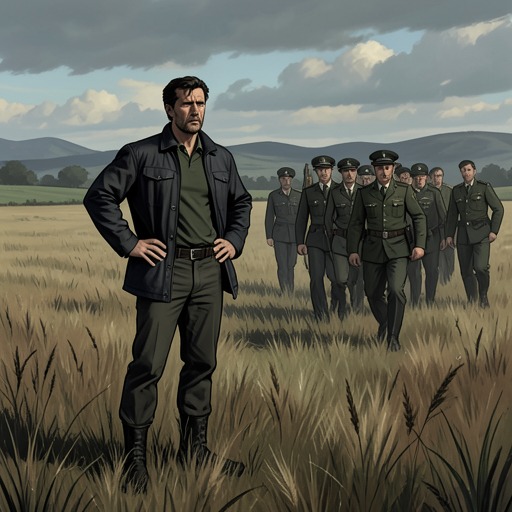
Livingston’s institutions become part of the conflict when Lance comes to Marsha Hunter’s house with uniformed officers. He identifies himself as a detective with the Livingston Police and asks for the door to be opened. Marsha tells him that Matt does not live there but in Irvington; Lance points to Matt’s car in her driveway. When he notices a small change in Marsha’s expression, he realizes that the delay in opening the door has mattered and orders the officers to check the backyard. The exchange turns an ordinary residential setting into a search scene, with the town’s police force acting on suspicion and Marsha responding with defiance.
Lance later recognizes that his earlier treatment of Matt had been clumsy and unjustified: whatever Matt’s past crime or present character, he had not deserved the harassment. That recognition does not erase the social mechanism that produced it. In Livingston, the anxiety attached to Matt’s record is amplified by neighborhood talk, the language of protecting the community, and concern for property values. The town is not represented as uniformly hostile, but its version of safety can become a rationale for treating a returning resident as an outsider before he has done anything new.
A Rebuilt Life and the Refrain of Return
Matt ultimately buys the house in Livingston and works from it, consulting on legal matters for Carter Sturgis; Ike Kier becomes his biggest client. His return is therefore not merely symbolic: the town becomes the base of his working life as well as his home. Lance apologizes, remains wary for several months, and eventually asks Matt to serve as his assistant basketball coach at a neighborhood barbecue. Matt accepts. The invitation connects their shared town and sports history to a practical change in their relationship: the former target of Lance’s suspicion is asked to take part in the community’s life.
The closing visits with Loren give the return its most intimate form. After Matt closes on the house, he and Loren sit in the backyard with Corona beers. Loren says, “Back in Livingston,” and Matt agrees. She repeats the phrase on later visits, sometimes as they sit outside when the weather permits. A year later, she is there again, this time with Sol beers, which she says are better than Coronas; Matt tastes one and agrees. The refrain persists, but its force changes with the scene around it.
In the final backyard image, Matt’s wife Olivia is planting a flower bed while their three-month-old son Benjamin lies on a mat, making happy cooing sounds. Kyra, who has lived with the family for a year and plans to stay until she graduates, helps Olivia in the garden. Matt watches the three of them; Olivia and Kyra smile back, and Benjamin’s sound carries across the yard. When Loren offers the familiar phrase once more, Matt answers, “Yeah,” with a grin: “Back in Livingston.” The town that first marked his return with suspicion now holds a family life he could not have imagined when he felt he no longer belonged. The refrain retains the history of displacement, but in the closing scene it also names a home made through renewed relationships, daily work, and the acceptance Matt feared he would never receive.