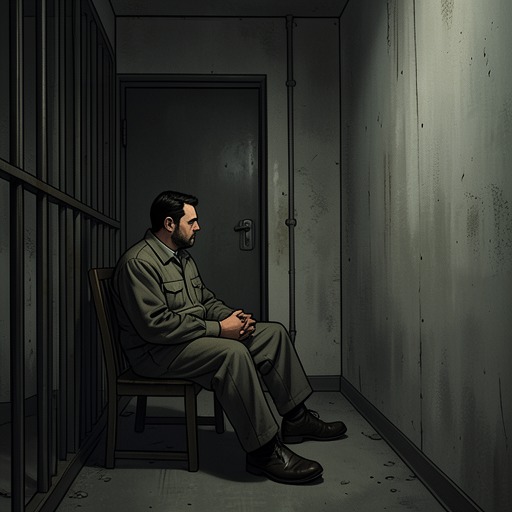
Matt’s four-year imprisonment
The InnocentMatt’s four-year imprisonment is the interval between the killing of Stephen McGrath and Matt’s return to life outside prison. He is taken away in handcuffs, spends four years incarcerated, and emerges still unsure how much he has changed. The term is not merely a sentence measured against a calendar: it shapes his sense of what freedom permits, where he can live, and how quickly he can re-enter the world he left behind.
Sentence and First Week
After killing Stephen McGrath, Matt is arrested and taken away. His upbringing has not prepared him for prison, and the stories he has heard about incarceration give him an expectation of danger. The account distinguishes that expectation from what actually happens: he is not sexually assaulted, but he is beaten during his first week. He then makes the mistake of identifying the people responsible, a decision that becomes part of his early experience behind bars.
The early incident establishes prison as an environment Matt must learn to navigate without preparation. Its consequence is not presented as a complete explanation of who he becomes; rather, it forms one part of an experience that begins after Stephen’s death has already set his life off course. The account gives the fact of the assault and Matt’s response without suggesting that either alone explains the years that follow.
Four Years and the Question of Change
Matt serves four years, a span the narrative measures against the four years many students spend in college. The comparison makes the duration legible as a substantial block of young adulthood, while emphasizing that Matt passes through it in prison rather than through ordinary education and independence. He is just short of his twenty-fifth birthday when the term ends.
Other people tell Matt that he has changed, but he is not sure whether they are right. That uncertainty complicates the conventional idea of release as a clean transformation: the sentence has ended, but Matt cannot confidently describe what it has made of him. The narrative leaves a gap between other people’s judgment and his own understanding of himself.
Release and the Uneven Return
Nine years before the later scene in which a home inspector is finishing work at a house, Matt walks out of jail after serving the four-year sentence. The nine-year interval locates his imprisonment in the past while showing how persistently the fact of his release remains a point of reference in his subsequent life. He is free, but freedom does not immediately mean a return to his former surroundings.
When he is newly released, Matt rents in Irvington, in a run-down area beneath the city’s giant beer-bottle landmark. He feels he deserves no better and can afford little better, but those practical limits do not fully explain why he stays. Despite his family’s protests, he has been renting there for nine years. He cannot yet return to the suburbs; the move feels too abrupt, like coming up too quickly from a depth. The image presents reintegration as a matter of pace as well as access: leaving prison does not instantly make the life before it feel inhabitable.
Freedom, Work, and the Sentence’s Afterlife
By the time the narrative describes Matt as free, he works at the Carter Sturgis law firm. The return of work and ordinary responsibilities signals a life resumed, but the narration remains cautious about what that resumption means. Matt guesses that his life has been given back to him rather than claiming that it has been restored without remainder.
The imprisonment therefore has a clear beginning and end in legal time, yet its effects persist beyond the four-year term. It follows the death of Stephen McGrath, interrupts Matt’s young adulthood, and precedes years in which he remains unable to move straight back into suburban life. His uncertainty about whether he has changed, and his slow accommodation to freedom in Irvington, make release a transition rather than a reversal of the past.